
Avenue d’Antin: Aristocratic Heritage, Urban Transformation and Residential Elegance Between Power, Commerce and Culture
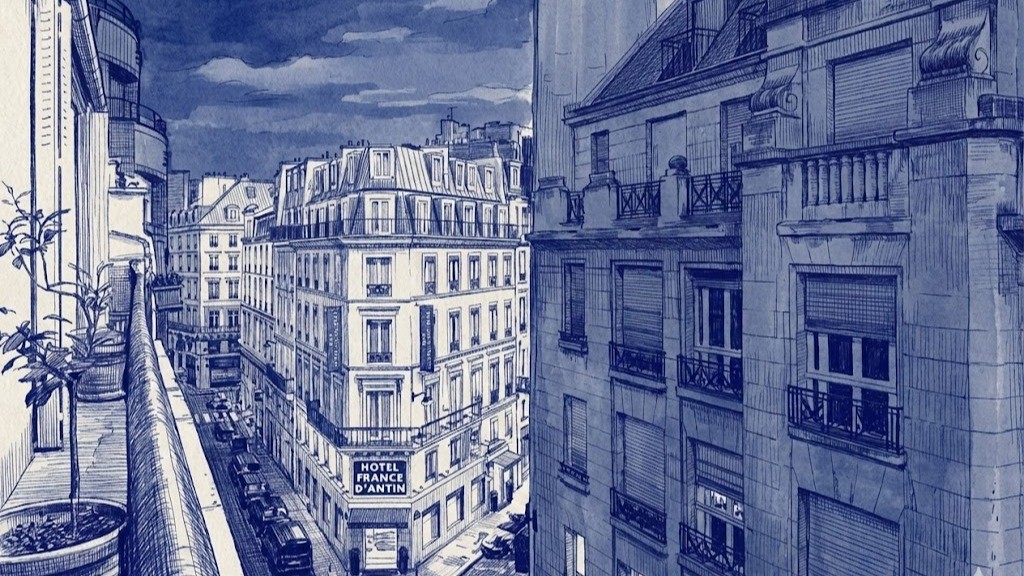
Avenue d’Antin occupies a singular place in Paris’s 8th arrondissement. Located between Rue du Faubourg Saint-Honoré, Avenue Matignon and the Champs-Élysées sector, it embodies a rare form of urban transition, where aristocratic history, institutional uses and residential life coexist in a subtle balance.
Less confidential than Avenue de la Trémoille and less institutional than Avenue Gabriel, Avenue d’Antin stands out for its ability to absorb multiple functions without losing coherence. It is an avenue of transformation in the noblest sense, reflecting the successive evolutions of western Paris.
This article offers a complete reading of Avenue d’Antin: its origins, its architectural evolution, the profiles it attracts, its lifestyle and the specific logic of its real-estate market.
1. Historical Origins and Aristocratic Memory
Avenue d’Antin takes its name from the Count of Antin, Louis-Antoine de Pardaillan de Gondrin, a powerful figure at the court of Louis XIV and Director General of the King’s Buildings. This name places the avenue directly within the history of power, architecture and French urban planning.
Originally, the area was composed of aristocratic estates and townhouses, benefiting from proximity to the Champs-Élysées and royal residences. Avenue d’Antin was initially part of a semi-rural landscape before being progressively integrated into the dense urban fabric of Paris during the 19th century.
This heritage still explains several of the avenue’s characteristics today: • historically deep plots • buildings with generous volumes • alternation between wide façades and narrower sequences • controlled architectural diversity
2. An Avenue of Transition Between Several Worlds
Avenue d’Antin plays a connective role between several distinct urban universes.
It sits at the intersection of: • the institutional axis of Rue du Faubourg Saint-Honoré • the cultural and commercial hub of the Champs-Élysées • the more discreet residential sector around Matignon • major fashion houses and cultural venues
This position gives the avenue a hybrid identity. It is neither purely residential nor strictly commercial. It absorbs flows without being overwhelmed by them, making it particularly legible for active, urban profiles.
3. Architecture: Controlled Diversity and Parisian Elegance
Architecturally, Avenue d’Antin displays greater variety than some neighboring avenues with strict homogeneity.
One finds: • quality Haussmannian buildings • post-Haussmannian constructions • a few more contemporary ensembles integrated with restraint • façades alternating classical rigor with more decorative elements
This diversity reflects the different phases of the avenue’s development. The whole remains coherent thanks to: • controlled building heights • continuity of alignment • predominance of noble materials • absence of ostentatious architecture
Apartments generally offer: • generous volumes • comfortable ceiling heights • layouts adaptable to multiple uses • good natural light, particularly on upper floors • configurations suitable for both residential and professional use
4. Residential Profiles and Contemporary Uses
Avenue d’Antin attracts a varied yet coherent population.
It is primarily home to: • senior executives and entrepreneurs • liberal professionals • international residents • urban families • patrimonial investors
Mixed use is common: primary residence, pied-à-terre, or combined residential and professional use. This versatility is one of the avenue’s major strengths, allowing it to adapt to contemporary rhythms without losing its identity.
5. Lifestyle: Active Centrality and Urban Balance
Living on Avenue d’Antin means choosing an active but controlled Parisian lifestyle.
Residents benefit from: • immediate proximity to the Champs-Élysées • fast access to institutional hubs • excellent public transport connections • dense cultural and commercial offerings • dynamic urban life without excess
The avenue is not a silent retreat, but a structuring axis appreciated by those who wish to be at the center of activity while maintaining residential quality.
6. The Real-Estate Market on Avenue d’Antin
The real-estate market on Avenue d’Antin is characterized by flexibility and depth.
Key features include: • constant demand • a wide range of buyer profiles • multiple property typologies • higher liquidity than ultra-confidential avenues • strong resilience to market cycles
The most sought-after properties are: • apartments on upper floors • carefully renovated units • buildings of standing with elevators • apartments offering dual exposure
7. Pricing and Value Logic
Prices on Avenue d’Antin remain high but are generally more accessible than those on the most emblematic axes of the Golden Triangle.
They are supported by: • exceptional centrality • diversity of supply • flexibility of use • architectural quality • depth of the market
Value appreciation is progressive and supported by strong structural demand. It is a balanced market, suitable for both owner-occupiers and investors.
Conclusion
Avenue d’Antin is an address of passage in the noblest sense: a passage between eras, uses and urban worlds. It embodies a Paris in motion, capable of transforming without losing itself.
Living or investing on Avenue d’Antin means choosing active centrality over distance, and adaptability over rigidity.
It is an avenue that accompanies trajectories rather than freezing them.
Thomas Herremans