
Boulevard Saint-Germain — Where Literary Dreams Meet Imperial Architecture
Introduction
A major artery of the Left Bank, Boulevard Saint-Germain crosses the 6th and 7th arrondissements over more than three kilometers, from the Pont de la Concorde to the Quai Saint-Bernard. Cut through during the Second Empire as part of the great Haussmannian works, it is one of Paris's most prestigious and lively axes. Unlike the more intimate streets of the neighborhood, such as Rue de Verneuil or Rue Jacob, Boulevard Saint-Germain embraces a first-rate commercial and cultural vocation, blending major brands, historic cafés, bookstores and academic institutions. It alone embodies the germanopratin spirit, that unique blend of intellectualism, bourgeois elegance and commercial effervescence that made Saint-Germain-des-Prés world famous.
History
The boulevard owes its name to the Abbey of Saint-Germain-des-Prés, founded in the 6th century, whose historic layout it follows. Its construction took place in several phases between 1855 and 1877, at the instigation of Baron Haussmann, as part of the modernization of Paris desired by Napoleon III. The goal was to create a great east-west axis on the Left Bank, connecting the Seine bridges and easing traffic through a medieval urban fabric that was until then particularly dense and unsanitary. Many old blocks were destroyed to allow this construction, sparking controversy at the time over the destruction of old heritage. The boulevard quickly became a hub of Parisian intellectual life in the 20th century: Café de Flore and Les Deux Magots, both located immediately near the church of Saint-Germain-des-Prés, hosted Jean-Paul Sartre, Simone de Beauvoir, Albert Camus and the entire postwar existentialist generation. Brasserie Lipp, founded in 1880, also became a favorite meeting place for writers, publishers and politicians. The boulevard also houses prestigious institutions such as the nearby Institut de France, as well as numerous historic publishing houses. In the 1960s and 1970s, the neighborhood also became the scene of intense nightlife and music, with jazz clubs that built Saint-Germain-des-Prés's international reputation.
Architecture
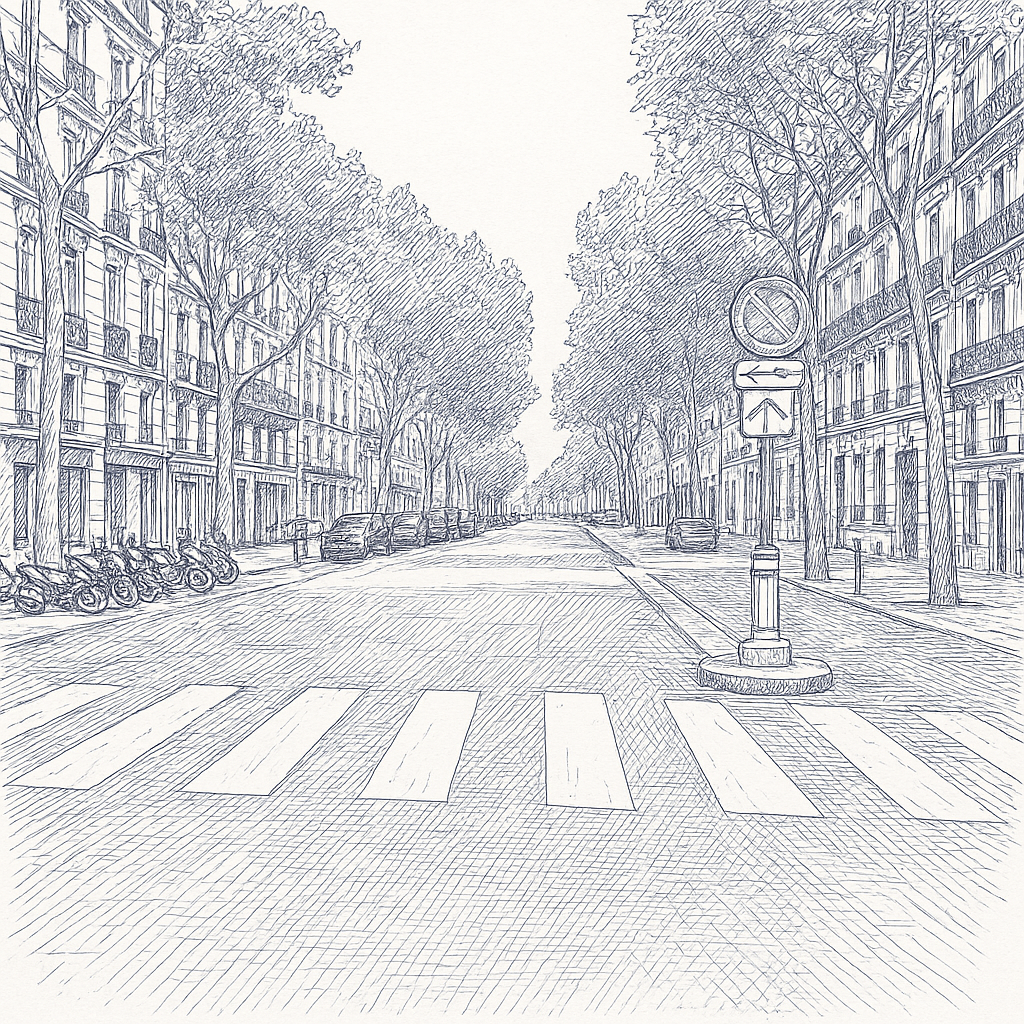
The architecture of Boulevard Saint-Germain beautifully illustrates the Haussmannian style in all its classical rigor: cut-stone facades, regular alignments, continuous balconies on the second and fifth floors, Mansart-style zinc roofs and sculpted cornices. The height of the buildings, generally six stories, and the boulevard's generous width create a monumental perspective characteristic of the great Haussmannian axes. A few older buildings, predating the construction, remain in places and testify to the pre-Haussmannian fabric, notably near the church of Saint-Germain-des-Prés, the oldest religious building in Paris.
Neighborhood life
Boulevard Saint-Germain lives at a sustained pace from morning until late evening. Bookstores like La Hune marked generations, while fashion and luxury boutiques have multiplied in recent decades. The terraces of historic cafés remain privileged vantage points for observing Parisian life. The neighborhood benefits from exceptional transport access with the Saint-Germain-des-Prés, Mabillon and Odéon stations, as well as proximity to the Jardin du Luxembourg and the Seine quays.
Real estate market
The real estate market on Boulevard Saint-Germain attracts an affluent, French and international clientele seeking prestige and centrality. Properties are mainly Haussmannian apartments with beautiful volumes, from three to six rooms, with moldings, Versailles parquet and original fireplaces. Prices range from €13,000 to €14,500/m² for a standard property, €15,500 to €17,500/m² for a high-end renovation, and up to €19,000 to €21,000/m² for an exceptional apartment with an open view or a noble floor. Sale timelines remain short, between two and three months for properly positioned properties.
Conclusion
Boulevard Saint-Germain remains a legendary address, combining architectural prestige, cultural effervescence and absolute centrality, perfect for a demanding clientele seeking an authentic Parisian art of living.
Thomas Herremans