
🏞️ Buying Property in the Buttes-Chaumont Area: Hilltop Havens and Bohemian Vibes in Paris’s 19ᵗʰ Arrondissement
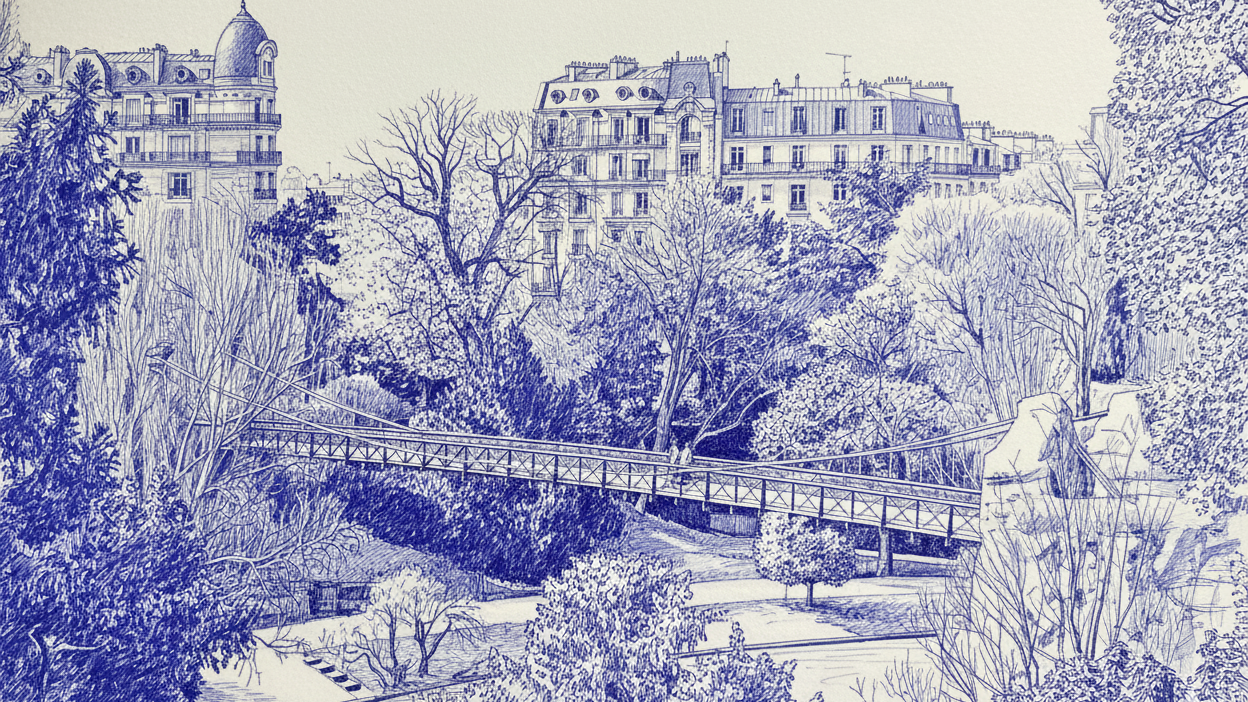
Few districts in Paris embody such a perfect balance between elevation and authenticity, serenity and spontaneity, as the Buttes-Chaumont. Rising above the 19ᵗʰ arrondissement like a green crown, this hillside enclave is one of the city’s most beloved paradoxes: peaceful yet social, elegant yet effortless, urban yet lush.
For decades, Parisians have climbed its slopes for picnics, sunsets, or a breath of air that feels miles from the dense Haussmannian grid. But in recent years, more and more buyers — families, creatives, and expatriates alike — have discovered that the Buttes-Chaumont area offers something increasingly rare: a genuine village spirit within Paris itself, with strong investment potential and a lifestyle that blends community, nature, and cultural vibrancy.
1️⃣ The Geography of Elevation
The Buttes-Chaumont district centers on the Parc des Buttes-Chaumont, a spectacular 25-hectare park carved from a former gypsum quarry. Created by engineer Jean-Charles Alphand in 1867 under Napoleon III, it remains one of Paris’s great feats of landscape design — cliffs, waterfalls, and a suspended temple crowning the skyline.
Surrounding the park, a constellation of micro-neighborhoods defines the area’s character:
- Botzaris and Mouzaïa to the east, with their cobbled lanes and flower-lined houses.
- Jourdain and Place des Fêtes to the north, lively and communal.
- Belleville and Pyrénées to the south, buzzing with cafés and ateliers.
From many streets, you can glimpse the domes of Sacré-Cœur, the towers of La Défense, or the faraway shimmer of Montmartre — views that remind residents they live above Paris, yet still in its beating heart.
2️⃣ A Brief History: From Quarry to Cultural Icon
The Buttes-Chaumont park itself was born from transformation. Once a wasteland of gypsum mines and refuse, it was reimagined in the 1860s as a pastoral masterpiece — a triumph of urban engineering and romantic landscape architecture.
Its creation spurred a wave of development in the surrounding hills. By the early 20ᵗʰ century, the area had attracted workers, artists, and small manufacturers. It was cheaper than Montmartre but shared its topography and creative energy.
In the post-war years, the 19ᵗʰ arrondissement became one of the most diverse in Paris, home to successive waves of immigration and cultural exchange. Yet amid change, Buttes-Chaumont preserved its village identity: narrow streets, human-scale architecture, and a spirit of inclusion that still defines it today.
3️⃣ The Lifestyle: Urban Calm Meets Bohemian Buzz
To live near Buttes-Chaumont is to experience urban life with breathing room. Mornings start with the rustle of trees and joggers looping around the lake; afternoons spill into terraces along Rue de Belleville or Rue Botzaris, where the scent of roasted coffee mingles with conversations in multiple languages.
Locals meet at Le Pavillon du Lac, Rosa Bonheur, or the organic markets on Place des Fêtes. Weekends bring outdoor cinema screenings, art fairs, and impromptu concerts. Unlike more polished arrondissements, the 19ᵗʰ wears its diversity openly — families, students, architects, and musicians share the same park benches.
The area’s everyday rhythm feels less like “living in a city” and more like belonging to a neighborhood that simply happens to overlook one.
4️⃣ Property Market Overview: The Balance Between Value and Prestige
As of 2025, property prices in the Buttes-Chaumont sector range between €9,000 and €11,500 per m², depending on proximity to the park and the type of property.
- Around Rue Botzaris and Avenue Simon-Bolivar, Haussmannian apartments with balconies fetch €10,500–€11,000 per m².
- In Mouzaïa, the famous network of pedestrian “villas” — small streets lined with pastel townhouses — commands €11,000–€13,000 per m², given their scarcity.
- The Jourdain–Pyrénées area remains more affordable, with larger family apartments around €8,500–€9,500 per m².
These figures are below those of central Paris but have risen steadily, reflecting sustained local demand and limited supply near the park. Rental yields of 3.2–3.8% net are common, supported by professionals and families seeking greenery and quick access to the city center.
In short: it’s the kind of market Paris rarely produces anymore — stable, authentic, and full of character.
5️⃣ Architecture: A Living Gallery
The Buttes-Chaumont district is a showcase of architectural diversity.
- Haussmannian grandeur dominates Rue de Crimée and Avenue Secrétan.
- Art Nouveau and Art Deco buildings add ornate charm near Botzaris and Jourdain.
- The Mouzaïa villas, originally workers’ houses built in the late 1800s on former quarries, now form one of Paris’s most photographed micro-neighborhoods: pedestrian lanes, ivy-covered façades, and a sense of timelessness.
- Around Place des Fêtes, 1970s and 1980s residences provide larger, light-filled units at accessible prices, many with terraces and panoramic views.
This mix offers investors and residents both aesthetic variety and strategic options: choose classic stone elegance or contemporary function — all within walking distance of one of the city’s most beautiful parks.
6️⃣ The Green Advantage
Few neighborhoods in Paris rival Buttes-Chaumont’s access to nature. Beyond the park itself, residents enjoy nearby Parc de Belleville, Parc de la Villette, and the Canal de l’Ourcq for cycling or riverside cafés.
In an era when green proximity has become a decisive factor in property value, Buttes-Chaumont stands out as a model of biophilic urbanism — where the view from your balcony might include both treetops and skyline.
This environmental quality translates into higher resident satisfaction and lower turnover rates — key indicators of long-term real estate stability.
7️⃣ Transportation and Connectivity
Despite its hilltop setting, the Buttes-Chaumont area is exceptionally connected:
- Metro Line 7bis (Botzaris, Buttes-Chaumont) loops gently through the district.
- Line 11 (Jourdain, Place des Fêtes) provides direct access to République and Châtelet.
- Line 5 (Laumière) connects to Gare du Nord and Gare d’Austerlitz.
- Numerous bus routes and expanded bike lanes make commuting fluid.
The ongoing extension of Line 11 eastward (toward Rosny-Bois-Perrier) strengthens the district’s strategic position within the Grand Paris network — reducing travel times and boosting attractiveness for both residents and investors.
8️⃣ Education, Culture, and Community
Buttes-Chaumont’s charm lies not just in scenery, but in social infrastructure. The area hosts well-rated public schools, Montessori programs, and bilingual options within short distance.
Cultural life thrives at venues like:
- Le Plateau, a contemporary art center.
- Le CENTQUATRE-PARIS, a nearby creative hub for performances and design.
- The historic Pathé Belleville cinema and neighborhood theaters.
Local associations organize gardening collectives, music festivals, and community cafés — preserving the sense of solidarity that has long defined the 19ᵗʰ arrondissement.
This cohesion gives the neighborhood a resilience and warmth that more transient areas often lack.
9️⃣ Who’s Buying — and Why
The Buttes-Chaumont attracts a fascinating mix:
- Young families moving from smaller central flats to larger, greener homes.
- Creative professionals and academics seeking inspiration and community.
- Foreign buyers who prefer Parisian authenticity over prestige addresses.
- Investors capitalizing on stable rents and enduring local demand.
For many, it’s the antidote to over-gentrified districts: a place where diversity is lived, not curated. The lifestyle combines neighborhood familiarity with cosmopolitan flair, appealing equally to artists and entrepreneurs.
🔟 Urban Dynamics: Between Renewal and Preservation
Like much of the 19ᵗʰ, Buttes-Chaumont continues to evolve. The city’s urban plan emphasizes preservation of heritage housing while encouraging energy-efficient renovations and mixed-use development.
Projects include:
- Restoration of 19ᵗʰ-century façades around Rue Manin and Rue de Crimée.
- Pedestrian improvements near Place des Fêtes.
- The creation of “cool islands” and tree-planted corridors connecting to Canal de l’Ourcq.
These initiatives ensure that the area’s evolution remains organic rather than disruptive, preserving its human scale and visual harmony — crucial factors for long-term value retention.
11️⃣ The Market Outlook
Analysts expect the Buttes-Chaumont sector to outperform the Paris average over the next five years, thanks to its strong fundamentals: green proximity, community identity, and continued public investment.
While luxury districts may plateau, mid-market neighborhoods with lifestyle appeal — such as this one — tend to deliver steady, sustainable appreciation. Moreover, the hybridization of work (remote plus office) has reinforced demand for livable, well-connected areas.
Expect prices to gradually converge toward €11,500–€12,000 per m² by 2030, with premium Mouzaïa houses climbing higher still.
12️⃣ Investing with Perspective
Buying property in Buttes-Chaumont isn’t a speculative play; it’s a long-view investment in livability.
Success comes from:
- Choosing well-located buildings (near park access or metro).
- Focusing on quality over square meters — light, layout, and charm matter more than size.
- Preserving architectural character during renovations — authenticity retains value.
For rental investors, furnished apartments near the park attract reliable tenants — young professionals, expats, and families between postings — with low vacancy rates.
In a Paris increasingly shaped by micro-markets, Buttes-Chaumont offers a clear thesis: invest where people love to live, not just where they work.
13️⃣ The Emotional Equation
Perhaps the most enduring allure of Buttes-Chaumont is emotional. It’s that moment when you walk through the park at dusk, the temple of Sybil glowing above the lake, the city unfolding in soft blue light. It’s the laughter from terrace cafés, the scent of jasmine on Mouzaïa’s cobbles, the skyline shimmering after rain.
Buyers here often describe a visceral sense of belonging — the rare feeling that they’ve found not just an apartment, but a community.
In an era of digital disconnection, that human connection is a form of luxury no marble bathroom can replace.
14️⃣ A Quiet Luxury in the Truest Sense
Buttes-Chaumont represents a kind of quiet luxury — the understated privilege of space, greenery, and authenticity within the capital. It appeals to those who value substance over status, comfort over opulence, roots over reach.
For investors and residents alike, it’s proof that Paris’s most enduring value isn’t found along the Seine or in gilded salons, but in neighborhoods that keep their soul while moving forward.
The Buttes-Chaumont remind us that Paris, for all its grandeur, is still a city of hills and hearts — and some of its brightest horizons lie not in the center, but just above it.
Thomas Herremans