
🏛️ Buying Property in the Père-Lachaise Area: Historic Charm and Vibrant Village Life in Paris’s 20th Arrondissement
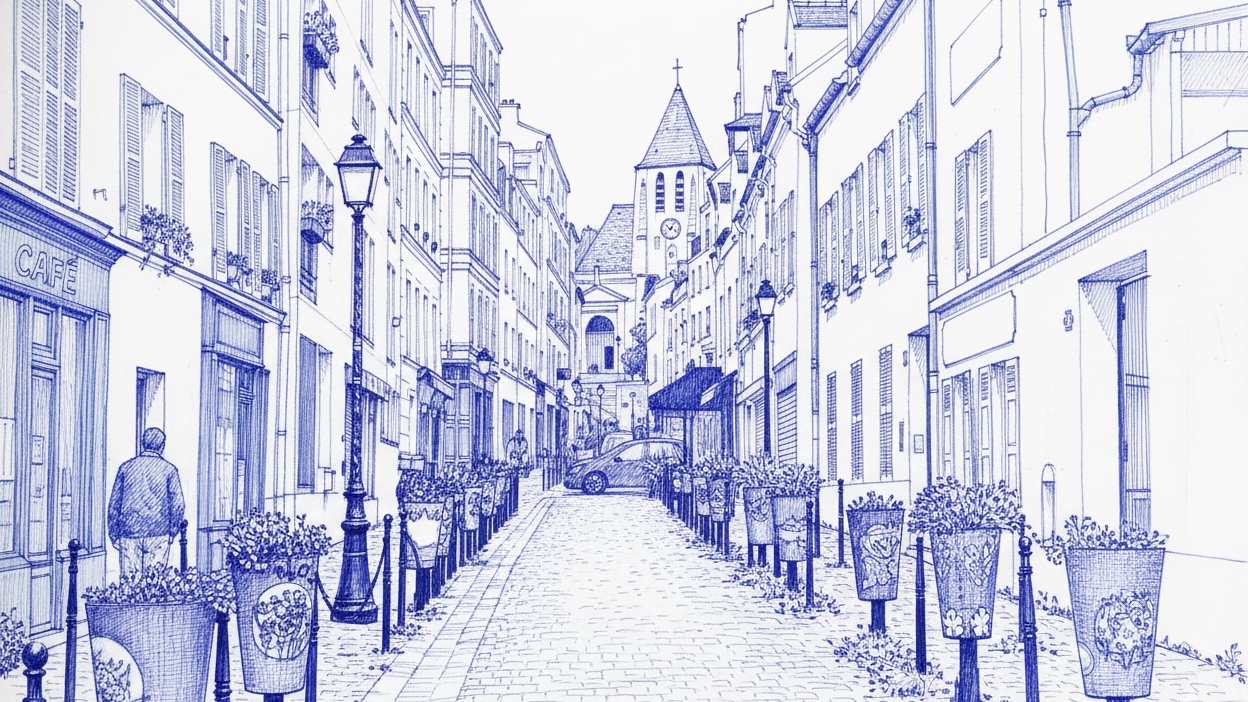
Where Memory, Authenticity, and Modern Parisian Life Intertwine
Few names evoke Paris’s poetic soul like Père-Lachaise. Known worldwide for its legendary cemetery — final home of Oscar Wilde, Edith Piaf, Jim Morrison, and Frédéric Chopin — the surrounding neighborhood has long been far more than a resting place. It’s a living district, animated by cafés, markets, ateliers, and tree-lined streets that whisper both history and renewal.
For years, Père-Lachaise sat quietly between the more famous districts of Ménilmontant, Gambetta, and Nation. But in recent decades, it has transformed into one of Paris’s most livable and desirable corners — a place where calm meets creativity, and where property value meets enduring charm.
Buying property here is not simply a financial decision. It’s an invitation to join a Paris of nuance: residential yet cosmopolitan, introspective yet full of life.
1️⃣ A Brief History: From Rural Outskirts to Parisian Enclave
When the Cimetière du Père-Lachaise opened in 1804, this area was still semi-rural. The city’s east side — dotted with windmills, vineyards, and convents — was considered far from fashionable. But with Haussmann’s 19th-century transformation of Paris and the growth of the metro in the early 20th century, the neighborhood became firmly integrated into the city’s fabric.
The cemetery itself became a phenomenon: designed as a romantic park and open-air museum, it attracted visitors from around the world. Around it, cafés, stonecutters, and florists appeared, forming the nucleus of a village economy.
Even as other districts grew denser and glossier, Père-Lachaise retained its residential tranquility. That atmosphere — a blend of Parisian elegance and quiet authenticity — continues to define it today.
2️⃣ Geography: Between Peace and Proximity
Located in the 20th arrondissement, between the vibrant quarters of Ménilmontant to the north and Nation to the south, the Père-Lachaise area sits on a gentle slope that offers open light and occasional rooftop views.
🚇 Accessibility
The area is served by several metro stations:
- Père-Lachaise (Lines 2 and 3) — connecting quickly to République, Opéra, and the Grands Boulevards.
- Gambetta (Line 3 and 3bis) — a major local hub with direct routes west.
- Philippe-Auguste, Alexandre-Dumas, and Rue Saint-Maur extend the network, ensuring fast access to every part of Paris.
Bus lines and cycle paths complement the picture, while Line 11’s extension eastward, completed in 2024, has further improved mobility and property appeal.
🏞️ Atmosphere
Unlike the grand boulevards of the center, Père-Lachaise feels intimate. Streets like Rue de la Roquette, Rue des Rondeaux, or Rue de Bagnolet reveal a quieter Paris: local bakeries, bookshops, brasseries with terrace tables under chestnut trees.
There’s a sense of neighborhood continuity — residents greet each other, artisans know their clients, and weekend markets remain rituals rather than spectacles.
3️⃣ Architectural Character: History in Stone and Iron
The Père-Lachaise quarter offers a remarkable architectural diversity, shaped by its topography and history.
🏠 Haussmannian and 1930s Elegance
Along Boulevard de Ménilmontant and Rue de la Roquette, classic Haussmannian façades with wrought-iron balconies coexist with 1930s brick buildings. Apartments here often feature high ceilings, herringbone parquet, and fireplaces — the timeless details of Parisian refinement.
🌿 Hidden Passages and Courtyards
Behind the main avenues lies a network of private courtyards, old ateliers, and cobblestone alleys — Villa Riberolle, Cité Leroy, Passage Deschamps. Many have been converted into artist studios or garden-flats, coveted for their light, greenery, and sense of seclusion.
🪟 Contemporary Additions
Recent decades have seen a wave of renovation and gentle densification. New eco-designed residences, often discreetly integrated among older buildings, offer lifts, balconies, and energy-efficient layouts — features increasingly demanded by modern buyers.
4️⃣ Property Market Overview
In 2025, the Père-Lachaise property market reflects the broader shift of interest toward eastern Paris, where charm meets relative affordability.
💶 Average Prices
According to the Chambre des Notaires de Paris:
- Average price: €9,800 – €10,500 per m²,
- Premium renovated apartments: up to €11,500 – €12,000 per m²,
- Smaller units or those requiring renovation: around €9,000 per m².
This positions Père-Lachaise comfortably below the city average of €10,800 /m², while offering a setting far richer in atmosphere than many peripheral zones.
📈 Market Dynamics
Demand remains strong from:
- Young professionals seeking livable two-bedroom flats;
- Expats looking for authentic yet well-connected neighborhoods;
- Families valuing green space, reputable schools, and calm streets;
- Investors targeting steady rental yields (3.5 – 4 % gross) and appreciation potential.
The combination of stability, beauty, and convenience has made Père-Lachaise one of the most balanced micro-markets in Paris real estate.
5️⃣ Lifestyle: Village Paris Meets Cosmopolitan Energy
☕ Local Life
Around Place Gambetta and Rue Sorbier, cafés buzz from morning until evening — Café Martin, Le Lumière, and Le Chéri(e) attract a relaxed, local clientele. Saturday mornings bring the Marché Réunion, where vendors sell flowers, cheese, and spices from every corner of France and beyond.
🌳 Green Spaces
Beyond the cemetery’s 44 hectares of tranquility, several smaller parks punctuate the area: Square Édouard-Vaillant, Jardin de la Cure, Parc de Belleville within walking distance. These oases offer playgrounds, lawns, and panoramic views over Paris’s skyline.
🎭 Culture and Creativity
Ménilmontant’s artistic influence extends southward. Local theaters (Théâtre de Ménilmontant, Studio Hébertot Gambetta), art galleries, and workshops sustain an ever-evolving creative scene. The district attracts musicians, filmmakers, and designers who appreciate affordable workspaces and a supportive community.
6️⃣ Everyday Practicality
For all its charm, Père-Lachaise is also eminently practical.
- Schools: Public options like École Bagnolet and Collège Robert-Doisneau enjoy solid reputations.
- Shops: Rue de Bagnolet and Boulevard de Ménilmontant host organic groceries, pharmacies, and boutiques.
- Healthcare: Clinics and dental practices are abundant; Hôpital Tenon lies nearby.
- Transport: With multiple metro lines and bus connections, daily commutes to central Paris are short and predictable.
For remote professionals or families, it’s a neighborhood that blends everyday ease with neighborhood intimacy.
7️⃣ Why Investors Look East
Over the past decade, eastern Paris has consistently outperformed the west in price growth. The reasons are structural:
- ongoing urban renewal programs;
- modernized transport (Line 11, tram T3b extensions);
- and a younger demographic profile fueling rental demand.
In Père-Lachaise, the balance between historic character and improving infrastructure makes the area particularly resilient. Even during market slowdowns, demand for quality apartments near metro lines and green spaces stays strong.
For investors, this means predictable liquidity: properties are easier to rent and to resell than in more speculative zones.
8️⃣ What to Look For When Buying
🧱 Building Condition
Many buildings date from 1880–1930. Verify recent façade restoration, roof maintenance, and electrical compliance. The 20th arrondissement has seen multiple subsidy programs for energy renovation — a good opportunity to reduce long-term costs.
🌤️ Orientation and View
Because of the hilly terrain, some apartments enjoy exceptional light or even partial views toward Montmartre or the city center. South- and west-facing units command a premium but maintain liquidity.
🪟 Floor Level and Elevator
Elevators are not standard in pre-war buildings; higher floors offer better light but may trade accessibility. For long-term holding, an upper-floor unit with balcony is ideal.
🏠 Layout Potential
Look for “through” apartments (traversants) with windows on both sides — highly valued for ventilation and brightness. Many older layouts can be reconfigured to create open living spaces without losing historic details.
9️⃣ The Emotional Appeal: Living with History
What sets Père-Lachaise apart from trendier neighborhoods is its emotional depth. You don’t just live near monuments — you live among stories.
Morning joggers pass by 200-year-old tombs shaded by chestnut trees; locals picnic near Chopin’s grave; lovers inscribe their initials on benches overlooking the rooftops.
There’s a serenity that permeates daily life here — a sense that time moves more slowly. And yet, step a few blocks down Rue de la Roquette, and you’re in the midst of laughter, music, and café chatter.
This equilibrium — between reflection and vitality — defines the neighborhood’s unique identity.
🔟 The Outlook: Timeless Appeal Meets Modern Transition
Looking ahead, the Père-Lachaise area stands at a sweet spot:
- It has reached maturity in infrastructure,
- Retains strong community character,
- And still offers relative value compared with more central arrondissements.
Urban improvements under the “Embellir Votre Quartier” program — wider sidewalks, new trees, traffic calming — are elevating its ambiance without disrupting authenticity.
As Paris prepares for the 2024 Olympics legacy and a renewed focus on sustainable urban living, areas like Père-Lachaise embody what future buyers seek: history with functionality, identity with comfort.
For those who believe property should hold soul as well as value, Père-Lachaise delivers both — and then some.
💬 Conclusion: A Neighborhood of Quiet Strength
Buying property in Père-Lachaise isn’t about spectacle. It’s about finding a place where the essence of Paris — its art, memory, and humanity — still breathe at street level.
Here, stone and time coexist. You might hear the echo of Piaf from a window, smell fresh croissants from a corner bakery, and feel the rhythm of a community that endures while the rest of Paris rushes ahead.
Financially, it’s a solid investment. Emotionally, it’s an anchor. In a city defined by beauty and impermanence, Père-Lachaise remains a constant — quietly alive, endlessly Parisian.
Thomas Herremans