
🎓 International Schools in the 6ᵉ Arrondissement of Paris: A Guide to Bilingual and Global-Curriculum Education in Saint-Germain-des-Prés
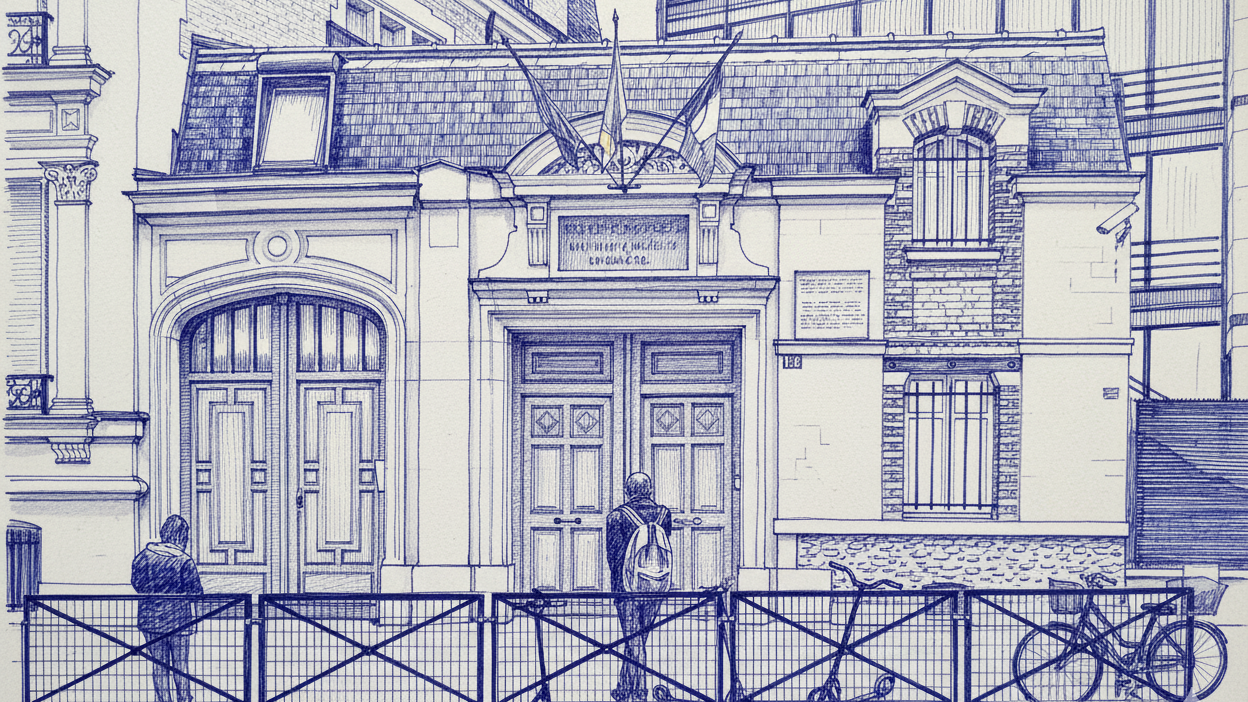
The 6th arrondissement of Paris represents the essence of the French art-de-vivre. Between the Jardin du Luxembourg, the cafés of Saint-Germain-des-Prés, and the historic campuses of Sciences Po and École Alsacienne, this district has long been the intellectual heart of Paris.
For families living here, or relocating to central Paris, education is a natural priority. Many parents seek schools that combine French academic excellence with international openness, preparing their children for a bilingual, global future.
This guide explores the educational landscape of the 6ᵉ — a mix of public institutions with sections internationales, prestigious private lycées, and bilingual schools — all within walking distance of the city’s most iconic landmarks.
1️⃣ The 6ᵉ Arrondissement: Paris’s Intellectual and Cultural Core
Few neighborhoods in the world balance beauty, history, and intellect like the 6th. It’s home to philosophers, writers, and artists — from Sartre and de Beauvoir to Picasso and Colette — and to France’s oldest institutions of learning.
The 6ᵉ is also remarkably cosmopolitan. Many embassies, cultural institutes, and international research centers are nearby. The result is a resident population that’s both deeply Parisian and globally connected.
Parents who live here tend to prioritize academic excellence, multilingual education, and cultural sophistication. And they have exceptional options at their doorstep.
2️⃣ What “International School” Means in Saint-Germain-des-Prés
In central Paris, large suburban-style international campuses are rare. Instead, schools integrate bilingualism and global programs into compact, high-performing urban environments.
In the 6ᵉ, “international school” typically means:
- Bilingual instruction (often 50 % French / 50 % English).
- Global accreditation such as IB or OIB.
- Multinational student body — families from diplomacy, academia, art, and business.
- Cultural partnerships — museums, universities, and institutes woven into the curriculum.
3️⃣ The Geography of Schooling in the 6ᵉ
Stretching from Boulevard Saint-Germain to the Jardin du Luxembourg, the arrondissement is compact and highly walkable. Families can reach most schools, parks, and extracurricular centers within 10-15 minutes on foot.
It borders the 5ᵉ (Latin Quarter) and the 7ᵉ (Invalides), both rich in additional international and bilingual options — a major logistical advantage for parents.
4️⃣ Key International and Bilingual Schools in or near the 6ᵉ
A. École Alsacienne
📍 109 Rue Notre-Dame-des-Champs, 75006 Paris Founded in 1871, École Alsacienne is one of France’s most respected private schools. It combines the French national curriculum with strong emphasis on languages, culture, and openness. While not formally an “international school,” it offers intensive English, German, and Spanish programs and maintains numerous foreign exchanges. Its alumni include writers, scientists, and politicians — testament to its academic prestige.
B. Lycée Montaigne
📍 17 Rue Auguste Comte, 75006 Paris A public lycée located beside the Jardin du Luxembourg, Montaigne is known for its European and international sections, where literature and history are taught in English or German. It offers both OIB (Option Internationale du Baccalauréat) and Section Européenne pathways. Free, selective, and academically rigorous — Montaigne is a cornerstone of bilingual education in central Paris.
C. EIB Monceau / EIB Victor Hugo (Accessible from the 6ᵉ)
Part of the École Internationale Bilingue network, EIB schools deliver 50 % French / 50 % English instruction from preschool to high school. They prepare students for the French Bac, OIB, and IB Diploma. Families in the 6ᵉ value their global orientation and smooth pathway to English-speaking universities. 👉 eibparis.com
D. École Jeannine Manuel (7ᵉ arrondissement – 10 min away)
A benchmark for bilingual excellence, Jeannine Manuel serves 80+ nationalities and offers the International Baccalaureate. Its campus near the 7ᵉ border is easily reachable from Saint-Germain-des-Prés. 👉 ecolejeanninemanuel.org
E. Institut Notre-Dame de Sion
📍 61 Rue Notre-Dame-des-Champs, 75006 Paris A private Catholic school with a strong academic reputation and bilingual English section. Its pedagogy emphasizes personal development, cultural exchange, and community — aligning with the area’s humanist spirit.
F. International School of Paris (ISP) – 16ᵉ arrondissement
Though west of the 6ᵉ, ISP attracts many Saint-Germain families. It’s the only Paris school offering the full IB continuum (PYP, MYP, DP) in English, with French as a second language. Commute: ≈ 25 min via RER C or bus. 👉 isparis.edu
G. Public Primary Schools with Bilingual Sections
Several 6ᵉ-arrondissement elementary schools host sections bilingues (English/French). They follow the French national curriculum, enriched with immersive language modules — perfect for young children starting bilingual education.
5️⃣ Curricular Pathways Explained
OIB – Option Internationale du Baccalauréat
Montaigne and other Paris lycées offer OIB tracks combining French and foreign-language study. Students complete additional coursework in English literature and history-geography, earning a globally recognized diploma.
IB – International Baccalaureate
The IB emphasizes analytical thinking, research, and global citizenship. Jeannine Manuel and ISP provide the full IB suite, ideal for mobile families.
Bilingual French/English Programs
Half the instruction in each language, building dual literacy and cross-cultural competence — characteristic of EIB and private Catholic schools.
6️⃣ Why Families Choose the 6ᵉ for Education
- Prestige and excellence: proximity to elite institutions (Sciences Po, École Alsacienne, Montaigne).
- Multilingual culture: cafés, bookshops, and art galleries nurture language in daily life.
- Accessibility: walkable routes, safe neighborhoods, efficient transport.
- Balance: rigorous academics alongside art, music, and philosophy.
- Community: many expatriate and Franco-international families share similar values.
7️⃣ Admissions, Costs, and Practicalities
- Public lycées (Montaigne): selective entry via tests; tuition free.
- Private bilingual schools (EIB, Jeannine Manuel, Notre-Dame de Sion): admission interviews, applications 6–12 months ahead; tuition €10 000–€25 000/year.
- Catholic schools: moderate fees (€4 000–€10 000).
- Commute: walking or ≤ 20 min metro rides.
- Language support: EAL / FLE programs standard for non-native speakers.
8️⃣ Education Beyond the Classroom
Saint-Germain-des-Prés itself is a classroom:
- Jardin du Luxembourg 🌳 for science, art, and sport.
- Musée Delacroix 🎨 for art history workshops.
- Théâtre de l’Odéon 🎭 for literature and drama programs.
- Cafés Flore & Deux Magots ☕ for observing Parisian philosophy in action.
Children here grow up immersed in culture — learning by living.
9️⃣ Who Typically Chooses the 6ᵉ
- Diplomats and international professionals valuing prestige + access.
- Binational families balancing French and foreign identities.
- Parisian intellectuals and academics who prize education above luxury.
- Expats wanting walkability, safety, and cultural richness.
They all share one belief: education and environment are inseparable.
🔟 Strengths & Constraints
Strengths
- Dense cluster of elite schools and universities.
- Authentic bilingual culture (English heard daily).
- Safe, inspiring, and central.
- Walkable lifestyle for children.
Constraints
- Competitive admissions.
- Smaller campuses, limited outdoor space.
- High housing and tuition costs.
Still, the trade-off is clear: few places on earth offer such intellectual atmosphere.
11️⃣ Trends in International Education in Central Paris
- Expansion of bilingual programs in public lycées.
- Rising interest from French families (no longer expat-only).
- Growth of STEM-plus-language curricula.
- Partnerships between Paris schools and universities abroad.
- Integration of digital learning with humanist values.
The 6ᵉ stands at the intersection of heritage and innovation — a microcosm of France’s educational evolution.
12️⃣ Selecting the Right Path
To choose well:
- Clarify long-term goals (French vs international university).
- Assess child’s language proficiency.
- Visit schools and meet teachers.
- Check curriculum equivalence (OIB vs IB).
- Balance commute, cost, and culture.
In the 6ᵉ, it’s less about finding a school and more about finding your philosophy of learning.
13️⃣ The Spirit of Saint-Germain-des-Prés
Education here is inseparable from artistry and conversation. Students study Molière in the morning, then sketch at the Luxembourg Gardens after lunch. They grow up debating ideas in cafés, speaking two languages without noticing, and viewing Paris as both classroom and playground.
This synthesis of intellect, language, and lifestyle defines what bilingual education truly means in Paris.
14️⃣ Conclusion
The 6ᵉ arrondissement remains one of the most inspiring educational environments in the world. Its blend of French academic rigor, international perspective, and cultural immersion allows families to raise children who are not only well-educated, but deeply cultivated.
From École Alsacienne to Lycée Montaigne and Jeannine Manuel, each school reflects the same ideal: that learning is a lifelong art.
In Saint-Germain-des-Prés, the classroom begins where the café ends — and the pursuit of knowledge is, quite simply, a way of life. 🌍📚
Thomas Herremans