
Rue Auber: Between Finance and Opera, the Discreet Elegance of the 9th Arrondissement
Introduction
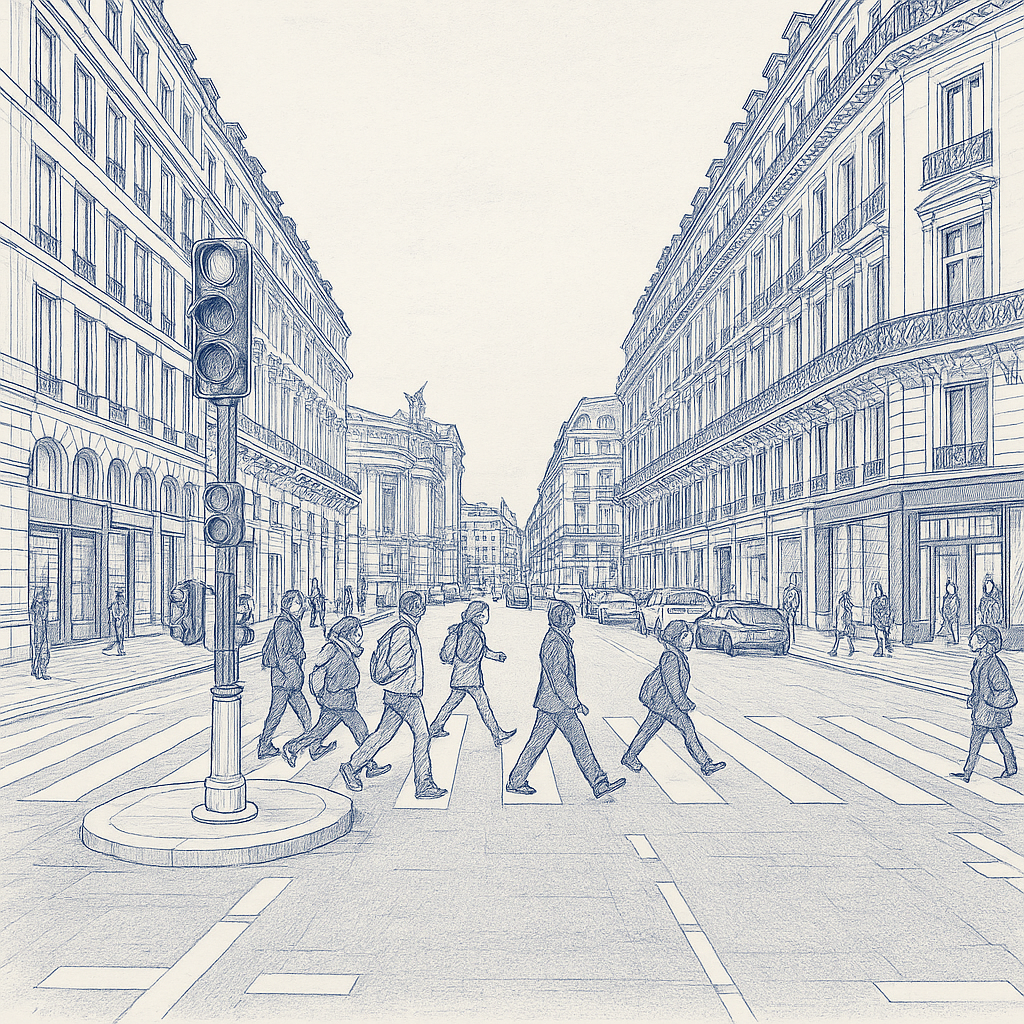
Rue Auber connects Place de l'Opéra to Boulevard Haussmann, in the 9th arrondissement, over a modest distance of about 250 meters. Despite its small size, this street occupies a strategic position at the heart of the Opéra district, between the Palais Garnier and the department stores, making it an essential thoroughfare for Parisians and international visitors alike. Its atmosphere blends Haussmannian elegance with urban bustle, driven by the presence of prestigious bank headquarters and luxury hotels that make this street a sought-after address for the business world and international travel. It is a transitional street, calm in its architecture yet vibrant in its daily activity.
History
The street owes its name to Daniel-François-Esprit Auber, a French composer born in 1782, famous for his opéras-comiques and director of the Paris Conservatory for many years, whose work "La Muette de Portici" had a particular impact in European history, its performance in Brussels in 1830 having helped trigger the Belgian revolution. This naming perfectly illustrates the cultural vocation of the neighborhood, located steps from the Opéra Garnier, completed in 1875 according to plans by Charles Garnier. The street was laid out as part of the great Haussmannian works of the 1860s-1870s, intended to create a direct and prestigious link between the new Gare Saint-Lazare and the Opéra district, then undergoing full urban expansion. From the late 19th century, Rue Auber welcomed several prestigious banking establishments, benefiting from its immediate proximity to the financial district of Chaussée d'Antin and Boulevard Haussmann. The Hôtel Scribe, opened in 1863 right at the corner of the street, quickly became a favored place of stay for wealthy international clientele, and notably served as the headquarters of the Allied Camera Committee in 1944, playing a historic role during the Liberation of Paris by hosting Allied war correspondents. Throughout the 20th century, the street retained its dual vocation as a business street and a tourist street, benefiting from the immediate proximity of the Opéra Garnier and the department stores of Boulevard Haussmann.
Architecture
The architecture of Rue Auber is typically Haussmannian, with cut-stone façades punctuated by continuous balconies on the second and fifth floors, and zinc mansard roofs characteristic of the Second Empire. The buildings, mostly constructed between 1860 and 1880, feature a uniform height of about six stories, with sober yet careful ornamentation: molded cornices, wrought-iron railings, massive carriage doors. The Hôtel Scribe, with its elegant façade and richly decorated entrance hall, is one of the architectural gems of the street, embodying Parisian hotel luxury of the second half of the 19th century.
Neighborhood Life
Neighborhood life around Rue Auber is punctuated by intense professional and tourist activity, due to the immediate proximity of the Opéra Garnier, the department stores of Boulevard Haussmann, and Gare Saint-Lazare. The cafés and brasseries lining the street welcome a clientele mixing bank executives, international tourists, and opera lovers attending performances at the Palais Garnier. The neighborhood benefits from exceptional public transport access, with the Opéra metro station and the immediate proximity of Gare Saint-Lazare, one of the busiest stations in the capital.
Real Estate Market
The real estate market on Rue Auber is characterized by limited supply, consisting mainly of Haussmannian apartments on the upper floors of buildings, as well as commercial and office spaces with high rental value on the ground floor. Buyers are predominantly institutional investors for commercial spaces, and affluent individuals, often international, for residential apartments seeking a prestigious address in immediate proximity to the Opéra and business districts. Prices per square meter range between €10,500 and €12,500/m² for a standard property, between €13,500 and €15,500/m² for a fully renovated high-end apartment, and can exceed €17,500/m² for an exceptional property with a view of the Opéra Garnier. Marketing times remain short, generally between two and four months.
Conclusion
Rue Auber remains a strategic address where cultural tradition, financial prestige, and Haussmannian elegance combine. It appeals to an international clientele seeking a central address, combining proximity to cultural institutions and exceptional transport accessibility.
Thomas Herremans