
Rue Boissière
Introduction
In the 16th arrondissement, Rue Boissière connects Avenue Kléber to Rue de Longchamp, crossing one of the most residential and upscale sectors of the Parisian right bank, a few minutes' walk from Trocadéro and the Eiffel Tower. This calm and elegant street, lined with bourgeois buildings from the early twentieth century, wonderfully embodies the spirit of the 16th arrondissement, between residential discretion, embassies, and international institutions. Less known to the general public than Avenue Victor-Hugo or Rue de Passy, Rue Boissière appeals to a clientele seeking tranquility and status, far from the tourist bustle of the nearby Trocadéro.
History
Rue Boissière takes its name from an old place name, La Boissière, which in the Middle Ages designated land planted with boxwood, a plant species then abundant on the hillsides of Chaillot before the area's urbanization. The village of Chaillot, then the commune of Passy, long occupied this rural territory before its annexation to Paris in 1860, as part of the great administrative reform initiated by Baron Haussmann under the Second Empire. Rue Boissière was then progressively urbanized, following the development plan of the new 16th arrondissement, designed to accommodate the wealthy bourgeoisie seeking an airy and prestigious living environment, far from the density of the historic center. From the late nineteenth century and early twentieth century, the street saw the construction of numerous bourgeois buildings intended for an affluent clientele, completing the residential fabric of the Chaillot district. The proximity of the Trocadéro Palace, then the Palais de Chaillot rebuilt in 1937 for the World's Fair, reinforced the area's appeal. Several embassies and international institutions settled over the course of the twentieth century in the buildings of the street and its surroundings, benefiting from the tranquility and prestige of the address. The neighborhood, remaining fundamentally residential, has managed to preserve its bourgeois and calm character despite the constant real estate pressure that has characterized the 16th arrondissement for several decades.
Architecture
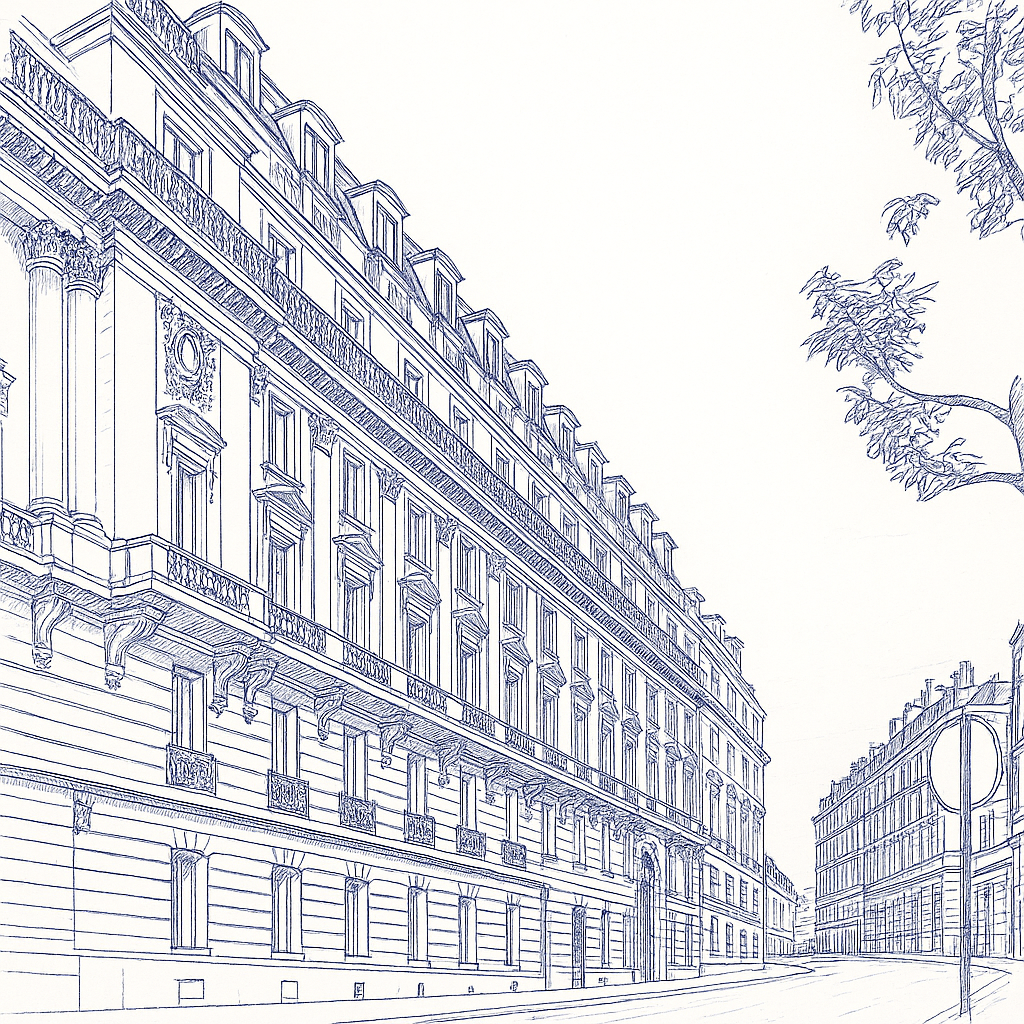
The architecture of Rue Boissière is representative of the Parisian bourgeois style of the late nineteenth and early twentieth centuries. The buildings, built mostly between 1880 and 1930, feature sculpted cut-stone façades, adorned with wrought-iron running balconies, mascarons, and decorative friezes characteristic of Art Nouveau and then emerging Art Deco. The entrance halls, often richly decorated with marble, stained glass, and artistic ironwork, testify to the care given to these constructions intended for a demanding clientele. The more recent buildings, built between the two world wars, adopt cleaner lines, heralding the Art Deco style that characterizes many constructions in the 16th arrondissement. The whole gives the street remarkable architectural homogeneity, reinforced by the careful alignment of the façades and the generous width of the roadway.
Neighborhood life
Neighborhood life on Rue Boissière is characterized by a residential calm conducive to family life. In the morning, a few quality bakeries and local shops welcome residents, while employees of the embassies and international institutions located in the area head to their offices. In the afternoon, the street regains a rather provincial tranquility, punctuated by the discreet comings and goings of residents. In the evening, a few refined and discreet restaurants welcome a clientele of regulars. The immediate proximity of Trocadéro, its gardens, and its emblematic view of the Eiffel Tower is a major asset for residents, as is easy access to transport with the Boissière metro station a few meters away and Trocadéro in immediate proximity. The neighborhood's population, mainly composed of affluent families, diplomats, and wealthy retirees, gives the street an elegant and peaceful atmosphere, worlds away from the tourist effervescence of the central districts.
Real estate market
The real estate market on Rue Boissière caters to an affluent and international clientele, composed of families seeking a high-standing residential living environment, diplomats, and senior executives of international companies. Available properties are mainly three- to five-room family apartments in early twentieth-century bourgeois buildings, with original parquet, moldings, and fireplaces, as well as a few Art Deco buildings offering generous volumes and remarkable brightness. Prices per square meter are as follows: between 11,500 and 13,000 euros for a standard property to be renovated, between 14,000 and 16,000 euros for a high-end renovated apartment, and above 17,500 euros, reaching up to 20,000 euros, for an exceptional property such as a high floor with a view of the Eiffel Tower or a through corner apartment. The market remains stable and sought after, with average marketing times of six to ten weeks, demand being driven by a patient and demanding clientele, seeking above all quality of life and discretion.
Conclusion
Rue Boissière embodies the discreet, residential elegance of the 16th arrondissement, a stone's throw from Trocadéro and the Eiffel Tower. A prime address for affluent families and international clientele seeking calm, status, and proximity to the most iconic symbols of Paris.
Thomas Herremans