
Rue Bonaparte
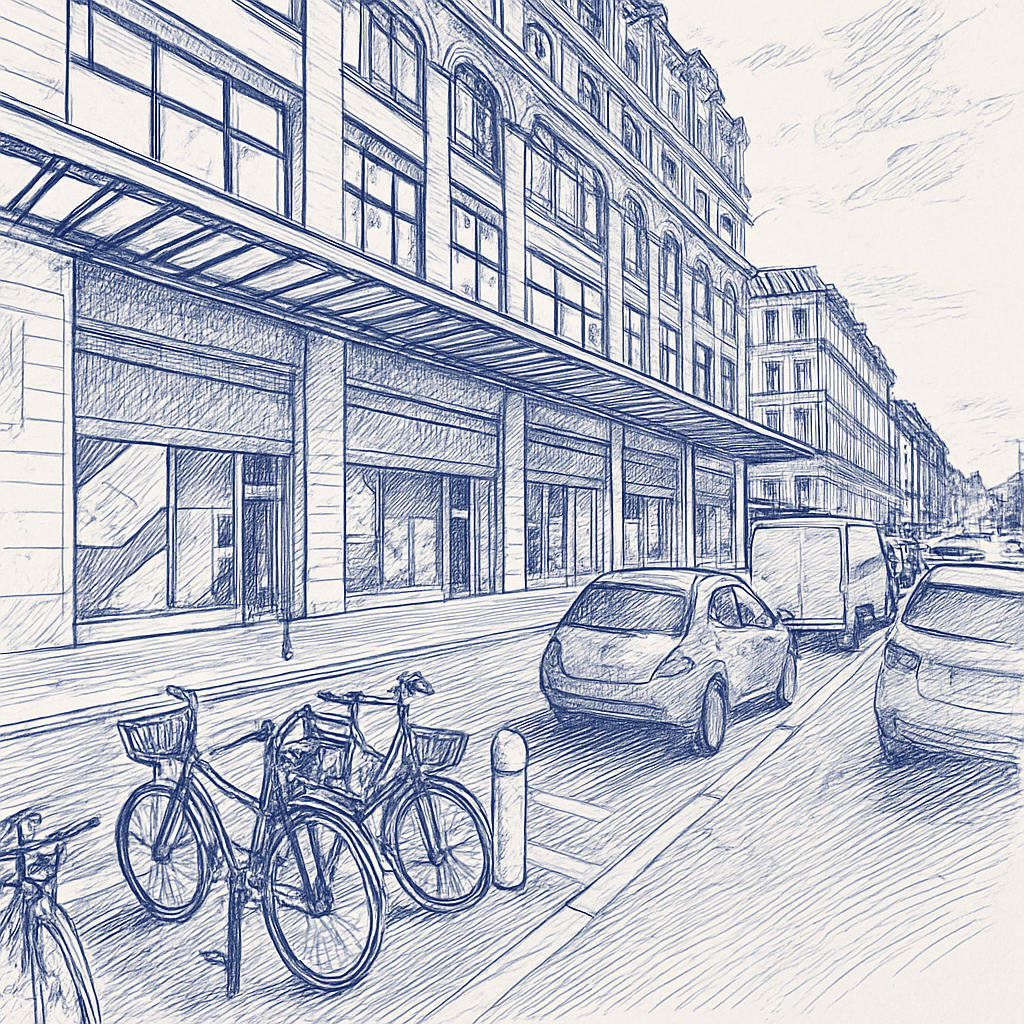
Rue Bonaparte, an emblematic artery of the 6th arrondissement, connects the Saint-Germain-des-Prés crossroads to the Seine, crossing one of Paris's most prestigious and intellectually charged neighborhoods. It embodies on its own the spirit of Saint-Germain-des-Prés, combining art galleries, antiquarian bookshops, major cultural institutions and residential buildings of rare standing.
The street owes its name to Napoleon Bonaparte, who had it laid out and named in 1852 under the Second Empire, replacing several older thoroughfares, including Rue des Petits-Augustins, which had existed since the 17th century. The latter took its name from the Convent of the Petits-Augustins, whose buildings today house the École nationale supérieure des Beaux-Arts, one of the street's most prestigious institutions. Founded on the very site of this convent, the school has trained generations of French artists and continues to attract students from around the world, contributing to the neighborhood's artistic identity. The Church of Saint-Germain-des-Prés, the oldest church in Paris whose origins date back to the 6th century, marks the northern end of the street and remains one of the most visited monuments in the 6th arrondissement.
The architecture of Rue Bonaparte shows remarkable homogeneity, dominated by 19th-century buildings with classical façades in cut stone, wrought-iron balconies and zinc mansard roofs. A few older buildings, predating the street's Haussmannian layout, still remain, testifying to the complex history of this thoroughfare born from the merger of several medieval streets. The École des Beaux-Arts building, with its courtyard of honor and neo-Renaissance architecture, constitutes the street's most remarkable ensemble in heritage terms.
Neighborhood life around Rue Bonaparte remains deeply marked by the intellectual and artistic legacy of Saint-Germain-des-Prés. Antiquarian bookshops, contemporary art galleries and elegant fashion boutiques follow one another, while the neighborhood's historic cafés, such as Les Deux Magots and Café de Flore located in immediate proximity, continue to attract a clientele mixing intellectuals, artists and tourists seeking an authentic Parisian experience. Transport links are excellent, with the Saint-Germain-des-Prés station directly on the eponymous square, offering quick access to the entire Left Bank. The Luxembourg Gardens, a few minutes' walk away, complete the neighborhood's residential appeal with its vast green spaces.
The real estate market on Rue Bonaparte attracts a particularly diverse clientele, ranging from large Parisian families historically settled in the neighborhood to international buyers, particularly American, drawn by the cultural and intellectual prestige of Saint-Germain-des-Prés. Standard properties, in older buildings requiring renovation, trade around 13,000 to 15,000 euros per square meter. Renovated apartments with a high level of finish, preserving period elements such as moldings and marble fireplaces, reach 16,000 to 19,000 euros per square meter. Exceptional properties, such as apartments with views of the Saint-Germain-des-Prés church or through noble floors, can exceed 22,000 euros per square meter.
The market trend confirms the constant vitality of this address, driven by the scarcity of available properties and the timeless appeal of the neighborhood among a demanding clientele. Selling times remain generally short for well-located properties, particularly those offering unobstructed views or through exposure, rare in this dense part of the Left Bank.
Rue Bonaparte thus remains one of the most sought-after addresses in the 6th arrondissement, where the artistic and intellectual legacy of Saint-Germain-des-Prés continues to attract a clientele in search of authenticity and cultural as much as real estate prestige.
Thomas Herremans