
Rue Cler
Introduction
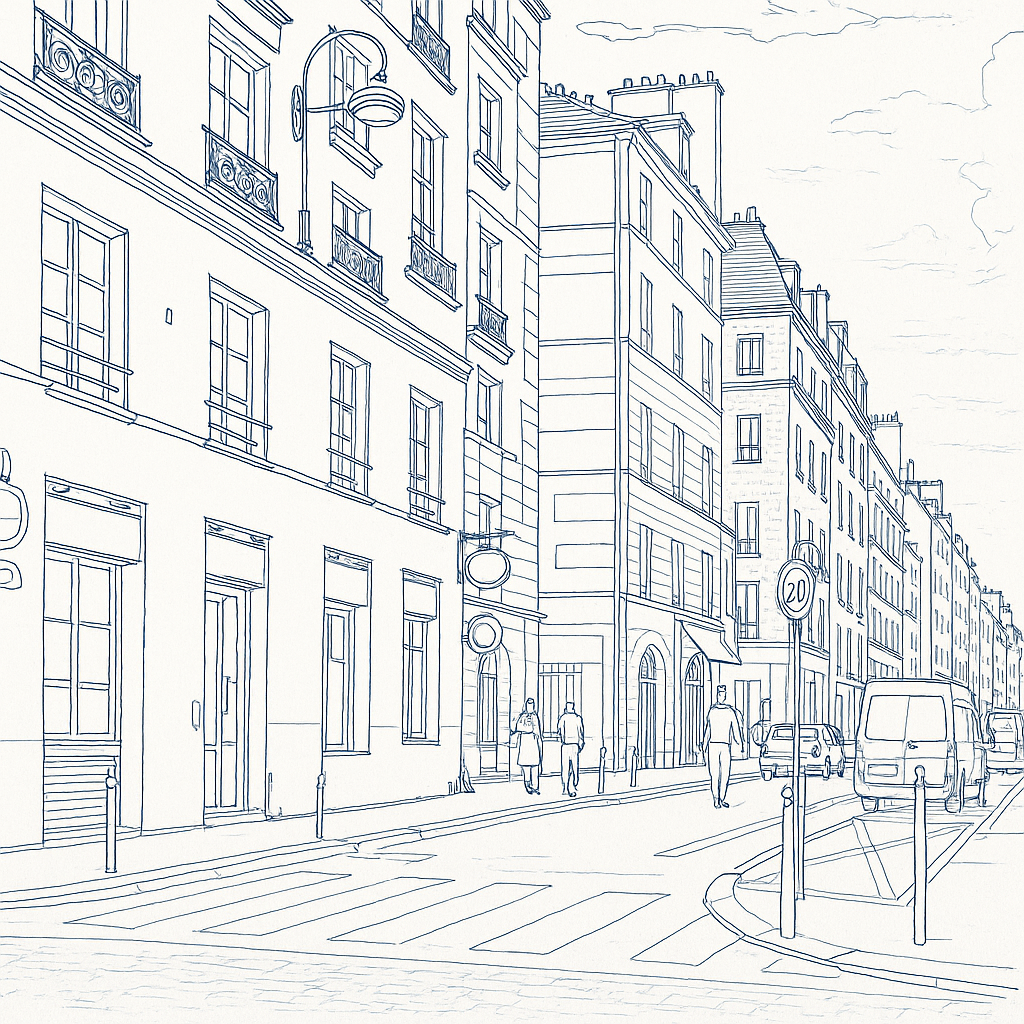
Rue Cler, a small pedestrian street in the 7th arrondissement located between Avenue de la Motte-Picquet and Rue de Grenelle, embodies on its own the image of a preserved Parisian village at the heart of an upscale residential district. Far from the tourist bustle of the nearby Champ-de-Mars, it retains an authentic neighborhood market atmosphere, with colorful stalls, food shops, and regulars greeting each other from one terrace to the next. Short and without major architectural pretension, Rue Cler owes its soul to its daily food market, one of the most renowned in the capital, drawing both wealthy residents of the École Militaire district and tourists seeking a more intimate Paris, far from the grand boulevards. It is a street loved for its atmosphere more than its built heritage — an exception in an otherwise quite austere arrondissement.
History
The street takes its name from Jean-Baptiste Cler, a French general born in 1798 who died heroically at the Battle of Magenta in 1859 during the Italian campaign. This name, assigned in 1867 by imperial decree, is part of a series of military tributes that characterize the toponymy of the neighboring École Militaire district.
Before this period, the site was part of the agricultural and market-garden land bordering the Plaine de Grenelle, a sector that remained sparsely urbanized for a long time due to its proximity to the military grounds of the École Militaire, founded by Louis XV in 1750. The gradual urbanization of the neighborhood in the 19th century, spurred by Haussmann's major works and the city's westward expansion, slowly transformed this land into a bourgeois residential district, where Rue Cler quickly became a local shopping street serving the many buildings constructed all around.
The Rue Cler market, whose origins date back to the late 19th century, gradually forged a reputation for excellence, sustained by the demanding local clientele. Shops here have been passed down through generations, with some bakers or cheesemongers occupying the same spots for decades. The street has also gained international fame through its recurring presence in tourist guides and culinary features devoted to the Parisian art of living, becoming an almost obligatory stop for visitors wishing to observe an authentic Paris off the beaten path.
Architecture
The architecture of Rue Cler, while not exceptional, presents a pleasing homogeneity of bourgeois buildings constructed mostly between 1880 and 1930. Façades of cut stone or rendered rubblestone, punctuated by running balconies and elegant ironwork, reflect the careful urbanization typical of upscale late-19th-century neighborhoods. Ground-floor shops, with their traditional painted storefronts and colorful awnings protecting the stalls, give the street its distinctive visual identity, almost provincial at the heart of Paris. A few Art Deco buildings from the 1930s, with cleaner lines and geometric ironwork, punctuate this late Haussmann-era homogeneity without ever disrupting the street's overall harmony.
Neighborhood Life
Rue Cler comes alive from 8 a.m., when merchants set up their stalls of fruit, vegetables, cheese and seafood, in a convivial atmosphere where regulars greet the same familiar faces each day. Morning and early afternoon are the busiest times, with a peak on Saturdays. In the afternoon, the street gradually calms down, giving way to café terraces where lunch stretches on. In the evening, a few traditional bistros and restaurants attract a loyal neighborhood clientele, far from tourist crowds. The area is served by the École Militaire and La Motte-Picquet-Grenelle metro stations, as well as the immediate proximity of the Champ-de-Mars, a true green lung where local families love to gather on weekends, just minutes on foot from the Eiffel Tower itself.
Real Estate Market
The real estate market on Rue Cler attracts a very specific clientele: affluent Parisian families, senior executives, Anglo-Saxon expatriates working for nearby international organizations, and wealthy retirees seeking a peaceful yet lively living environment. Available properties mainly consist of two-to-five-room bourgeois apartments in quality buildings with elevators, often offering generous ceiling heights and period moldings. Immediate proximity to the market is a decisive selling point for many buyers, who value this neighborhood quality of life as much as square footage or floor level. Prices per square meter break down as follows: for a standard property requiring renovation, expect between €11,000 and €12,500; for a renovated apartment with quality finishes, the range sits between €13,500 and €15,000; and exceptional properties, with unobstructed views or remarkable volumes, particularly in corner buildings overlooking the market, can reach €16,000 to €17,500 per square meter. The market remains dynamic, with marketing times generally between one and three months for well-positioned properties.
Conclusion
A small street with great charm, Rue Cler offers one of the most endearing faces of upscale residential Paris — that of a preserved urban village where local commerce and quality of life take precedence over architectural prestige. It appeals primarily to families and professionals seeking a convivial living environment, steps from the Eiffel Tower and the Champ-de-Mars, without the drawbacks of tourist overcrowding. For those seeking an authentic Parisian art of living in a secure and lively environment, Rue Cler remains a prime address, whose value continues to be confirmed year after year.
Thomas Herremans