
Rue Copernic — Where Discretion Meets Prestige
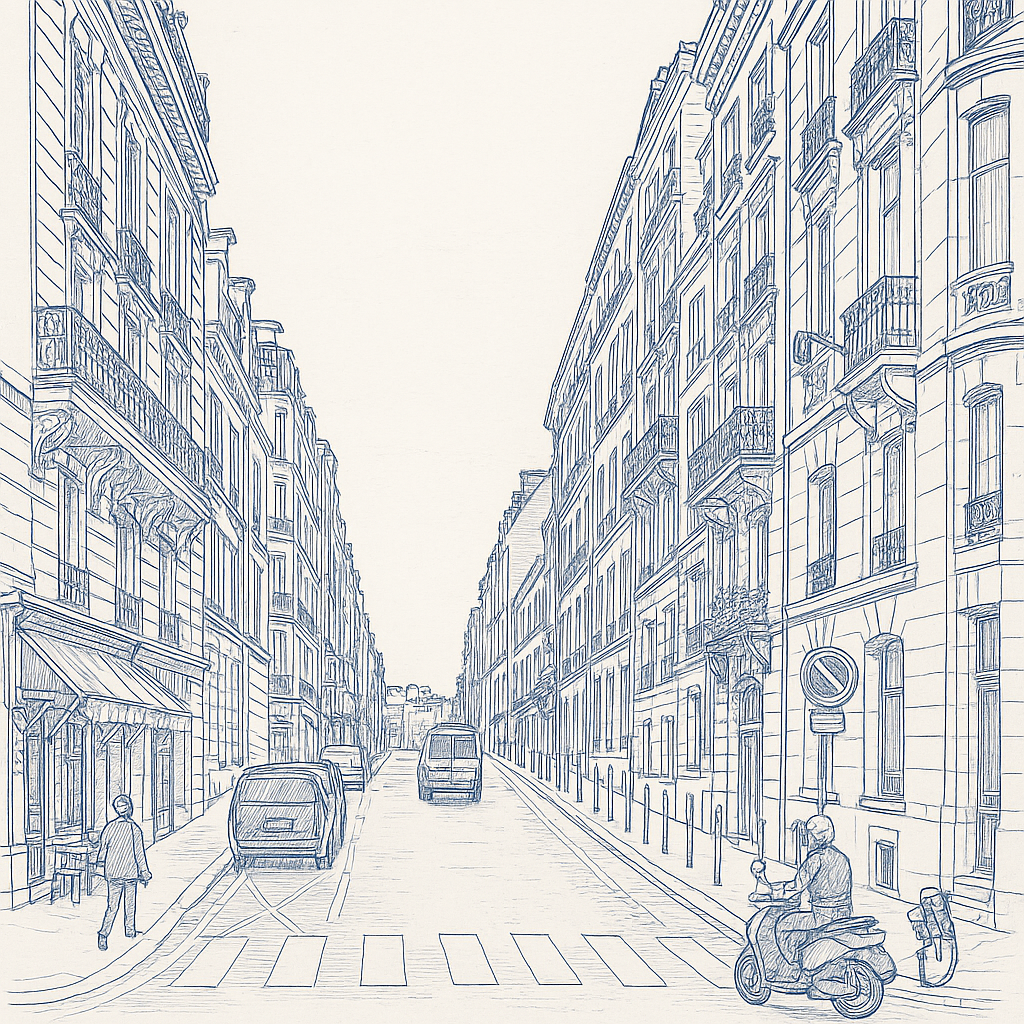
Between Avenue Victor-Hugo and Place de Mexico, in the 16th arrondissement, Rue Copernic unfolds its discreet elegance within one of the most sought-after neighborhoods in the capital. Close to the Trocadéro and its gardens offering an unobstructed view of the Eiffel Tower, it benefits from a strategic location, both residential and central, making it a prime address for a discerning clientele. Rue Copernic is characterized by its calm and architectural sobriety, far from the commercial bustle of the nearby major avenues, while remaining within walking distance of the neighborhood's major cultural institutions, such as the Palais de Chaillot and the Cité de l'architecture et du patrimoine. It embodies the bourgeois Paris of the 16th arrondissement, where discretion rhymes with excellence, and where each building seems to bear the mark of a bygone era, carefully preserved.
The history of Rue Copernic is part of the grand urbanization movement of the 16th arrondissement in the 19th century, when the former villages of Passy and Auteuil were annexed to Paris in 1860 and transformed into upscale residential neighborhoods intended for the upper bourgeoisie and aristocracy. The street was cut through in the following decades and bears the name of Nicolaus Copernicus, the Renaissance Polish astronomer whose revolutionary work on heliocentrism upended the conception of the universe and laid the foundations of modern astronomy. This choice fits within a toponymic tradition specific to the 16th arrondissement, which readily honors great European scientific and intellectual figures, as seen in the neighboring streets dedicated to Vauquelin or Boissière. Rue Copernic experienced sustained residential development during the Belle Époque, a period during which numerous bourgeois buildings and a few private mansions were erected to accommodate a wealthy clientele seeking tranquility near the Bois de Boulogne and the emerging business districts. In the 20th century, the street witnessed some of the tragic moments of Parisian history: it was notably the site, in 1980, of a tragic terrorist attack targeting the synagogue located there, an event that left a lasting mark on collective memory and recalled the multicultural and tolerant vocation of this residential neighborhood. Even today, the street retains a profoundly institutional and residential character, notably housing several embassies and diplomatic missions that reinforce its hushed and secure atmosphere.
Architecturally, Rue Copernic presents a fine homogeneous ensemble of buildings constructed mainly between 1880 and 1930, harmoniously blending late Haussmannian style with Art Nouveau and then Art Deco influences. The cut-stone façades, adorned with wrought-iron balconies featuring floral motifs characteristic of the turn of the century, attest to the architectural refinement of this era. Some buildings display particularly fine sculpted decorative elements: mascarons, vegetal friezes, ornate ironwork on entrance doors. The entrance halls, often sumptuous, retain original elements such as stained glass, Art Nouveau light fixtures, or mosaic floors. A few private mansions also remain, with their discreet interior gardens, bearing witness to the street's original upscale residential vocation. The apartments within these buildings generally offer beautiful ceiling heights, refined moldings, and period parquet floors, elements appreciated by a clientele seeking authenticity and character.
Neighborhood life around Rue Copernic is distinguished by its residential calm and polished atmosphere. One mainly encounters families, diplomats, and affluent professionals, in a secure and peaceful environment. Local shops, though few directly on the street, are abundant on the nearby Avenue Victor-Hugo, the neighborhood's true commercial artery with its luxury boutiques, renowned bakeries, and gourmet restaurants. The Trocadéro, a few minutes' walk away, offers an exceptional setting for strolls, with its gardens, fountains, and iconic view of the Eiffel Tower. Transport access is excellent, with the Victor Hugo and Trocadéro metro stations serving lines 2 and 6, 9 respectively, complemented by several bus lines. The Bois de Boulogne, accessible within minutes, is an additional asset for families seeking green spaces.
The real estate market on Rue Copernic attracts a particularly international and wealthy clientele, composed of diplomats, senior executives, and families seeking a prestigious and secure living environment. Available properties are mainly large family apartments of 90 to 250 sqm, offering high-end fittings: period parquet floors, moldings, marble fireplaces, and sometimes unobstructed views over interior gardens or neighborhood rooftops. Prices per square meter are as follows: €11,500 to €12,800/sqm for a standard property requiring renovation; €14,000 to €15,500/sqm for a high-end renovated apartment with careful fittings; and up to €17,000 to €19,000/sqm for an exceptional property, a high floor with unobstructed views or a dual-aspect apartment in a converted private mansion. Demand remains very strong, driven by the constant attractiveness of the 16th arrondissement for international clientele and the structural scarcity of supply in this sector. Marketing periods are generally short, one to three months for quality properties correctly priced.
Ultimately, Rue Copernic elegantly and discreetly embodies the spirit of the bourgeois 16th arrondissement, between residential calm, refined architecture, and immediate proximity to the capital's major cultural institutions. It primarily appeals to an international and discerning clientele, seeking prestige, security, and an exceptional living environment at the heart of chic Paris.
Thomas Herremans