
Rue Coquillière: The Shell Merchants, the Culinary Capital of Professional Kitchens and the Street That Feeds the Chefs
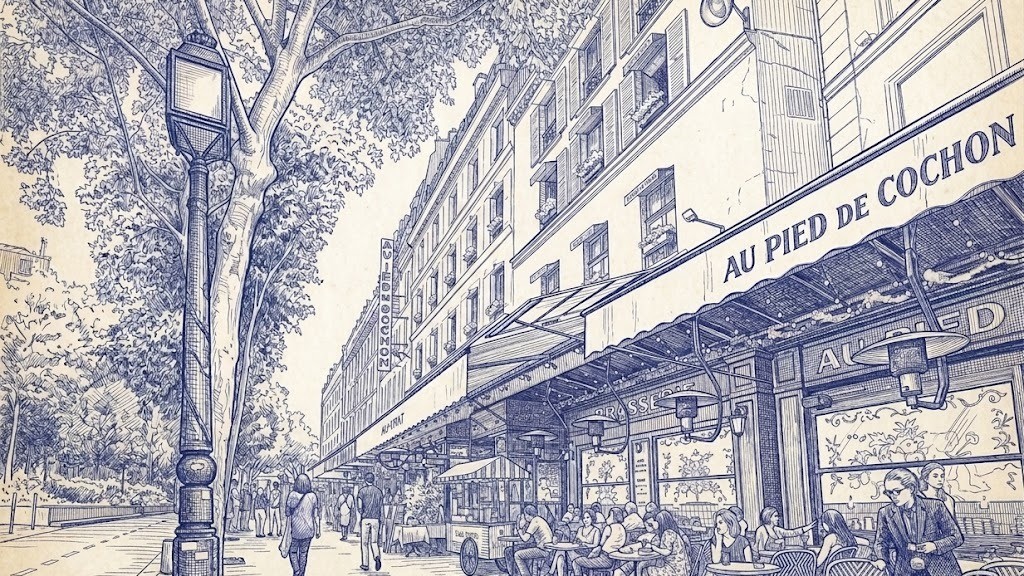
Rue Coquillière is one of the most practically celebrated streets in the area straddling the 1st and 2nd arrondissements — a street whose name evokes the shell merchants of the medieval market district and whose contemporary identity as the principal address of the Paris restaurant supply and professional kitchen equipment trade has made it one of the most visited professional destinations in central Paris for every chef, caterer, baker and kitchen professional in France.
The name "Coquillière" derives from the "coquilliers" or shell merchants who once traded in this area adjacent to the old Les Halles market — dealers in the shells used as decoration, as currency equivalents in some trade contexts, and as natural history specimens by the educated classes of early modern Paris. The transformation of the street from a decorative materials trade to the epicentre of professional culinary equipment reflects the broader evolution of the Les Halles neighbourhood from raw materials market to food-supply and food-service infrastructure.
Running from Rue du Louvre in the west to Rue Montmartre in the east, skirting the boundary between the 1st and 2nd arrondissements along its length, Rue Coquillière is lined with the shops of E. Dehillerin — the legendary culinary equipment store founded in 1820, whose copper pans, cast-iron casseroles, mandolines and specialist kitchen tools have outfitted the kitchens of professionals and serious amateurs alike for over two centuries — and a dense array of complementary culinary supply businesses.
1. The Shell Merchants and the Name
The "coquilliers" — shell merchants — who gave Rue Coquillière its name were part of the extraordinarily diverse commercial ecosystem that surrounded the Les Halles market in the medieval and early modern periods. Shells of all kinds — marine bivalves, land snails, imported tropical shells — were traded in this market zone for a variety of purposes: as decorative materials for inlay work and ornamental objects, as packaging and measuring vessels for foodstuffs, as natural history specimens for collectors, and as raw materials for the luxury arts.
The presence of shell merchants in this neighbourhood reflects the proximity of the Seine river trade routes along which marine products were transported from the French coasts to the Paris markets, and the general principle of commercial clustering that brought complementary trades together in adjacent streets around the central market.
2. E. Dehillerin and the Culinary Equipment Tradition
The most celebrated commercial establishment on Rue Coquillière is E. Dehillerin, founded in 1820 and still occupying its original premises at number 18-20 in a shop whose floor-to-ceiling walls of copper pans, professional knives, moulds, terrine dishes, saucepans and specialist kitchen equipment create one of the most extraordinary retail interiors in Paris.
Dehillerin has outfitted the kitchens of some of the most important chefs and culinary institutions in French history. Julia Child purchased her first serious French kitchen equipment here during the years she spent in Paris learning to cook. Paul Bocuse, Joël Robuchon and generations of three-starred French chefs have sourced equipment from the store's unparalleled selection of professional-grade materials. The shop is simultaneously a working retail establishment and a culinary museum — a place where the material culture of French cuisine is preserved in the tools and equipment of a professional tradition that stretches back two centuries.
3. The Professional Kitchen District
The concentration of culinary equipment suppliers, restaurant supply businesses and specialist food trade professionals that makes Rue Coquillière the principal address of the professional kitchen trade in Paris is one of the most remarkable examples of commercial clustering in the city. Within a few minutes' walk of the street, chefs and caterers can source everything required to outfit and supply a professional kitchen: pots, pans, knives, pastry moulds, aprons, uniforms, restaurant linen, specialist ingredients, serving equipment and the full range of professional culinary infrastructure.
This concentration of supply within a compact area of the city reflects the historical legacy of the Les Halles district as the commercial and logistical hub of the Paris food economy, and the persistence of the professional culinary trade in an area that has otherwise been substantially transformed by tourism, cultural institutions and residential development.
4. Urban Context
Rue Coquillière runs from Rue du Louvre in the west to Rue Montmartre in the east, along the boundary between the 1st and 2nd arrondissements in the immediate vicinity of the former Les Halles site. The street is served by the Les Halles and Étienne Marcel metro stations.
5. Architectural Character
The architecture of Rue Coquillière reflects the working commercial character of the Les Halles district — varied buildings of four to six storeys with facades that have been substantially adapted to the needs of the commercial kitchen supply trade. The street has a practical, workmanlike character that is entirely consistent with its identity as a professional destination rather than a residential or tourist showcase, punctuated by the extraordinary Dehillerin shopfront with its historic painted facade and its window displays of copper and steel.
6. The Residential Market
The residential market on Rue Coquillière serves a specific type of buyer — one who values proximity to the professional culinary district and to the Centre Pompidou and Marais cultural infrastructure equally:
- professional chefs and culinary professionals who want to live within walking distance of their primary supply source
- food-oriented buyers for whom proximity to both Rue Coquillière's professional suppliers and Rue Montorgueil's market is the ultimate culinary living situation
- creative professionals drawn by the proximity to the Centre Pompidou and the cultural infrastructure of the Beaubourg area
- investors in the sustained rental demand from the professional and creative population of the Les Halles district
7. Property Prices
Property values on Rue Coquillière reflect the lower Sentier-Les Halles boundary location:
- €13,500 to €17,000 per m² for standard apartments
- €17,000 to €21,500 per m² for renovated properties with quality finishes
- €21,500 per m² and above for exceptional properties
Rue Coquillière is a street that feeds the feeders — a professional destination whose commercial identity is dedicated to equipping the kitchens, the restaurants and the culinary establishments that in turn feed the city. From the medieval shell merchants who gave it its name to the copper pans of Dehillerin that have outfitted French professional kitchens for two centuries, the street carries a direct and unbroken connection to the material culture of food that makes this corner of central Paris one of the most genuinely useful and most specifically Parisian addresses in the entire arrondissement.
Thomas Herremans