
Rue d'Aboukir: Napoleonic Victory, the Textile Trade and the Living Backbone of the Sentier
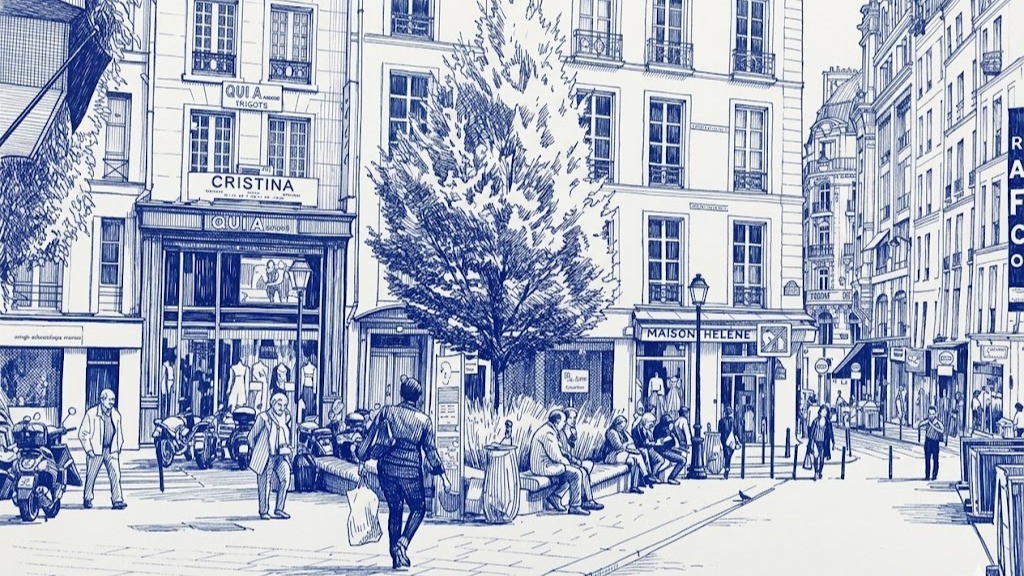
Rue d'Aboukir is one of the most commercially vital streets in the 2nd arrondissement of Paris, running north to south through the heart of the Sentier district — the historic centre of the French textile and garment trade. The street's name commemorates the Battle of Aboukir, fought on 25 July 1799 on the Egyptian coast, in which Napoleon Bonaparte's forces achieved a decisive victory over the Ottoman army, a success that contributed significantly to Napoleon's political consolidation in the months leading up to the coup of 18 Brumaire and the establishment of the Consulate.
The street thus carries in its name both a military memory and a political turning point in French history — a reminder that the Napoleonic period left its mark on the street nomenclature of Paris as extensively as it did on French institutions, law and culture. Today, Rue d'Aboukir is above all a street of commercial energy, where the wholesale garment trade, textile showrooms and fashion industry suppliers coexist with a residential market that serves the diverse working population of the Sentier.
1. The Battle of Aboukir
The Battle of Aboukir of July 1799 was one of the most decisive engagements of Napoleon Bonaparte's Egyptian campaign. Having suffered the strategic disaster of the Battle of the Nile the previous year — in which the French fleet was destroyed by the British Admiral Nelson at Aboukir Bay — Napoleon's land forces now faced an Ottoman army that had landed on the same Egyptian coast with the aim of reconquering Egypt.
In a single day of fighting, Napoleon's army routed the Ottoman forces, capturing the majority of the invading army and securing French control of Egypt for the time being. The victory was strategically important, but its political significance in France was even greater: news of the victory reached Paris shortly before Napoleon's return to France, contributing to the atmosphere of military prestige and national confidence that enabled his seizure of power in November 1799.
The naming of Rue d'Aboukir, along with several other Parisian streets commemorating Napoleonic battles, reflects the deliberate policy of the Napoleonic administration and the subsequent Bourbon restoration to embed the memory of military glory in the urban fabric of the capital.
2. The Sentier: Capital of the French Garment Trade
Rue d'Aboukir runs through the core of the Sentier, the historic district that has served as the centre of the French wholesale textile and garment trade since at least the nineteenth century. The Sentier — loosely defined by the streets between the Grands Boulevards, Rue Étienne Marcel, Rue du Louvre and the Rue du Temple — has for over two centuries concentrated the showrooms, workshops, cutting rooms and trading firms of the French fashion industry in an extraordinarily dense urban environment.
At its peak in the mid-twentieth century, the Sentier was one of the most intense commercial environments in Europe, with thousands of small firms occupying every available floor of every building in the district, creating a constant movement of goods, fabrics, samples and buyers that spilled onto the streets themselves.
Today, the Sentier has evolved significantly. The departure of many traditional textile firms — driven by the globalisation of fashion production and the rising cost of central Paris real estate — has been partially offset by the arrival of digital and technology companies, which have established a significant presence in the district and given rise to the nickname "Paris Silicon Sentier." The creative and technology economy now coexists with the surviving textile trade, creating a particularly dynamic and diverse commercial environment.
3. Commercial Character and Street Life
Rue d'Aboukir is one of the busiest streets in the Sentier, characterised by the constant activity of the garment and wholesale trade. Fabric merchants, button suppliers, haberdashers, trim dealers and garment sample rooms occupy the ground floors and lower levels of buildings along the street, creating a commercial landscape that is distinctive and immediately recognisable to anyone familiar with the wholesale fashion trade.
The street-level commercial intensity of Rue d'Aboukir is complemented by a dense restaurant and café culture that serves the working population of the district. The Sentier's traditional bistro culture, oriented towards rapid and generous service for a professional clientele, is well represented on and around Rue d'Aboukir.
4. Urban Context
Rue d'Aboukir runs from the Grands Boulevards in the north — where it meets Boulevard Bonne-Nouvelle — to Rue Étienne Marcel in the south, forming one of the principal north-south arteries of the Sentier. It intersects with Rue Réaumur, Rue du Sentier and Rue d'Alexandrie along the way, connecting the vertical commercial fabric of the district.
The street is served by the Bonne-Nouvelle and Sentier metro stations, giving it strong connectivity across the city.
5. Architectural Character
The architecture along Rue d'Aboukir is typical of the commercial districts of the 2nd arrondissement: Haussmann-era buildings of five to six storeys with limestone facades that have in many cases been adapted over time to accommodate the commercial uses of the textile trade. Large ground-floor openings, loading bays and commercial signage overlay the original architectural composition of many buildings, creating a visual tension between the Haussmann framework and the commercial reality of the district.
Upper floors contain residential accommodation that ranges from modest studios to larger apartments, with the quality of the residential stock varying significantly between buildings depending on the extent and date of renovation.
6. The Residential Market
The residential market on Rue d'Aboukir and in the surrounding Sentier serves a diverse population of residents and renters. The district's commercial intensity and its evolution towards a mixed textile-technology economy have attracted a younger and more diverse residential population over the past decade:
- young professionals and entrepreneurs in the technology and creative sectors who have been drawn to the Sentier by its commercial energy and relatively accessible rental prices
- long-term residents from the established immigrant communities who have historically lived and worked in the district
- investors seeking rental properties in a district with sustained demand and significant transformation potential
- buyers attracted by the historical character of the Sentier and its proximity to the major cultural institutions of central Paris
7. Property Prices
Property values on Rue d'Aboukir reflect the commercial character of the Sentier and its position within the broader 2nd arrondissement market:
- €12,000 to €15,000 per m² for unrenovated or modest apartments in older commercial buildings
- €15,000 to €19,000 per m² for renovated properties with good finishes and natural light
- €19,000 per m² and above for exceptional units in well-renovated buildings
Rue d'Aboukir carries within its name the memory of a Napoleonic victory that helped launch one of the most transformative political careers in European history. Today it is above all a street of the present — commercially vital, culturally diverse and in the midst of a significant economic transformation as the Sentier evolves from its textile trading origins towards the digital economy of the twenty-first century. For buyers and investors, it represents a dynamic address in one of the most actively changing districts of the 2nd arrondissement.
Thomas Herremans