
Rue Dalayrac: The Forgotten Composer, the Opéra-Comique's Favourite Son and the Most Musically Poignant Minor Street in the Arrondissement
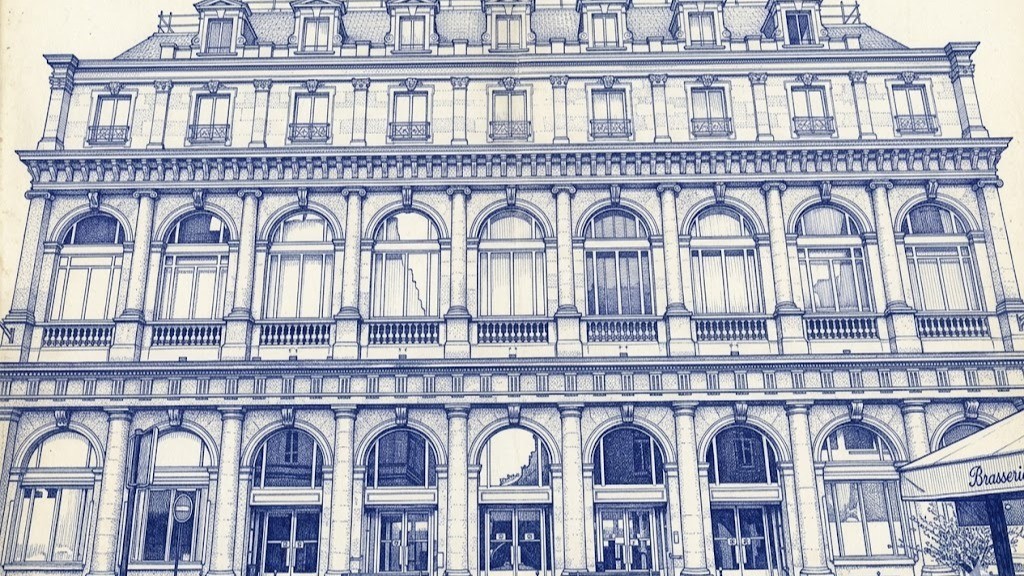
Rue Dalayrac is one of the most musically intimate and least-known streets in the 2nd arrondissement — a short north-south passage connecting the Rue du Quatre-Septembre in the south to the Rue Saint-Marc in the north, in the immediate vicinity of the Opéra-Comique on the Place Boieldieu. Named after Nicolas-Marie Dalayrac, one of the most prolific and celebrated composers for the opéra-comique stage in the late eighteenth and early nineteenth centuries, the street commemorates a musical figure who was in his lifetime one of the most performed composers in France but who has since fallen into an obscurity as complete as it is unjust.
Dalayrac's story — extraordinary success followed by almost total oblivion — is one of the more poignant in the history of French music. In the 1780s, 1790s and 1800s, his opéras-comiques were performed at the Opéra-Comique with a frequency and enthusiasm that rivalled the reception of Gluck and anticipated that of Auber; today his works have almost entirely disappeared from the repertoire. The street that bears his name, positioned immediately behind the Opéra-Comique where his greatest successes were performed, is a monument to both his achievement and his disappearance.
1. Nicolas-Marie Dalayrac: The Composer Who Was Everywhere and Then Nowhere
Nicolas-Marie Dalayrac was born in Muret in the Haute-Garonne in 1753 and moved to Paris in his early twenties, where he quickly established himself as a composer of remarkable theatrical instinct and melodic gift. His first opéra-comique, "Le Petit souper," was performed in 1781, and the success it generated launched a career that would see him compose over sixty operas, ballets and theatrical works before his death in 1809.
In the 1780s and 1790s, Dalayrac was arguably the most performed French composer of stage music. His works filled the Opéra-Comique season after season, and his gift for memorable melody, natural prosody and dramatically effective writing made him the preferred composer of audiences who valued accessibility and emotional directness over academic complexity.
His 1792 work "Nina, ou la Folle par amour" — a musical setting of the story of a young woman who loses her mind from grief after the apparent death of her lover, only to recover her sanity when he returns — was one of the most moving and most frequently performed opéras-comiques of its generation, a work that anticipated the Romantic sensibility in its exploration of psychological breakdown and recovery.
The reasons for Dalayrac's subsequent disappearance from the repertoire are partly musical — his style is firmly of its era, without the structural ambition that has kept the works of Cherubini or Méhul in the academic repertoire — and partly historical: the catastrophic disruptions of the Revolution and the Empire broke the continuity of French musical culture in ways that disproportionately affected the works of composers whose reputations rested primarily on theatrical performance rather than publication.
2. The Opéra-Comique: Where Dalayrac Triumphed
The Opéra-Comique, immediately adjacent to Rue Dalayrac, was the theatre where virtually all of Dalayrac's greatest successes were performed. The theatre's history during his lifetime encompassed the turbulent decades of the Revolution and the early Empire, when the theatre was variously closed, reorganised and renamed as the political climate shifted, but managed to maintain a continuity of performance tradition that sustained Dalayrac's career through the most politically disruptive period in French history.
The positioning of a street named after Dalayrac immediately behind the theatre where he had his greatest successes creates one of the most poignant theatrical commemorations in the arrondissement — a name that looks towards a stage from which it has almost entirely disappeared, preserving in the street map what the repertoire has let go.
3. The Musical Heritage of the Neighbourhood
Rue Dalayrac sits within a neighbourhood of extraordinary musical heritage — immediately adjacent to the Opéra-Comique, connected to Rue Favart and Rue de Marivaux, and within easy walking distance of the Opéra Garnier. The concentration of musical institutions in this corner of the arrondissement gives Rue Dalayrac a cultural density that even its modest physical dimensions cannot diminish.
4. Urban Context
Rue Dalayrac runs from the Rue du Quatre-Septembre in the south to the Rue Saint-Marc in the north, forming a short north-south connection immediately behind the Opéra-Comique. The street is served by the Quatre-Septembre and Richelieu-Drouot metro stations.
5. Architectural Character
The architecture of Rue Dalayrac is of the consistent Haussmann quality appropriate to the Opéra-financial quarter — well-maintained buildings of five to six storeys with limestone facades that define a quiet and refined streetscape immediately behind the grand public facade of the Opéra-Comique.
6. The Residential Market
The residential market on Rue Dalayrac is shaped by its position in the musical heart of the arrondissement and the poignant cultural associations of a composer's name that represents both exceptional achievement and exceptional obscurity:
- music historians and opera enthusiasts with a specific interest in the French opéra-comique tradition and Dalayrac's place within it
- Opéra-Comique professionals for whom immediate proximity to the theatre is a practical residential priority
- buyers who appreciate the discovery of an overlooked name in the street map of Paris
- investors in the Opéra-financial quarter premium zone
7. Property Prices
Property values on Rue Dalayrac reflect its position in the Opéra quarter:
- €17,500 to €22,000 per m² for standard well-maintained apartments
- €22,000 to €27,000 per m² for renovated properties with quality finishes
- €27,000 per m² and above for exceptional properties
Rue Dalayrac is a monument to musical achievement and musical forgetting in equal measure — a street named after a composer who was in his lifetime one of the most performed musicians in France and who today is known only to specialists. The Opéra-Comique that stands at the end of his street continues to perform the genre he mastered without performing his works. And the street that bears his name preserves, in the cartography of the 2nd arrondissement, a memory that the repertoire has declined to maintain. For buyers who understand that obscurity is not the same as insignificance, it is one of the most rewarding addresses to discover in the musical streets of the Opéra quarter.
Thomas Herremans