
Rue de Bretagne: The Province, the Oldest Market in Paris and the Social Heart of the Haut Marais
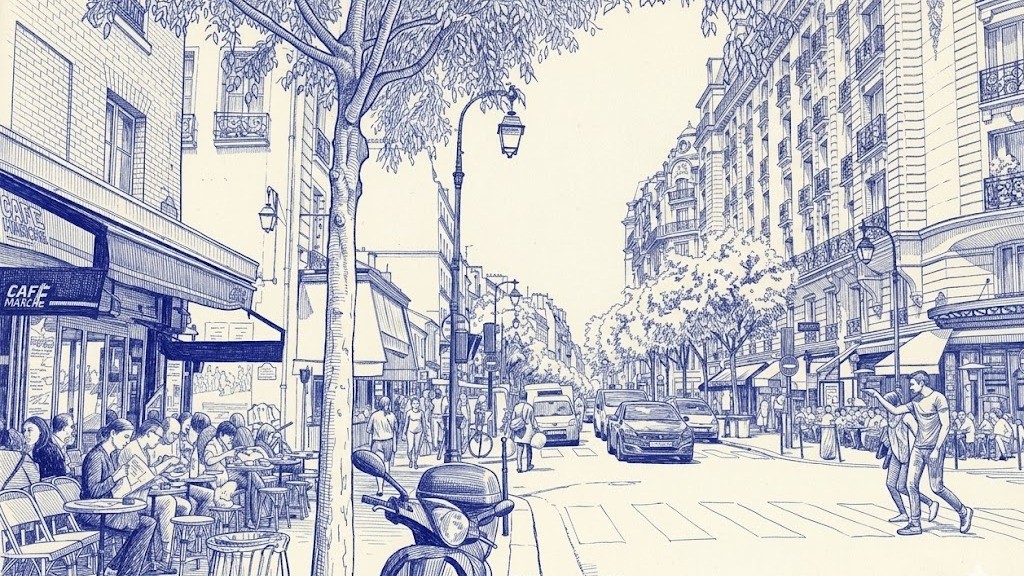
Rue de Bretagne is the most socially animated and gastronomically celebrated street in the 3rd arrondissement — a wide, bustling east-west artery that runs through the heart of the Haut Marais, connecting the Rue du Temple in the west to the Rue de Turenne in the east, and serving as the principal axis of everyday life for the residential community of one of the most fashionable neighbourhoods in Paris. The street is above all defined by the presence of the Marché des Enfants Rouges — the oldest covered market in Paris, opened in 1615 and named after the red uniforms worn by the orphaned children of a nearby charitable institution — whose food stalls, restaurant counters and artisan producers have made it one of the most beloved market experiences in the city.
The name "de Bretagne" reflects the historical practice of naming Parisian streets after the great provinces of France — a practice particularly common in streets developed during the seventeenth century, when the administrative and political integration of the French provinces under the crown was expressed, among other ways, in the urban nomenclature of the capital. The duchy of Brittany, which had been incorporated into France by marriage in 1532, was one of the largest, most culturally distinctive and most politically sensitive of the French provinces, and its name on a street in the rapidly developing Marais district was a statement of royal authority over a territory that retained strong independent traditions.
1. The Marché des Enfants Rouges: The Oldest Market in Paris
The Marché des Enfants Rouges is the oldest surviving covered market in Paris, and one of the oldest in France. Opened in 1615 under the reign of Louis XIII, it takes its name from the Hospice des Enfants Rouges — a charitable institution founded in 1536 to care for orphaned children, whose distinctive red uniforms gave both the institution and subsequently the market their name.
For over four centuries, the market has occupied its site on Rue de Bretagne, serving the residential community of the Marais with fresh produce, meat, fish and prepared foods. Its survival through the upheavals of the Revolution, the redevelopment of the Second Empire, the twentieth-century decline of the traditional urban market and the modernisation pressures of the contemporary period is remarkable — a testament to the loyalty of the neighbourhood it serves and to the irreplaceable quality of the market experience it offers.
Today, the Marché des Enfants Rouges is one of the most diverse and celebrated market experiences in Paris. Its covered halls house a community of stallholders that reflects the full range of Parisian culinary culture: North African couscous, Japanese sushi, Moroccan tagine, Lebanese mezze, organic French vegetables, artisan cheese, natural wine and traditional Parisian street food all coexist in the same market, creating a culinary environment of extraordinary diversity and vitality.
The market's growing international reputation has transformed it into a destination in its own right — a place where food journalists, celebrity chefs and gastronomes from around the world come alongside the neighbourhood's residents to experience a market culture that combines genuine local character with exceptional culinary ambition.
2. The Haut Marais and Its Social Life
Rue de Bretagne serves as the principal social artery of the Haut Marais — the northern section of the Marais district that has become, since the 1990s, one of the most fashionable residential neighbourhoods in Paris. The street's combination of the Marché des Enfants Rouges, an exceptional concentration of cafés, bakeries, wine bars and specialist food retailers, and the daily movement of the neighbourhood's diverse and fashion-conscious resident population creates a street life of unusual quality and vitality.
The social character of Rue de Bretagne reflects the particular character of the Haut Marais as a neighbourhood: it combines the authentic residential community of a working-class district with the creative and professional class that has moved in over the past three decades, creating a social environment that is simultaneously diverse, fashionable and genuinely local in a way that is increasingly rare in the gentrifying districts of central Paris.
3. The Breizh Café and the Crêpe Culture
Among the most celebrated establishments on Rue de Bretagne is the Breizh Café — a restaurant and crêperie that is widely acknowledged as one of the finest expressions of Breton culinary culture in Paris, and whose combination of exceptional buckwheat galettes, carefully selected natural ciders and a purist's attention to ingredient quality has made it one of the most talked-about and influential restaurants in the Haut Marais.
The presence of the Breizh Café on Rue de Bretagne — the street named after Brittany — creates one of those satisfying correspondences between street name and contemporary commercial identity that occasionally arise in Parisian topography. The Breton province whose name the street carries is now represented on it by one of the finest Breton restaurants in the city, making the street's gastronomic and toponymic identities converge in a way that would have surprised the seventeenth-century royal administrators who gave it its name.
4. Urban Context
Rue de Bretagne runs from the Rue du Temple in the west to the Rue de Turenne in the east, through the heart of the Haut Marais in the 3rd arrondissement. The street is served by the Filles-du-Calvaire and Temple metro stations.
5. Architectural Character
The architecture of Rue de Bretagne reflects the varied building history of the Haut Marais, with buildings of three to five storeys in mixed styles representing different periods of construction. The street is relatively wide for a Marais street, giving it a more open and market-oriented spatial character than many of the narrower medieval passages of the surrounding district. The facades on the market side of the street present the shopfronts of the food retailers and cafés that have animated the street since the market's earliest days, while the residential floors above preserve a variety of architectural details from different periods of construction.
6. The Residential Market
The residential market on and around Rue de Bretagne benefits from the exceptional concentration of market culture, food heritage and social vitality that the street provides:
- food-oriented buyers for whom proximity to the Marché des Enfants Rouges and the street's food culture is a primary residential priority
- creative and fashion industry professionals who have made the Haut Marais their home and workplace
- international buyers drawn by the global reputation of the Marais as a residential destination, and for whom the daily market culture of Rue de Bretagne represents the ideal expression of Parisian urban life
- investors in one of the most sustainably desirable streets in the 3rd arrondissement, where the combination of market heritage and contemporary vitality creates consistent long-term rental demand
7. Property Prices
Property values on and around Rue de Bretagne:
- €13,000 to €16,500 per m² for standard apartments in older buildings
- €16,500 to €21,500 per m² for well-renovated properties with quality finishes
- €21,500 per m² and above for exceptional properties with particularly desirable positions
Rue de Bretagne is the social and gastronomic heart of the 3rd arrondissement — a street whose identity is inseparable from the Marché des Enfants Rouges that has occupied its site for over four centuries, and whose daily life expresses the best qualities of the Haut Marais: diverse, fashionable, genuinely local and exceptionally well-fed.
Thomas Herremans