
Rue de Chaillot
Introduction
Rue de Chaillot unfolds its elegant route between avenue Marceau and place du Trocadéro, in the heart of the 16th arrondissement, one of the most prestigious and sought-after sectors of the capital. A residential street par excellence, it combines residential calm, architectural prestige, and immediate proximity to major cultural institutions such as the Palais de Tokyo, the Musée Galliera, and the Trocadéro. Unlike the lively, commercial avenues nearby, rue de Chaillot retains a hushed, discreet atmosphere, typical of the upscale residential streets of the 16th arrondissement, where private mansions, embassies, and high-end bourgeois buildings stand side by side. It embodies a certain Parisian art of living, between aristocratic tradition and discreet modernity.
History
Rue de Chaillot takes its name from the former village of Chaillot, which existed as a distinct entity before being gradually absorbed by Paris's urban expansion in the 19th century. This village, mentioned as early as the Middle Ages, occupied the heights overlooking the Seine and offered a rural setting prized by the nobility and great Parisian families wishing to escape the bustle of the city center while remaining close to the capital. Catherine de Medici even had a residence built there in the 16th century, testifying to the site's early appeal to the kingdom's powerful figures. The village of Chaillot was officially attached to Paris in 1787, then definitively integrated during the annexation of peripheral communes in 1860 under Napoleon III, forming the basis of the current 16th arrondissement. The street itself truly developed during the 19th century, with the progressive construction of private mansions intended for the upper bourgeoisie and aristocracy, drawn by the neighborhood's tranquility and its proximity to the burgeoning fine neighborhoods of western Paris. In the 20th century, rue de Chaillot welcomed numerous embassies and diplomatic representations, reinforcing its international and prestigious character, while several private mansions were converted into headquarters for cultural institutions or high-end private residences. The proximity of the Palais de Chaillot, built for the 1937 World's Fair on the site of the former Palais du Trocadéro, also reinforced the cultural aura of this sector, making it a must-visit location for art and heritage enthusiasts.
Architecture
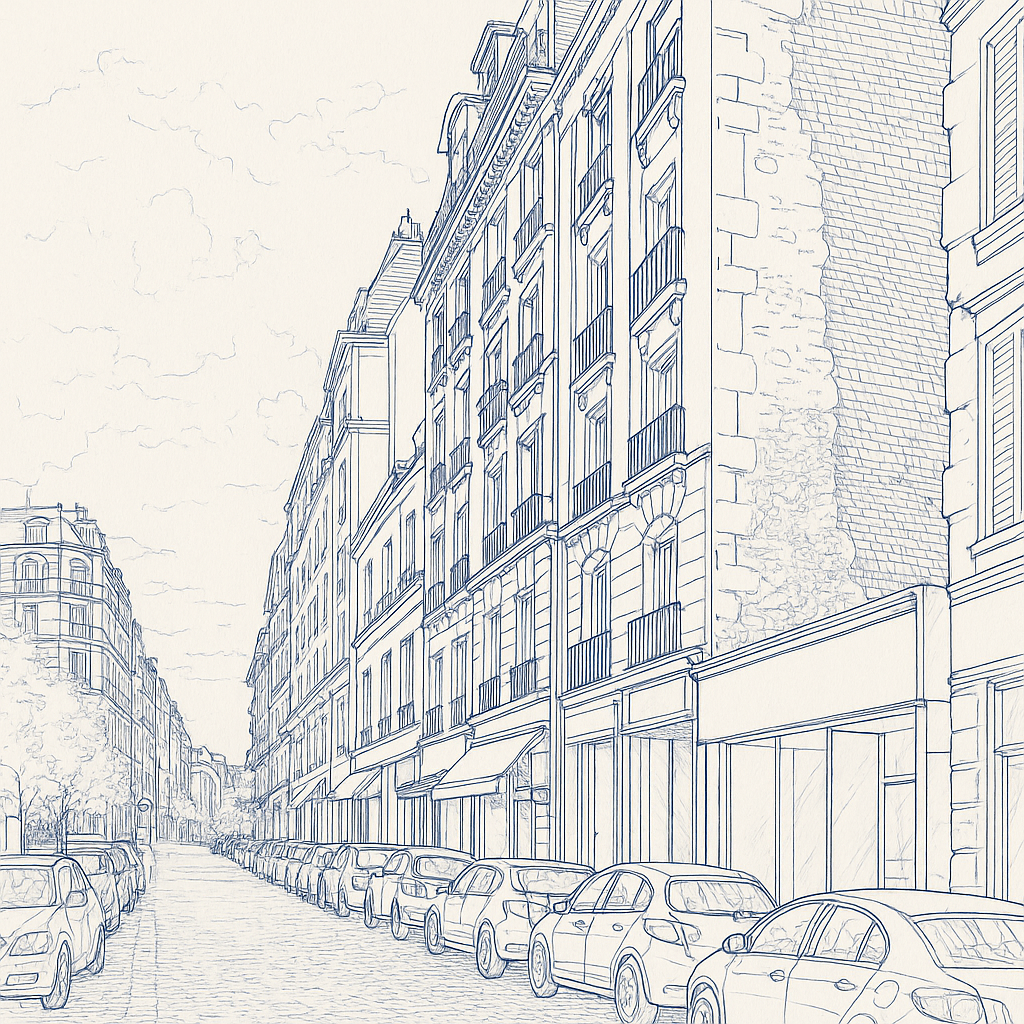
The architecture of rue de Chaillot is resolutely Haussmannian and post-Haussmannian, with buildings rising between five and seven stories, featuring carefully sculpted stone facades, adorned with wrought-iron balconies, classical pediments, and monumental carriage doors leading to tree-lined interior courtyards. Several 19th-century private mansions remain, testifying to the architectural splendor of the era, with their richly ornamented facades and private gardens. The architectural ensemble exudes an impression of harmony and prestige, characteristic of the finest streets of the 16th arrondissement, where every detail, from ironwork to cornices, reflects a constant concern for quality and elegance.
Neighborhood life
Rue de Chaillot benefits from an exceptional environment, just steps from the Champs-Élysées, the Trocadéro, and the Eiffel Tower. Neighborhood life here is peaceful and refined, with a few luxury shops, art galleries, and discreet gourmet restaurants frequented by an international clientele. The Théâtre National de Chaillot and the Musée Galliera, dedicated to fashion, bring a precious cultural dimension to the neighborhood. Transport links are excellent, with Iéna and Alma-Marceau metro stations in immediate proximity, as well as several bus lines serving the entire sector. The neighborhood's population is mainly composed of wealthy families, diplomats, international executives, and wealthy owners attached to the discretion and prestige of this address.
Real estate market
The real estate market on rue de Chaillot caters to a very high-end clientele, composed of wealthy families, diplomats, international investors, and personalities seeking absolute discretion. Available properties are essentially large family apartments of 120 to 300 square meters, as well as a few rare private mansions, offering exceptional features: remarkable ceiling heights, marble fireplaces, original Versailles parquet flooring, and sumptuous moldings. Prices per square meter currently stand between 14,500 and 16,000 euros for a standard property, between 17,000 and 19,500 euros for a high-end renovated apartment, and can reach 22,000 to 25,000 euros, or even more, for an exceptional property, particularly a private mansion or an apartment with a view of the Eiffel Tower. The market remains extremely selective, with rare supply and variable marketing periods, generally between one and three months depending on the rarity and specificity of the property, with the most exceptional transactions sometimes negotiated privately in complete discretion.
Conclusion
Rue de Chaillot embodies the ultimate refinement of the 16th arrondissement, between aristocratic history, sumptuous architecture, and proximity to the most beautiful Parisian monuments. A confidential and prestigious address, it appeals to a demanding international clientele seeking discretion, elegance, and heritage excellence at the heart of one of the capital's most distinguished neighborhoods.
Thomas Herremans