
Rue de Charonne — Where Parisian Authenticity Thrives
Introduction
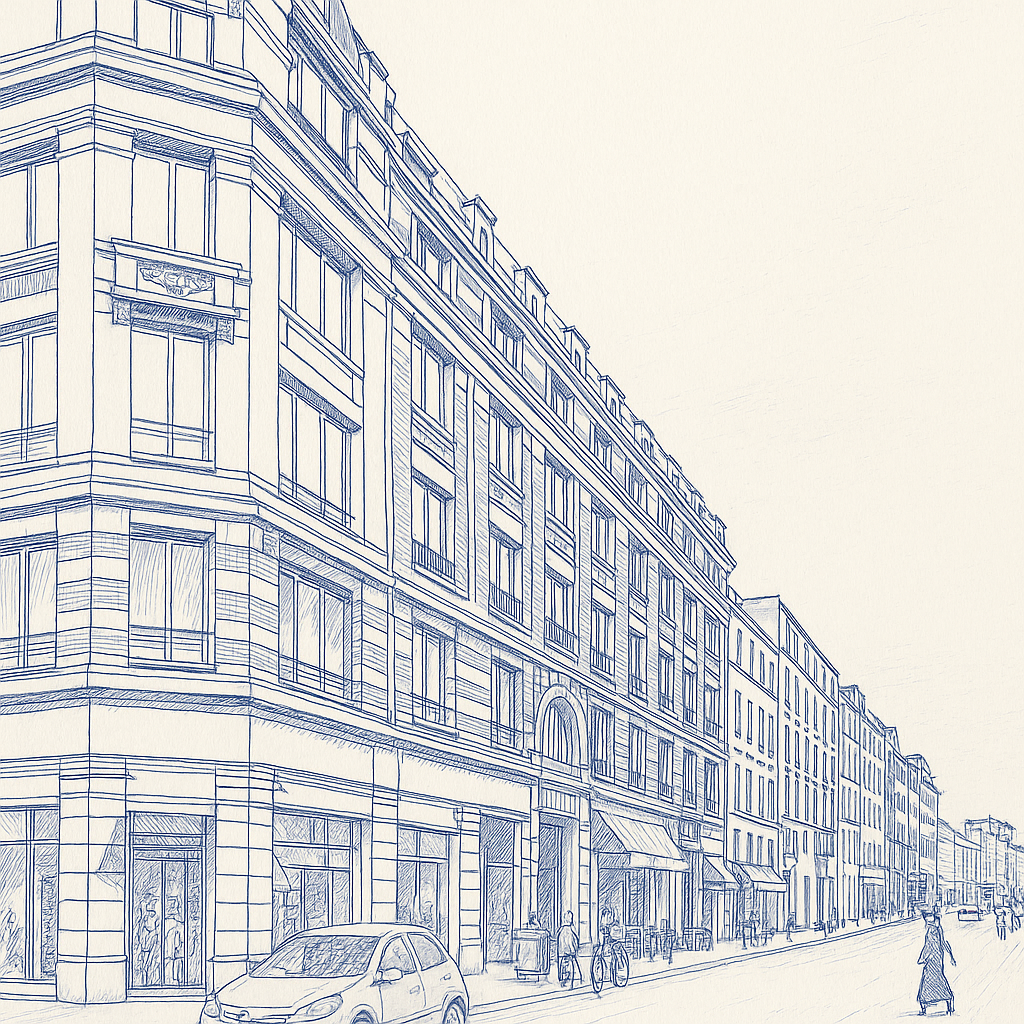
Rue de Charonne winds gracefully from place de la Bastille to rue Alexandre-Dumas, crossing one of the liveliest and trendiest neighborhoods of the 11th arrondissement. A sinuous artery with a village-like feel, it stands out for an irregular charm, inherited from its ancient layout which largely escaped the great Haussmannian cuts. Unlike the straight avenues of Baron Haussmann's Paris, rue de Charonne retains a human scale, gentle curves, and a succession of small squares and nooks that invite strolling. Today it embodies the face of an 11th arrondissement in full transformation, where historic artisans, contemporary creators, wine bars, art galleries, and young families seeking Parisian authenticity coexist, far from tourist bustle yet close to the effervescence of Bastille and the Marais.
History
Rue de Charonne takes its name from the village of Charonne, a former independent commune annexed by Paris in 1860 during the extension of the capital's boundaries under the Second Empire. This ancient route existed as early as the Middle Ages, connecting Paris intra-muros to the village of Charonne, then surrounded by vineyards and farmland, and constituted one of the historic axes leading toward eastern Paris. The neighborhood was later profoundly transformed by the rise of the Faubourg Saint-Antoine, a center of Parisian furniture-making and cabinetwork since the 18th century, whose artisanal influence is still felt today in the many courtyards and passages that line rue de Charonne, remnants of the carpentry and upholstery workshops that once animated this working-class, industrious sector. The street was also marked by Paris's social history, the Faubourg Saint-Antoine having been a major hub of popular uprisings, from the storming of the Bastille in 1789 to the workers' movements of the 19th century. Several convents and religious institutions also punctuated its history, notably the Hôpital de la Croix-Saint-Simon, founded in the 19th century, which continues an old hospital vocation in the neighborhood. Throughout the 20th century, rue de Charonne retained its working-class character while progressively seeing artists, designers, and creators move in, drawn by the charm of its interior courtyards and converted workshops, initiating a gentle gentrification that accelerated after the 2000s.
Architecture
The architecture of rue de Charonne is characterized by great heterogeneity, reflecting its long and eventful history. One finds old buildings dating from the 17th and 18th centuries, with modest facades and irregular proportions, standing alongside later Haussmannian constructions and converted industrial buildings, former cabinetmaking workshops transformed into lofts and contemporary apartments. Numerous cobbled courtyards and discreet passages, typical of the Faubourg Saint-Antoine, reveal themselves behind old porches, exposing a dense and secret urban fabric made of workshops, small low houses, and hidden gardens. This architectural diversity gives the street a picturesque charm and a rare authenticity in contemporary Paris.
Neighborhood life
Rue de Charonne is today one of the liveliest and most sought-after arteries in the 11th arrondissement, particularly appreciated for its nightlife and its constantly evolving gastronomic scene. There is a remarkable concentration of wine bars, trendy restaurants, and small designer boutiques, attracting a young, urban, connected clientele. The nearby Marché d'Aligre complements the offering with its colorful stalls and authentic popular atmosphere. The street benefits from excellent transport access, with Bastille, Ledru-Rollin, and Charonne metro stations in the immediate vicinity, as well as numerous bus lines. The population is young and dynamic, mixing creatives, young professionals, and recently settled families, drawn by the urban village atmosphere that characterizes this sector.
Real estate market
The real estate market on rue de Charonne attracts a young, urban clientele, often first-time buyers, rental investors drawn by strong tourist and student demand, as well as families seeking an authentic living environment in immediate proximity to central Paris. Available properties are varied: atypical lofts resulting from the conversion of former workshops, classic Haussmannian apartments, and small units ideal for rental investment. Prices per square meter currently stand between 9,200 and 10,200 euros for a standard property, between 10,800 and 12,000 euros for a high-end renovated apartment, and can reach 13,500 to 14,800 euros for an exceptional property, particularly a loft with private courtyard or a through apartment with terrace. The sector has enjoyed constant enthusiasm for several years, driven by its proximity to Bastille and its reputation as a trendy neighborhood, with marketing periods generally between three and six weeks for attractive properties.
Conclusion
Rue de Charonne charms with its unique blend of working-class history, picturesque architecture, and bustling urban life. A prime address for young professionals, creatives, and savvy investors, it represents one of the best illustrations of the renewal of the 11th arrondissement, where Parisian authenticity and modernity combine harmoniously.
Thomas Herremans