
Rue de Cléry: The Old Wall of Charles V, the Textile Trade and a Street of Medieval Depth
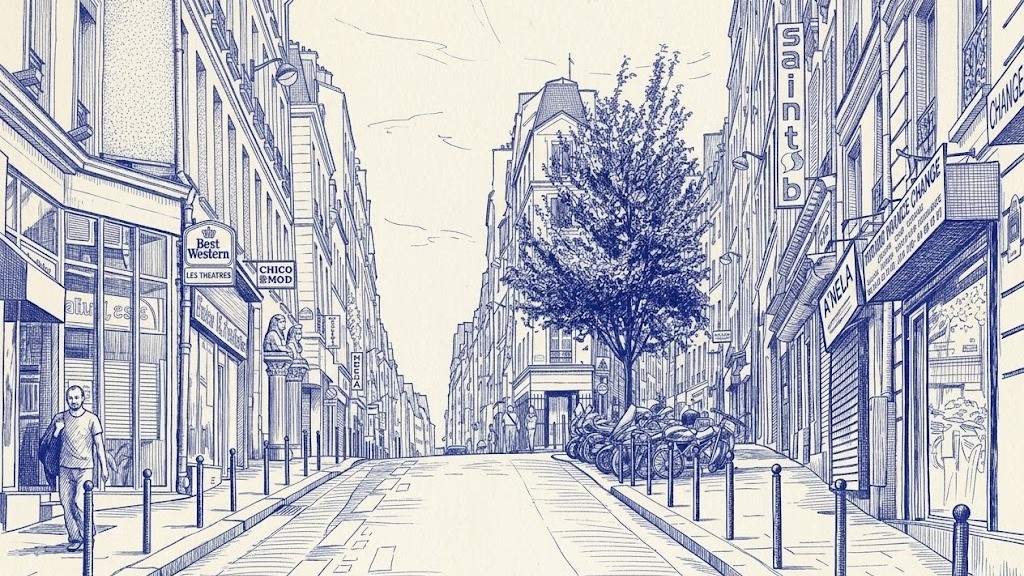
Rue de Cléry is one of the oldest streets in the 2nd arrondissement of Paris, whose origins can be traced directly to the medieval fortifications that once defined the northern boundary of the city. Running east to west through the northern section of the arrondissement, the street follows the line of the moat of the Wall of Charles V — the great fourteenth-century defensive structure built to protect Paris from the English during the Hundred Years' War — giving Rue de Cléry a historical depth that is almost unmatched among the streets of the arrondissement.
The name "Cléry" derives from the town of Cléry-Saint-André in the Loiret, which was closely associated with Louis XI — the son of Charles VII and one of the most politically astute monarchs in French history — who chose the Basilica of Notre-Dame de Cléry as his place of burial. The connection between this name and the Parisian street reflects the complex web of royal associations and institutional presences that shaped the naming conventions of medieval and early modern Paris.
Today, Rue de Cléry runs through the northern reaches of the Sentier district, where its medieval lineage is overlaid by the commercial heritage of the textile trade and, increasingly, by the presence of the technology and creative industries that are transforming the wider Sentier neighbourhood.
1. The Wall of Charles V and the Street's Medieval Origins
The history of Rue de Cléry begins with the Wall of Charles V, constructed between 1356 and 1383 following the political and military crises that convulsed France in the aftermath of the Battle of Poitiers. Charles V — known as "the Wise" — undertook a comprehensive program of urban fortification that extended the defensive perimeter of Paris significantly to the north, encompassing new residential and commercial districts that had grown up outside the earlier Wall of Philippe Auguste.
The Wall of Charles V was a formidable structure: a continuous masonry wall with towers, gates and a deep moat that ran along the northern edge of the city. The moat, and the open ground alongside it, eventually became a zone of informal settlement and later of formal street development as the city continued to expand in the fifteenth and sixteenth centuries.
Rue de Cléry follows this ancient alignment with remarkable fidelity, its curved and slightly irregular course reflecting the original geometry of the defensive moat that it replaced. To walk along Rue de Cléry is, in a very direct sense, to walk along the edge of medieval Paris — a physical connection to the city's defensive history that few other streets in the arrondissement can offer.
2. The Textile Heritage
Like the surrounding streets of the Sentier district, Rue de Cléry developed a strong commercial identity centred on the textile and garment trade during the nineteenth and twentieth centuries. The proximity of the street to the principal wholesale markets and showroom districts of the Sentier drew fabric merchants, trim suppliers, lace dealers and specialist textile importers to its buildings, creating a commercial character that complemented and extended the broader Sentier economy.
Lace and embroidery were among the specialities associated with Rue de Cléry, reflecting the historical presence of luxury textile traders who occupied the street alongside more general fabric merchants. The lace trade, which had been an important luxury industry in France since the seventeenth century, found a natural home in the Sentier district, and Rue de Cléry was among the streets where specialist lace merchants established lasting presences.
3. Urban Character and Street Life
Rue de Cléry has a character that is somewhat distinct from the more intensively commercial streets of the Sentier. Its relatively narrow width, its irregular medieval alignment and the presence of buildings from multiple historical periods give it a more intimate and historically textured atmosphere than the wider, more uniform arteries of the district.
The street retains a number of buildings that date from the eighteenth century, predating the Haussmann transformation, and these structures give certain sections of Rue de Cléry an architectural variety and historical authenticity that is increasingly valued by buyers who seek genuine urban character in central Paris.
4. Urban Context
Rue de Cléry runs from the Boulevard Bonne-Nouvelle in the east to the Rue du Caire in the west, traversing the northern section of the Sentier district. Along its length it intersects with Rue d'Aboukir and other north-south arteries of the quarter. The street is served by the Bonne-Nouvelle metro station at its eastern end.
5. Architectural Character
The architecture of Rue de Cléry is among the most historically varied in the 2nd arrondissement. The street's medieval origins and its relatively modest commercial profile during the Haussmann period meant that it was not as thoroughly rebuilt as the principal arteries of the arrondissement, leaving a building stock that includes structures from the eighteenth century alongside later Haussmann-era constructions.
This variety gives Rue de Cléry a visual richness that is quite different from the more uniform streetscapes of the major boulevards. Building heights vary from three to six storeys, facades range from narrow pre-Haussmann structures to broader nineteenth-century compositions, and the irregular alignment of the street creates unexpected visual effects as it curves along its ancient path.
6. The Residential Market
The residential market on Rue de Cléry appeals particularly to buyers who value historical authenticity and architectural character alongside the practical advantages of a central Paris address. The combination of medieval lineage, textile trade heritage and architectural variety creates a residential address of genuine distinction within the northern Sentier:
- buyers attracted by the historical depth and architectural authenticity of the street
- creative industry professionals drawn by the Sentier's evolving commercial character
- investors seeking properties in a district undergoing significant transformation
- buyers who appreciate the intimate scale and irregular character of a street that has preserved more of its pre-Haussmann personality than most in the arrondissement
7. Property Prices
Property values on Rue de Cléry reflect the combination of historical character, location within the Sentier and the ongoing transformation of the district:
- €12,500 to €15,500 per m² for unrenovated or older apartments in pre-Haussmann buildings
- €15,500 to €19,500 per m² for renovated properties with quality finishes
- €19,500 per m² and above for exceptional renovated units in the best buildings
Rue de Cléry is one of the most historically resonant streets in the 2nd arrondissement — a physical trace of the Wall of Charles V that has survived seven centuries of urban transformation. Its medieval lineage, its textile trade heritage and its position within the evolving Sentier district make it one of the most characterful addresses in the arrondissement, and one that rewards the attention of buyers who look beyond the obvious to find the historical depth that Paris so abundantly offers.
Thomas Herremans