
Rue de Grenelle — The Discreet Avenue of Power and Diplomatic Elegance
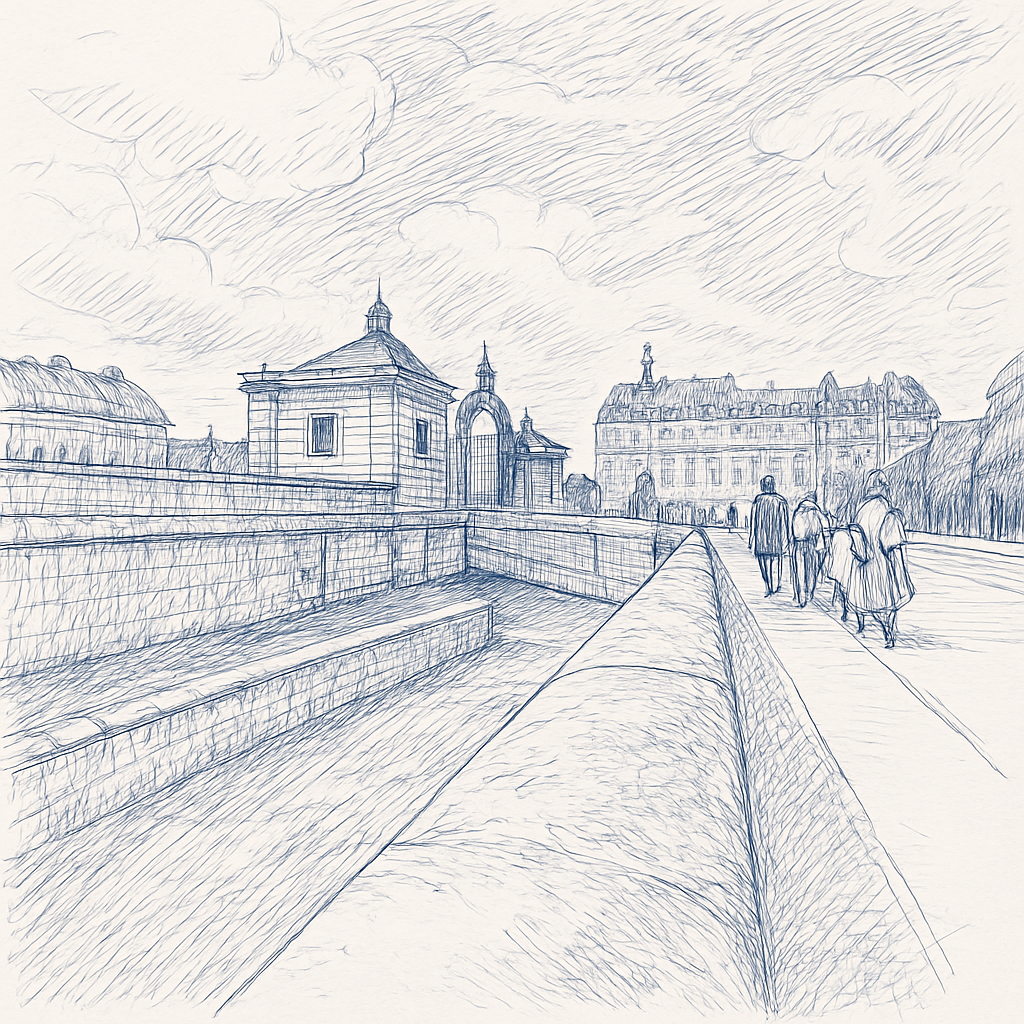
The rue de Grenelle runs through the entire 7th arrondissement from east to west, from the rue du Bac to the Invalides, over nearly two kilometers. This long artery, one of the oldest and most prestigious in the Faubourg Saint-Germain district, stands out for its aristocratic calm and the massive presence of ministries, embassies, and listed private mansions. Less commercial than the rue du Bac, less touristic than boulevard Saint-Germain, the rue de Grenelle cultivates a wholly diplomatic discretion, where austere façades often conceal sumptuous honor courtyards and secret gardens. It is a street of quiet power, where senior officials, diplomats, and families settled for generations in this cradle of French power cross paths.
Its name originates from the Grenelle plain, a vast agricultural territory that once stretched southwest of Paris, between the Seine and the current 15th arrondissement, long before the city absorbed these lands in its 19th-century urban expansion. The street itself was laid out as early as the 17th century, but it truly experienced its golden age in the 18th century, when robe and sword nobility built sumptuous private mansions there, fleeing the bustle of the Marais for this newer, airier district of the Faubourg Saint-Germain. The Hôtel Matignon, built in 1721 and today the official residence of the French Prime Minister, is located nearby, while the rue de Grenelle itself houses the Ministry of Agriculture, installed in a former 18th-century mansion. The famous Fontaine des Quatre-Saisons, a masterpiece by sculptor Edme Bouchardon completed in 1745, still adorns the street and constitutes one of the finest examples of monumental Parisian fountains from the Age of Enlightenment, classified as a historical monument. This fountain, commissioned by the Provost of Merchants of Paris to supply the neighborhood with drinking water, symbolizes by itself the urban and aesthetic ambition of 18th-century Paris. Later, in 1968, the Grenelle Accords, negotiated in the offices of the Ministry of Labor located on rue de Grenelle, ended the great general strike of May 1968, permanently anchoring the street's name in contemporary French social history.
The architecture of the rue de Grenelle is dominated by 18th-century private mansions, with classical façades punctuated by pilasters and pediments, preceded by paved courtyards and monumental porches. Many buildings are classified or listed as historical monuments, guaranteeing exemplary heritage preservation. Later buildings, constructed in the 19th century in Haussmannian style, harmoniously complement this architecturally coherent ensemble of remarkable stylistic homogeneity.
Neighborhood life here remains marked by calm and restraint, with a strong institutional presence as ministries and embassies occupy a significant portion of the street. Local shops, artisan bakeries, and fine grocery stores coexist with a few discreet gastronomic restaurants favored by diplomats and senior officials. The Solférino and Rue du Bac metro stations serve the street easily, while the nearby Esplanade des Invalides offers a rare open green space in this dense neighborhood.
In real estate terms, the rue de Grenelle attracts a very high-end, often international clientele seeking exceptional heritage properties or diplomatic residences. Available properties are rare, mainly large apartments in former private mansions converted into residences, with exceptional ceiling heights and period moldings. Standard prices range between €13,000 and €15,000/sqm, high-end renovated properties reach €16,000 to €18,000/sqm, while exceptional properties, particularly noble floors of listed private mansions, can exceed €22,000/sqm. Marketing times remain long, generally exceeding four months, due to the rarity and specificity of these heritage properties.
An address of quiet power and heritage elegance, the rue de Grenelle appeals to a demanding clientele seeking history, discreet prestige, and an exceptional living environment at the heart of the Faubourg Saint-Germain.
Thomas Herremans