
Rue de la Chaussée-d'Antin — Where Finance Meets the Grandeur of Opéra
Introduction
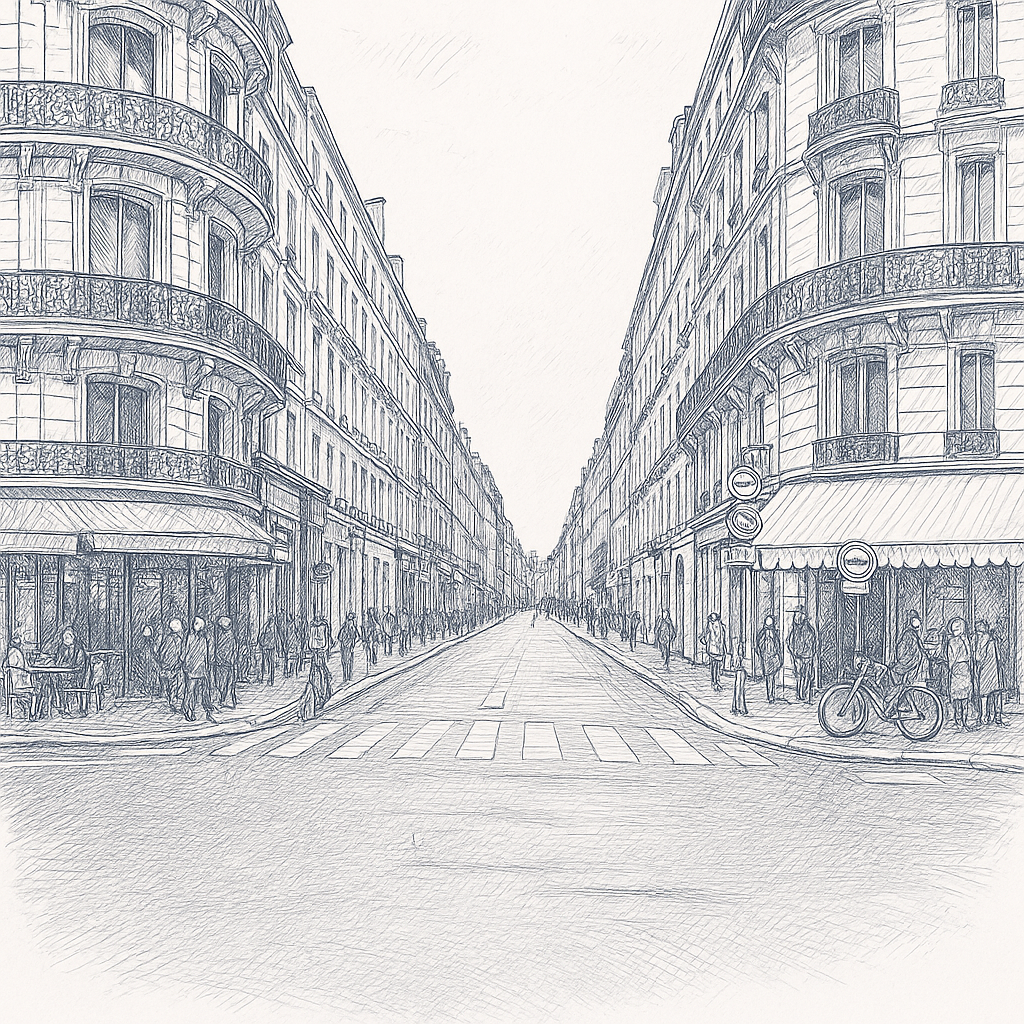
In the 9th arrondissement, Rue de la Chaussée-d'Antin connects Boulevard des Italiens to Rue de Provence, crossing one of the capital's neighborhoods richest in financial and cultural history. Both a commercial and banking artery, it stands out for its immediate proximity to the Opéra Garnier and the great department stores, while retaining remarkable architectural heritage inherited from the Age of Enlightenment and the Second Empire. Less touristic than the nearby Boulevard Haussmann, it offers a more authentic atmosphere, blending corporate headquarters, neighborhood shops and upscale residential buildings.
History
Rue de la Chaussée-d'Antin owes its name to the Duke of Antin, governor of the Château de Versailles under Louis XIV, who had an elevated roadway built here to avoid flooding from the Ménilmontant stream. The Chaussée-d'Antin neighborhood truly developed in the 18th century, becoming a favored residence of the new financial bourgeoisie and tax farmers, who built sumptuous mansions there. The street also became famous thanks to Mademoiselle Guimard, an Opera dancer whose mansion hosted lavish receptions. In the 19th century, the neighborhood underwent a new transformation with the rise of the Parisian banking system: numerous financial institutions, including several ancestors of major French banks, settled there. The street was also marked by the presence of artistic and literary figures, notably composer Gioachino Rossini who resided there. The construction of the Opéra Garnier nearby, completed in 1875, further reinforced the neighborhood's attractiveness and prestige, making it a crossroads between financial power and Parisian cultural life.
Architecture
The architecture of Rue de la Chaussée-d'Antin harmoniously combines 18th-century mansions and 19th-century Haussmannian buildings. Cut-stone facades, ornate balconies and sculpted carriage doors testify to high-quality construction. Some buildings retain Directoire and Empire elements, notably neoclassical pediments and engaged columns. Generous ceiling heights and the volumes of the noble floors recall the street's original bourgeois residential vocation.
Neighborhood life
Rue de la Chaussée-d'Antin lives to the rhythm of office flows and nearby department stores, while retaining authentic neighborhood life with its traditional bakeries, cafés and food shops. Proximity to the Opéra Garnier, Galeries Lafayette and Boulevard Haussmann ensures constant activity, while the Chaussée d'Antin-La Fayette and Havre-Caumartin metro stations offer exceptional service.
Real estate market
The real estate market on Rue de la Chaussée-d'Antin appeals to a mixed clientele of investors and residents drawn by centrality and architectural heritage. Available properties are mostly Haussmannian apartments, from two to five rooms, with moldings, period parquet and marble fireplaces. Prices range from €9,800 to €11,000/m² for a standard property, €12,000 to €13,500/m² for a high-end renovation, and up to €14,500 to €16,000/m² for an exceptional property on a noble floor with an open view. Marketing periods are two to four months, the street benefiting from renewed interest linked to the overall revaluation of the Opéra neighborhood.
Conclusion
Rue de la Chaussée-d'Antin combines financial history, architectural heritage and Parisian centrality, a solid address for investors as well as residents seeking authenticity at the heart of the 9th arrondissement.
Thomas Herremans