
Rue de la Paix
Introduction
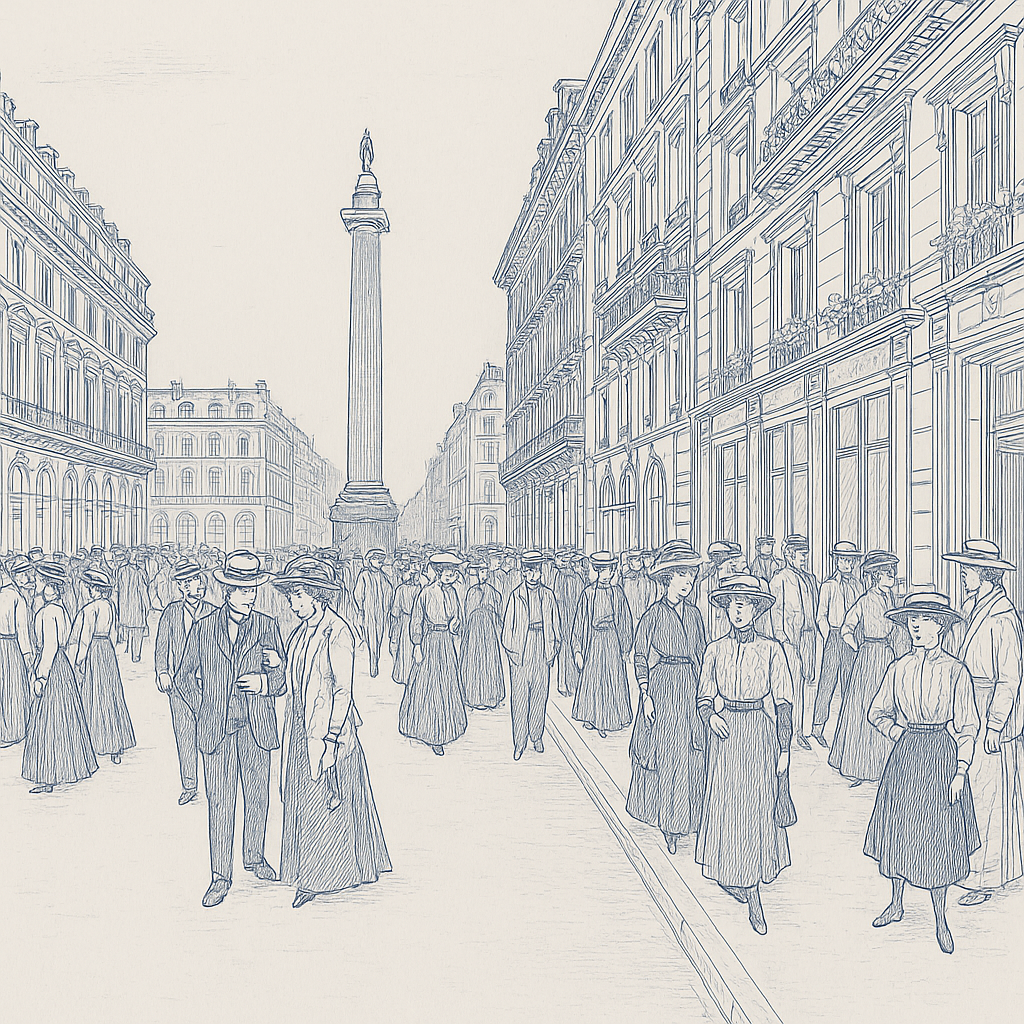
Rue de la Paix connects Place Vendôme to Boulevard des Capucines and the Opéra Garnier, a short stretch carrying a rare symbolic density within the 2nd arrondissement. A straight, elegant thoroughfare, it has established itself since the Second Empire as the temple of Parisian high jewelry, home to some of the world's greatest jewelry and watchmaking houses. Less touristic than the Champs-Élysées, more intimate than the Place Vendôme it extends, Rue de la Paix cultivates a discreet sophistication where every window display resembles a jewel box. One rarely comes here by chance: this street is a destination in itself, frequented by a knowledgeable international clientele, moving between appointments at century-old jewelers and strolls toward the Opera.
History
Rue de la Paix owes its name to the Peace Treaty of Amiens signed in 1802, a diplomatic event Napoleon Bonaparte wished to commemorate by naming this newly cut street after it. Previously, the site was occupied by the convent of the Filles Capucines and its garden, a religious space that disappeared during the great urban works undertaken under the First Empire to connect Place Vendôme to the boulevards.
The street experienced its golden age in the 19th century, when the great jewelry houses gradually settled there, benefiting from the aristocratic and later imperial clientele who frequented the nearby Opera district. Frédéric Boucheron opened his boutique at number 26 in 1893, in a building then considered one of the most modern in the capital, equipped with innovative electric lighting designed to showcase precious stones. This establishment sparked an unprecedented concentration of jewelry houses that persists today, making Rue de la Paix a natural counterpart to Place Vendôme.
The street was also a stage for Parisian high society during the Belle Époque: the great couture houses, before their gradual move toward Avenue Montaigne and the Faubourg Saint-Honoré in the 20th century, rubbed shoulders here with jewelers, creating a microcosm of luxury and elegance that drew European aristocrats, crowned heads and great American fortunes passing through Paris. The inauguration of the Opéra Garnier in 1875, at the end of the street, further reinforced its status as a prestigious thoroughfare, linking imperial power to luxury commerce.
Architecture
The architecture of Rue de la Paix illustrates Napoleonic and then Haussmann-era urbanism in all its classical rigor. The buildings, constructed mostly between 1806 and 1870, present cut-stone façades of remarkable homogeneity, with strict alignments, wrought-iron balconies on the second floor, and steeply pitched zinc roofs pierced by dormer windows. This architectural regularity, intended from the outset by imperial urban planners, gives the street a sober, solemn elegance that serves as the ideal setting for jewelers' window displays. The ground floors, transformed over the decades to house ever more prestigious boutiques, often retain Art Nouveau or Art Deco elements dating from major early 20th-century renovations, notably ironwork and finely wrought glass canopies.
Neighborhood Life
Rue de la Paix lives at a hushed, almost solemn pace, consistent with its jewelry vocation. Boutiques open late in the morning and close early in the evening, leaving the street surprisingly quiet outside of tourist and professional peak hours. The immediate proximity of the Opéra Garnier animates the area in the late afternoon and evening, as theatergoers and onlookers flock toward Place de l'Opéra. A few elegant cafés and renowned pastry shops offer a refined break between jeweler visits. The neighborhood is served by the Opéra and Madeleine metro stations, providing quick access to the grand boulevards and the nearby department stores. The street's relative calm, contrasting with the bustle of the nearby Boulevard des Capucines, makes it as sought-after a place to pass through as it is a destination.
Real Estate Market
The real estate market on Rue de la Paix is marked by structural scarcity and an essentially commercial and professional vocation. Ground floors and first floors are almost exclusively occupied by luxury boutiques and representative offices, leaving few residential spaces available, mostly located on the upper floors of buildings. Buyers are predominantly institutional investors or international private fortunes seeking to diversify their assets through the acquisition of commercial premises with high rental value, or, more rarely, individuals seeking an exceptional apartment with views over Place Vendôme or the Opera. Available residential properties, often of generous size, feature classic Haussmann-era finishes but frequently require technical upgrading. For a standard residential property, prices range between €13,000 and €15,000 per square meter; for a renovated apartment with high-end finishes, the range climbs to between €17,000 and €19,000; and exceptional properties, with views over Place Vendôme or remarkable volumes, can reach €20,000 to €22,000 per square meter. Residential transactions remain rare, but quality properties trade quickly, generally within three months, as demand far outstrips available supply.
Conclusion
A natural extension of Place Vendôme and the historic temple of high jewelry, Rue de la Paix embodies a discreet, heritage-rich luxury, far from the tourist bustle of Paris's grand avenues. It appeals primarily to investors and connoisseurs, attuned to the scarcity of residential supply and the symbolic value of the address. For anyone dreaming of owning a pied-à-terre at the heart of this historic golden triangle between the Opera and Vendôme, Rue de la Paix remains an exceptional address, where every transaction continues a story that began under the First Empire.
Thomas Herremans