
Rue de la Paix: Napoleon's Peace, the Jewellers of the World and the Most Expensive Street in the History of French Luxury
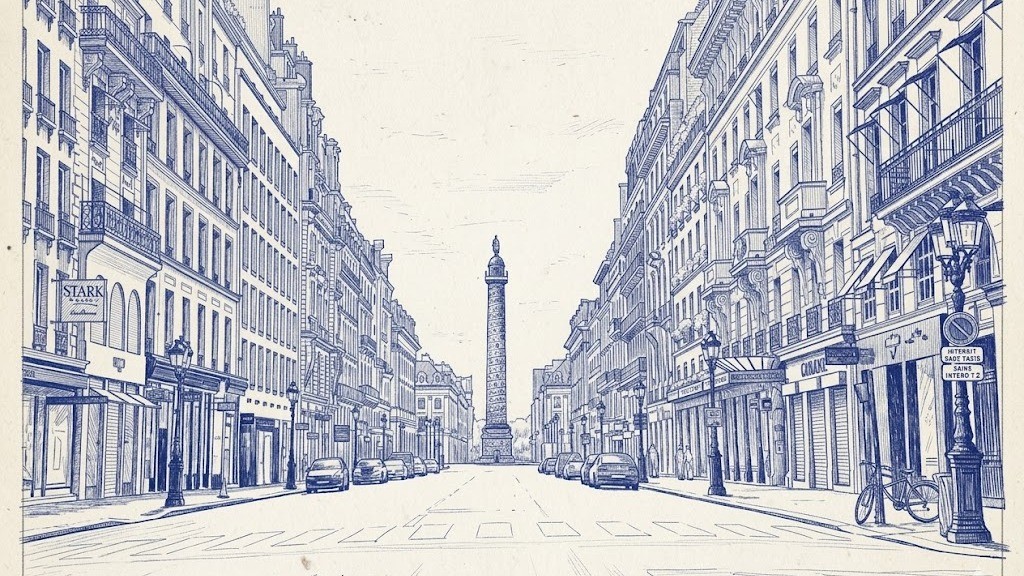
Rue de la Paix is the most celebrated luxury address in Paris and one of the most famous streets in the world — a short, wide, perfectly straight axis connecting the Place Vendôme in the south to the Place de l'Opéra in the north, running through the western boundary of the 2nd arrondissement in a position of absolute commercial and symbolic pre-eminence. Lined on both sides by the ateliers, boutiques and flagship stores of the world's most prestigious jewellers, couturiers and luxury houses, the street has been synonymous with the absolute summit of French luxury culture since the early nineteenth century and remains, two hundred years after its creation, the single address most associated with the idea of Parisian splendour in the global imagination.
The name "de la Paix" — of Peace — commemorates the Peace of Amiens, the treaty signed in March 1802 between France and Great Britain that brought a temporary end to the almost continuous warfare that had convulsed Europe since the French Revolution began in 1789. Napoleon Bonaparte, then First Consul of the French Republic, negotiated the treaty as a demonstration of his capacity for statesmanship alongside his military genius, and the naming of this new Parisian street after the peace it celebrated was a direct expression of the political symbolism that the Napoleonic state invested in its urban planning.
The peace proved short-lived — hostilities between France and Britain resumed in May 1803 — but the street name endured, and the irony of the world's most commercially aggressive luxury street bearing a name that commemorates a failed peace is one of the more quietly satisfying details in the history of Parisian toponymy.
1. The Creation of the Street and Its Napoleonic Origins
Rue de la Paix was created under Napoleon's direction as part of the broader program of Parisian urban improvement that characterised the Consulate and the early Empire. The new street was cut through an area previously occupied by the Couvent des Capucines — one of the major religious institutions on this northern edge of the city that had been suppressed during the Revolution and whose property was now available for secular redevelopment.
The creation of the street served multiple purposes simultaneously: it provided a formal urban connection between the recently completed colonnades of the Place Vendôme — itself a monument of Bourbon royal urbanism that Napoleon was in the process of appropriating and transforming — and the growing commercial and residential districts to the north; it opened up a prestigious building frontage that could attract the luxury retailers whose presence would elevate the surrounding district; and it demonstrated the Napoleonic state's capacity to reshape the urban fabric of Paris as an expression of political ambition and aesthetic order.
The Colonne Vendôme — the great bronze column erected by Napoleon on the Place Vendôme between 1806 and 1810, cast from the metal of cannon captured at Austerlitz and modelled on the Column of Trajan in Rome — gave the southern terminus of Rue de la Paix one of the most powerful monuments of imperial self-representation in Paris. To walk down Rue de la Paix towards the Place Vendôme is to walk towards a monument of military triumph that speaks the same language as the peace the street's name commemorates — a language of imperial confidence that could afford, by the time the column was erected, to be entirely honest about the gap between its nominal celebrations and its actual ambitions.
2. The Jewellers: Cartier, Van Cleef and the Architecture of Desire
The association of Rue de la Paix with the world's most prestigious jewellers began in the early nineteenth century, when the street's exceptional prestige — the combination of Place Vendôme at one end and the fashionable Opera quarter at the other — made it the natural location for the luxury retailers who served the new aristocracy of wealth that the Napoleonic Empire was creating.
Cartier, the most celebrated name in French jewellery, established itself on Rue de la Paix in 1899, moving from its earlier location on the Boulevard des Italiens to an address that more precisely expressed the ambitions and identity of the house. The choice of Rue de la Paix was both a practical commercial decision — the street's clientele was precisely the international elite for whom Cartier created — and a symbolic statement: Cartier on Rue de la Paix announced the house's claim to be the premier jeweller not merely of France but of the world.
Van Cleef & Arpels, Chaumet, Boucheron and other jewellery houses of comparable prestige established or maintained addresses on Rue de la Paix or the immediately surrounding streets, creating a concentration of fine jewellery that made the Place Vendôme zone the undisputed global capital of the jewellery trade. The street became, in the language of the luxury industry, a benchmark address: to have a shop on Rue de la Paix was to announce membership in the most exclusive commercial community in the world.
3. The Monopoly Connection: The Most Famous Street That Never Was
Rue de la Paix holds a peculiar cultural distinction beyond its luxury commercial identity: it is the most expensive property on the original French edition of the Monopoly board game, as it is in many international editions. The game, which was introduced to France in the 1930s and quickly became one of the most widely played board games in the country, embedded Rue de la Paix permanently in the popular cultural consciousness as the ultimate symbol of wealth and commercial success.
For generations of French children who had never set foot on the actual street, Rue de la Paix existed first and most vividly as a dark blue square on a board game — the property that could bankrupt any opponent who landed on it with insufficient funds. This board-game celebrity has given the street a cultural presence that transcends its physical reality, making it one of the most universally recognised Parisian street names in the world, known to millions who have never visited Paris.
The relationship between the street's actual luxury identity and its Monopoly celebrity is one of those perfect correspondences in cultural history where the symbolic representation and the reality align with unusual completeness: Rue de la Paix is the most expensive street in the game because it is, in the world it represents, one of the most expensive and prestigious streets that exists.
4. The Architecture of Splendour
The physical experience of Rue de la Paix is one of the most theatrically orchestrated in Paris. The street is unusually wide for its length — a deliberate design choice that creates a sense of ceremonial space and allows the scale and quality of the buildings on either side to be fully appreciated. The facades that line the street are among the most consistently magnificent in the arrondissement: Haussmann-era structures of six to seven storeys with elaborately carved stone ornaments, enormous ground-floor windows designed to maximise the display potential of the luxury goods within, and upper facades of a sculptural richness that signals the investment that the luxury houses have made in the street over two centuries.
The view southward from the northern end of the street, looking down towards the Place Vendôme and its great column, is one of the most composed urban vistas in Paris — a perspective that combines the architectural grandeur of the place, the drama of the column and the theatrical alignment of luxury boutiques in a visual experience of calculated magnificence.
The Opéra Garnier, visible at the northern end of the street where it opens onto the Place de l'Opéra, provides an equally spectacular southern bookend when viewed in reverse — the golden facade of the opera house framing the northern terminus of the street in a composition that appears almost too perfectly staged to be accidental.
5. Place Vendôme: The Extraordinary Southern Terminus
The Place Vendôme, onto which Rue de la Paix opens at its southern end, is one of the greatest urban spaces in France and one of the defining achievements of French classical urbanism. Designed by Jules Hardouin-Mansart under Louis XIV and completed in the early eighteenth century, the place was originally conceived as a setting for a great equestrian statue of the Sun King and as a demonstration of the capacity of royal urban planning to create spaces of harmonious architectural grandeur.
Today the Place Vendôme is the centre of Parisian jewellery culture, its arcaded ground floors housing Cartier, Chaumet, Boucheron, Van Cleef & Arpels and other great jewellery houses in what is effectively the most valuable single collection of commercial real estate in France, possibly in Europe. The Ritz Paris occupies the northern side of the place, completing a concentration of luxury hospitality and fine jewellery that makes the Place Vendôme the most economically dense address in the city.
6. The Residential Market
The residential market on Rue de la Paix is one of the most distinctive in the arrondissement — shaped by the near-total dominance of luxury commercial uses at ground level and the extreme prestige of the address, which has made it one of the most sought-after residential locations in all of Paris:
Upper-floor residential accommodation on Rue de la Paix is extremely rare, with most of the building stock given over to commercial uses. When residential properties do come to the market — whether as pied-à-terre apartments above the ground-floor boutiques or as larger apartments in the upper floors of the finest buildings — they command premiums that reflect both the scarcity of the supply and the extraordinary prestige of the address.
Buyer profiles for residential properties on or immediately adjacent to Rue de la Paix include:
- ultra-high-net-worth individuals for whom the address itself — the most symbolically powerful luxury address in Paris — is the primary residential motivation
- international buyers from countries where Rue de la Paix is the best-known Parisian street name, for whom living here represents the most complete possible expression of Parisian aspiration
- luxury industry professionals — jewellers, couturiers, fashion executives — for whom proximity to the trade addresses of their industry is a practical as well as a symbolic priority
- the most discerning patrimonial investors in the Paris market, for whom the long-term stability of the world's most famous luxury address represents an unparalleled store of value
7. Property Prices
Property values on Rue de la Paix and in the immediately adjacent blocks represent the absolute summit of the 2nd arrondissement property market and some of the highest residential values in all of Paris:
- €25,000 to €32,000 per m² for standard apartments in the residential floors above the commercial premises
- €32,000 to €40,000 per m² for renovated properties of exceptional quality
- €40,000 per m² and above for truly exceptional properties — rare pied-à-terre apartments in the finest buildings, with Place Vendôme views or proximity to the column
These values place Rue de la Paix firmly in the company of the most expensive residential addresses in Paris, alongside the Île Saint-Louis, the Quai Voltaire and the most prestigious streets of the 6th and 7th arrondissements.
8. Cultural Legacy: Beyond the Street
Rue de la Paix has accumulated a cultural legacy that extends far beyond its physical dimensions. It appears in the literature of the Belle Époque as a shorthand for everything Parisian, luxurious and aspirational; in the early cinema as the backdrop for films celebrating the glamour of the French capital; in the Impressionist paintings of the 1870s and 1880s, where its wide, light-filled perspective attracted several of the most important artists of the movement; and in the popular culture of the twentieth century, above all through its Monopoly celebrity, as the universal symbol of commercial triumph.
Édouard Manet, Claude Monet and Gustave Caillebotte all depicted the street and its surroundings in works that captured the particular quality of light on its wide, Haussmann-era facades — paintings that gave the street an artistic identity as well as a commercial one, and that contributed to the international image of Paris as a city of visual splendour.
Thomas Herremans