
Rue de la Roquette
Introduction
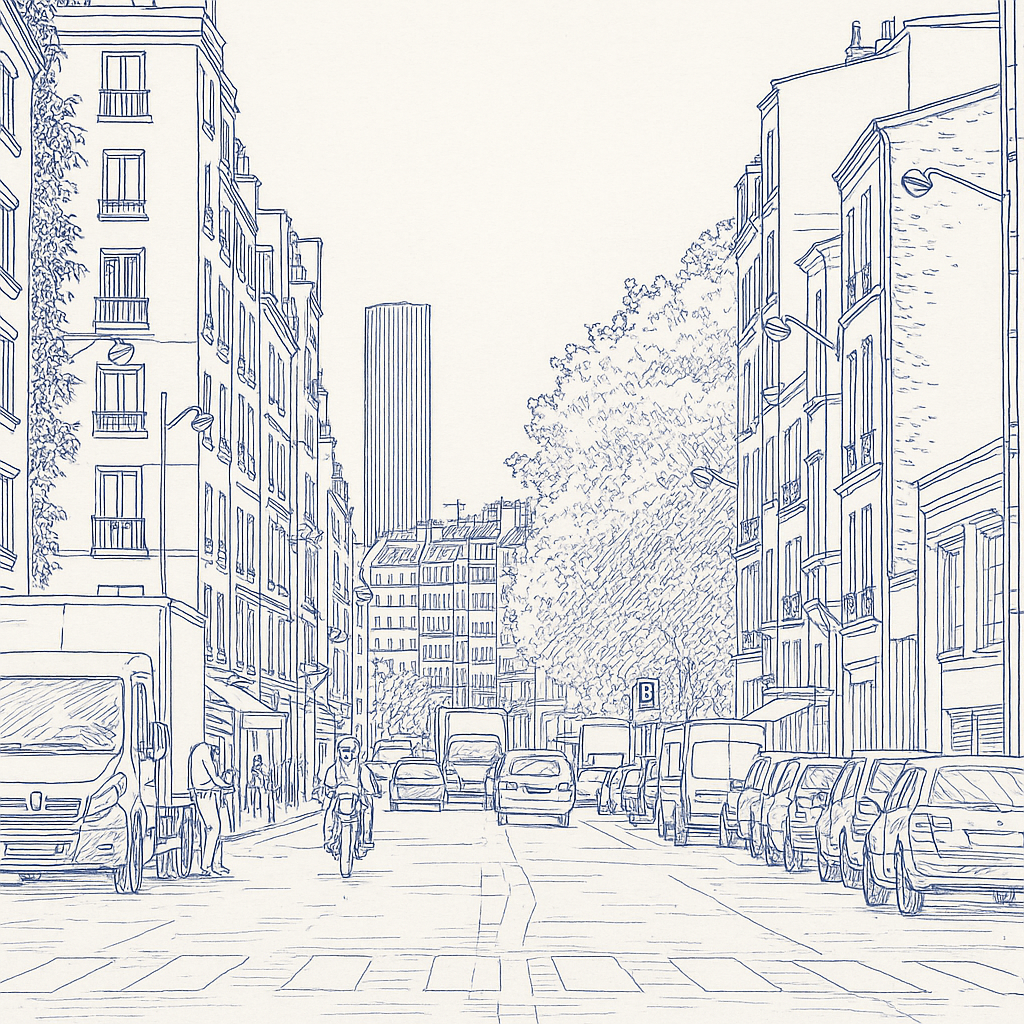
Rue de la Roquette connects Place de la Bastille to Boulevard de Ménilmontant, crossing the heart of the 11th arrondissement over about 1.3 kilometers. A historic and popular thoroughfare, it perfectly embodies the contrasting identity of this Parisian neighborhood, both rooted in a rich working-class memory and fully engaged in creative, festive modernity. Less touristy than the streets immediately adjacent to Bastille, Rue de la Roquette retains a raw, authentic charm, punctuated by old façades, converted workshops, and intense local commercial life. It differs from Rue de Charonne, more resolutely oriented toward fashion and design, through a more popular and varied atmosphere, where traditional shops, lively bars, and remnants of an industrial and penal past that profoundly marked its history coexist.
History
The name Rue de la Roquette likely derives from a former chapel dedicated to Notre-Dame-de-Bon-Secours, known as "de la Roquette," itself named after a garden plant, arugula (roquette), once cultivated in the market gardens that occupied this area before its urbanization. The street has existed since the 17th century, laid out through farmland and convents then located on the edges of Paris. Its history is inseparable from that of the two prisons that bore its name: La Grande Roquette, a prison for men sentenced to death, and La Petite Roquette, initially intended for young delinquents and later converted into a women's prison. These now-vanished penal institutions profoundly marked Parisian collective memory: La Grande Roquette was the site of the last public guillotine executions in Paris, a dark but fundamental chapter in French judicial history, until its demolition in 1900. The Square de la Roquette now occupies the site of this former prison, offering a space of memory and relaxation for neighborhood residents. In the 19th century, the street also became a major axis of furniture craftsmanship, a historic activity of the nearby Faubourg Saint-Antoine, with numerous cabinetmaker and upholsterer workshops set up in its buildings and inner courtyards. The opening of Boulevard Voltaire and the growing urbanization of the 11th arrondissement at the turn of the 20th century accentuated the street's popular, working-class character, a status it retained until the urban transformations of recent decades. Since the 2000s, Rue de la Roquette has undergone progressive gentrification, without renouncing its past: many artisan workshops have given way to concept stores, natural wine bars, and trendy restaurants, while preserving certain historic shops that now stand as neighborhood institutions.
Architecture
The architecture of Rue de la Roquette reflects its rich artisan and working-class past. There is a heterogeneous mix of 18th-century buildings with sober façades and 19th-century former workshops organized around paved inner courtyards, today often converted into housing or creative office spaces. Haussmannian buildings, rarer here than in other Parisian sectors, stand alongside more modest constructions typical of popular Parisian building stock, with façades in millstone or limestone, four to six stories high. Many inner courtyards, once occupied by carpentry and cabinetmaking workshops, today offer atypical housing configurations particularly prized by a clientele seeking authenticity and space, sheltered from street noise.
Neighborhood Life
Rue de la Roquette lives at a sustained pace throughout the day. In the morning, local shops - bakeries, greengrocers, wine merchants - welcome a loyal local clientele, while cafés and restaurants attract a population of young professionals working in the neighborhood from lunchtime onward. In the evening, the street becomes particularly lively around its numerous bars and restaurants, some of which have become true institutions of the 11th arrondissement, such as natural wine bars or small neighborhood restaurants known for their creative cuisine. The Voltaire metro station (line 9) and Bastille (lines 1, 5, and 8) efficiently serve the street, offering quick access to the entire capital. The Square de la Roquette, laid out on the site of the former prison, is a green space appreciated by neighborhood families. The population of Rue de la Roquette is particularly diverse, mixing long-established families, young creative professionals, and a more modest population inheriting the neighborhood's working-class past, forming a rare and precious social mix in contemporary Paris.
Real Estate Market
The real estate market on Rue de la Roquette attracts a varied clientele, ranging from young first-time buyers to rental investors, as well as families drawn by the neighborhood's dynamism and authenticity. Available properties are mostly older, medium-sized apartments, from 35 to 90 sqm, sometimes converted from former workshops at the back of courtyards, offering particularly sought-after atypical layouts. Prices per square meter are distributed as follows: for a standard property requiring renovation, expect between €8,500 and €9,500/sqm; for a high-end renovated property, prices range between €10,000 and €11,200/sqm; for an exceptional property - a courtyard loft, a duplex with terrace, or a fully renovated architect-designed apartment - prices can reach €12,000 to €13,500/sqm. The market has seen significant growth over the past decade, driven by the growing appeal of the Bastille-Roquette sector among a young, creative population, while remaining generally more accessible than Paris's more central neighborhoods. Quality properties generally sell within four to six weeks, reflecting sustained demand and a dynamic market.
Conclusion
Rue de la Roquette authentically embodies the popular and creative spirit of the 11th arrondissement, between working-class memory and contemporary effervescence. A sought-after address for a young, dynamic clientele attached to Parisian authenticity, it offers an excellent compromise between financial accessibility and urban quality of life. A street to discover for those wishing to invest in a lively Paris undergoing constant transformation, without ever renouncing its popular soul.
Thomas Herremans