
Rue de Rennes
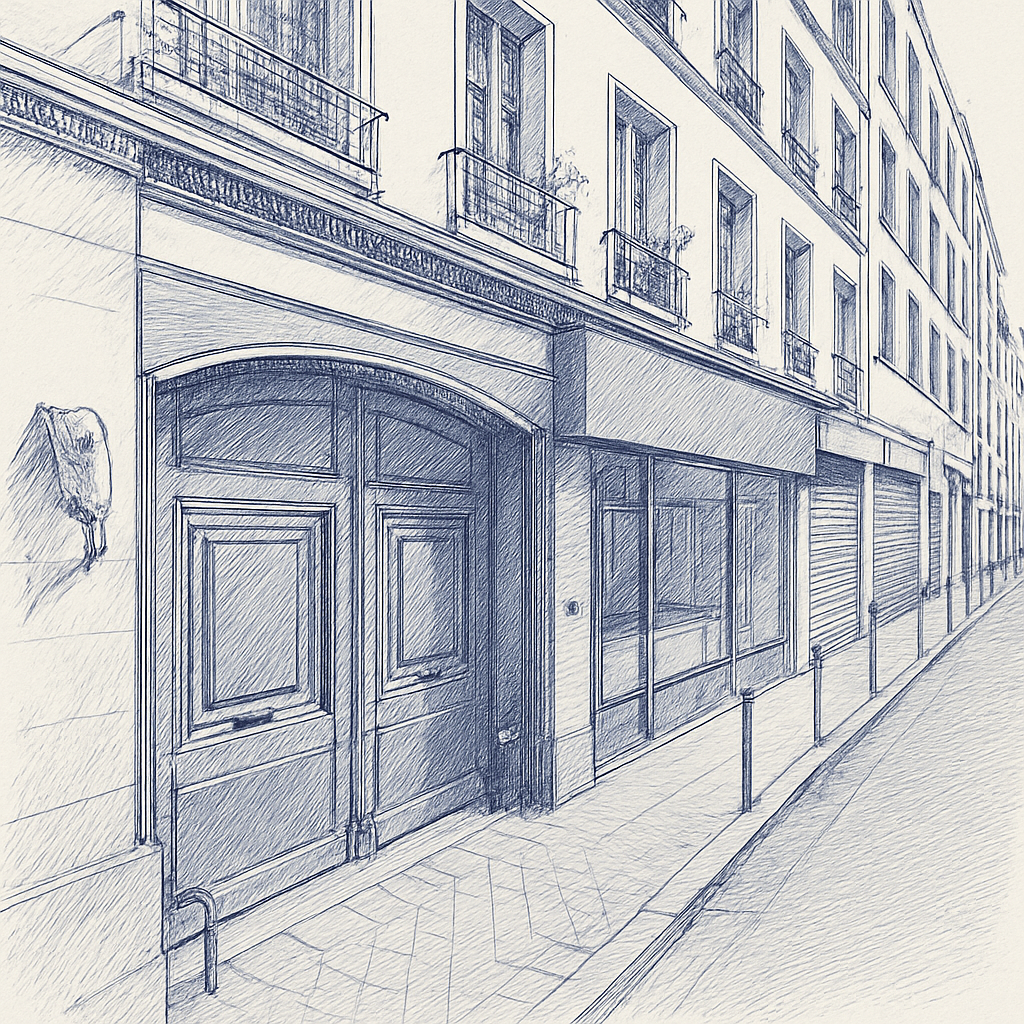
Rue de Rennes, a major shopping artery in the 6th arrondissement, connects Place du 18-Juin-1940, in front of the Montparnasse Tower, to the Croix-Rouge crossroads, in immediate proximity to Saint-Germain-des-Prés. Unlike many streets in historic Paris, Rue de Rennes is a relatively recent creation, born from the great urban planning works of the 19th century, and it today embodies one of the busiest commercial axes on the Left Bank.
The opening of Rue de Rennes began in 1853, as part of Haussmann's transformations of Paris, with the aim of connecting the Montparnasse train station, then recently built, to the historic heart of Saint-Germain-des-Prés. The street's name pays tribute to the city of Rennes, prefecture of Brittany, a region directly served by the new station. Works spanned several decades, with the street not completed in its full layout until the late 19th century, due to the complexity of the expropriations needed in an already densely built neighborhood. This late origin explains the remarkable architectural homogeneity of the street, entirely designed according to Haussmannian canons, unlike older thoroughfares with heterogeneous buildings. The Saint-Germain-des-Prés church and the Croix-Rouge crossroads mark the northern end of the street, while the Montparnasse station and tower of the same name dominate its southern end, offering a striking architectural contrast between tradition and modernity.
The architecture of Rue de Rennes is thus typically Haussmannian along most of its length, with cut-stone buildings, continuous balconies on the second and fifth floors, and zinc mansard roofs characteristic of Second Empire Paris. The ground floors, largely occupied by shops from the outset, feature wide storefronts that have adapted to contemporary commercial requirements while preserving the overall harmony of the façades. A few more recent buildings, constructed in the second half of the 20th century near the Montparnasse station, add a more modern touch to the architectural landscape.
Neighborhood life on Rue de Rennes is decidedly commercial and lively, the artery being one of the busiest in the 6th arrondissement for shopping, with major ready-to-wear brands, bookshops and department stores alongside more traditional businesses. Transport links are exceptionally good, with the Saint-Germain-des-Prés, Rennes and Montparnasse-Bienvenüe stations offering quick access to several metro lines as well as TGV connections to western France. The Luxembourg Gardens, in immediate proximity to the northern part of the street, offer a particularly appreciated green escape for residents and families.
In real estate terms, Rue de Rennes attracts a varied clientele, combining investors seeking rental yield thanks to the artery's commercial dynamism, and families drawn by proximity to the Luxembourg Gardens and Saint-Germain-des-Prés. Standard properties, in Haussmannian buildings requiring renovation, trade around 11,000 to 13,000 euros per square meter. Carefully renovated apartments, offering modern comfort while preserving Haussmannian character, reach 14,000 to 16,500 euros per square meter. Exceptional properties, particularly upper floors with unobstructed views of the Luxembourg Gardens or the Eiffel Tower, can exceed 19,000 euros per square meter.
The market trend shows sustained demand, particularly from investors attracted by the commercial rental potential of ground floors and by the artery's stability, less subject to speculative fluctuations than certain more confidential streets in the neighborhood. Selling times remain reasonable, the street offering an excellent compromise between practical living, accessibility and residential prestige.
Rue de Rennes thus constitutes a dynamic gateway to Saint-Germain-des-Prés, combining commerce, transport and quality housing, making it a consistently sought-after address in the 6th Parisian arrondissement.
Thomas Herremans