
Rue de Sèvres — The Historic Commercial Axis Between the 6th and 7th Arrondissements
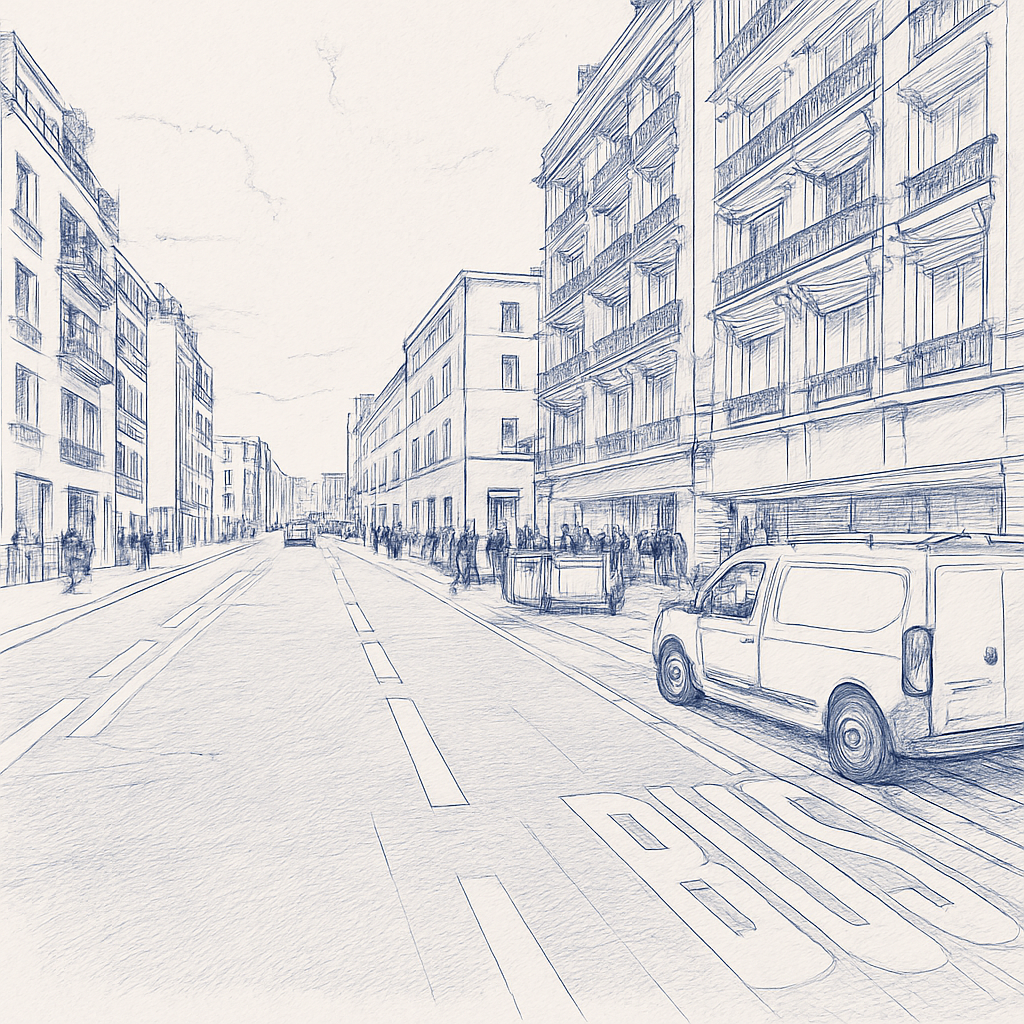
The rue de Sèvres connects the lively Sèvres-Babylone crossroads to the rue de Vaugirard, crossing both the 6th and 7th arrondissements along a route rich in historic institutions and iconic shops. This commercial artery, one of the liveliest on the Left Bank, stands out for the presence of the legendary Le Bon Marché department store, the world's first department store, which attracts a demanding international clientele seeking fashion, fine gastronomy, and refined decoration. Unlike the more residential and peaceful streets of the neighboring Faubourg Saint-Germain, the rue de Sèvres vibrates with constant commercial energy, blending luxury brands, independent boutiques, and historic hospital institutions that shape its distinctive identity.
Its name comes from the town of Sèvres, famous for its porcelain manufacture, toward which this road once led from Paris, before the complete urbanization of the neighborhood. Laid out as early as the Middle Ages as a rural path connecting the capital to surrounding villages, the rue de Sèvres truly developed from the 17th century onward with the establishment of major religious and hospital institutions. The Laennec Hospital, founded in the 17th century under the name Hospice des Incurables, occupied for centuries a vast remarkable architectural complex before its closure and recent conversion into mixed-use spaces while preserving its listed historical heritage. In 1852, the Boucicaut brothers founded Le Bon Marché, revolutionizing world commerce by inventing the very concept of the department store, with fixed displayed prices, free entry without obligation to buy, and mail-order sales. The current building, designed notably by architect Louis-Charles Boileau with structural collaboration from Gustave Eiffel for certain metal frameworks, remains a masterpiece of 19th-century commercial architecture, still today owned by the LVMH group and an absolute reference for Parisian luxury commerce. This entrepreneurial success story, immortalized by Émile Zola in his novel Au Bonheur des Dames, permanently anchors the rue de Sèvres in the history of modern world commerce. The street also hosts several historic religious institutions, including the Chapelle des Carmes, a testament to the ancient spiritual vocation of this sector of the Faubourg Saint-Germain.
The architecture of the rue de Sèvres presents an interesting stylistic diversity, blending 17th and 18th-century institutional buildings in classical cut stone, 19th-century Haussmannian buildings with orderly façades, and the imposing Bon Marché building with its metal structure, innovative for its time, adorned with glass roofs bringing remarkable luminosity to the interior sales spaces.
Neighborhood life here is particularly lively throughout the day: from the moment shops open, a dense crowd of Parisians and tourists flocks toward Le Bon Marché and its Grande Épicerie de Paris, the absolute reference for fine grocery. Surrounding cafés and restaurants, often elegant, welcome a diverse clientele of neighborhood residents and international visitors. The Sèvres-Babylone metro station, crossing point of two lines, offers optimal service, while the Square Boucicaut, a public garden built in memory of the department store's founders, adds an appreciable touch of greenery.
In real estate terms, the rue de Sèvres attracts a varied clientele, oscillating between investors drawn by commercial rental potential and individuals seeking a dynamic, central living environment. Available residential properties are mainly Haussmannian apartments on upper floors, offering relative calm despite the street's bustle. Standard prices range between €11,000 and €13,000/sqm, high-end renovated properties reach €14,000 to €16,000/sqm, while exceptional properties, particularly large apartments with unobstructed views or terraces, can exceed €18,000/sqm. Marketing times generally remain short, between two and three months, as the street's centrality and commercial dynamism constitute major assets for buyers.
A historic artery of Parisian commerce and a quality residential address, the rue de Sèvres appeals to a dynamic urban clientele, appreciating both commercial effervescence and immediate proximity to the most elegant neighborhoods of the Left Bank.
Thomas Herremans