
Rue de Tournon — Where Senate Grandeur Meets Odéon's Allure
Introduction
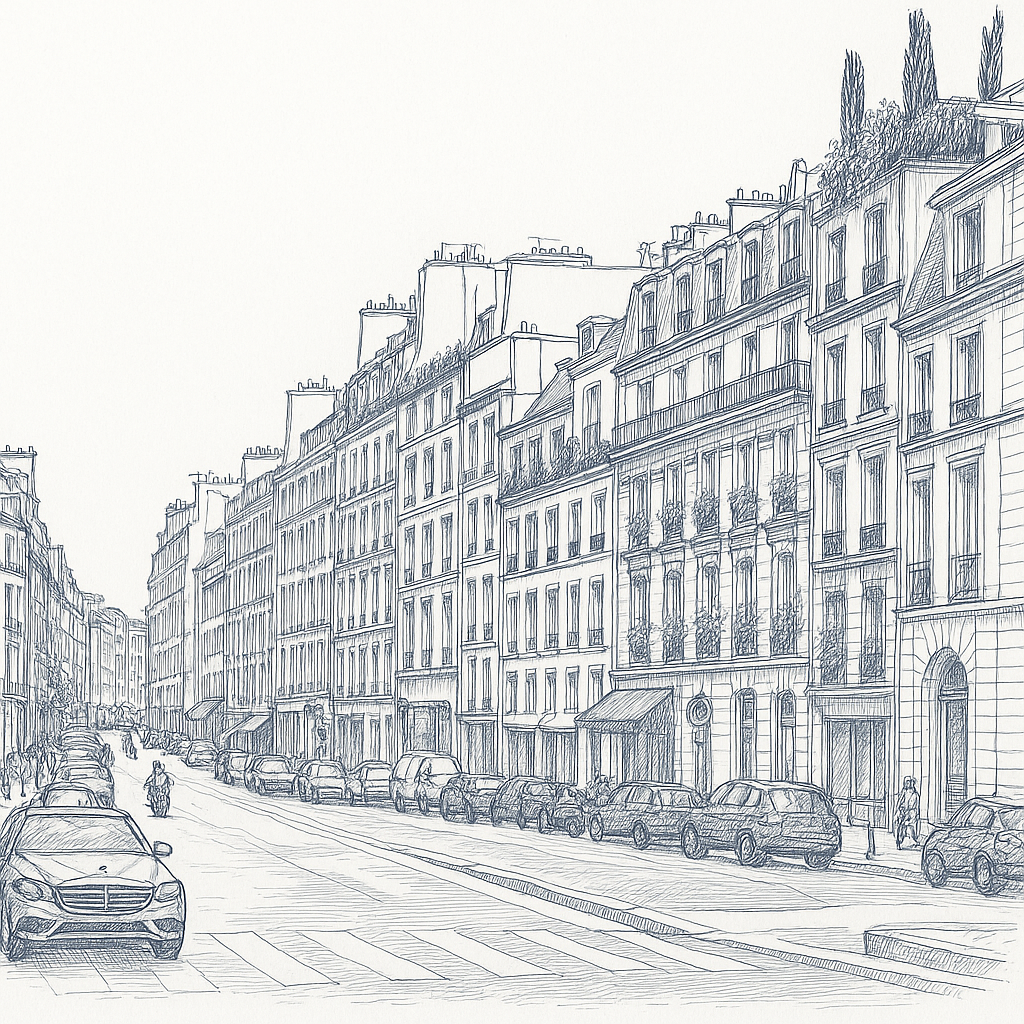
In the 6th arrondissement, Rue de Tournon connects the Odéon crossroads to the Senate, offering one of the finest architectural perspectives on the Left Bank. Short but majestic, it opens onto the Palais du Luxembourg, whose southern facade admirably closes the visual perspective. Less commercial than Rue de Buci or Rue Dauphine, Rue de Tournon cultivates a more hushed, almost solemn atmosphere, blending political institutions, mansions and refined food shops. It is a sought-after address for a discreet clientele, drawn by the immediate proximity of the Senate and the Jardin du Luxembourg.
History
Rue de Tournon takes its name from Cardinal François de Tournon, who owned a mansion on this street in the 16th century. It was laid out at the end of the 16th and beginning of the 17th century, as part of the urbanization of the neighborhood around the Palais du Luxembourg, built from 1615 for Marie de Médicis. The street quickly became a favored address of the aristocracy and senior administration due to its proximity to political power. Numerous mansions were built there in the 17th and 18th centuries, some preserved to this day. The street also has a rich literary history: writer Honoré de Balzac set certain scenes of his novels there, and many artists and writers resided there over the centuries. The Hôtel du Petit Luxembourg, official residence of the President of the Senate, stands at the street's corner, reinforcing its institutional character. In the 20th century, the street welcomed several art galleries and publishing houses, contributing to the intellectual life of the wider Latin Quarter.
Architecture
The architecture of Rue de Tournon presents a remarkably homogeneous ensemble of mansions and buildings from the 17th, 18th and 19th centuries. Cut-stone facades, sculpted carriage doors and paved interior courtyards testify to high-quality construction. The perspective onto the Palais du Luxembourg, with its central dome and symmetrical wings, gives the street a monumental dimension rare in the Parisian urban fabric. Several buildings retain Louis XV and Louis XVI elements, notably wrought-iron balconies and sculpted pediments.
Neighborhood life
Rue de Tournon retains an elegant and quiet atmosphere, punctuated by quality shops: renowned wine merchants, cheesemongers and fine pastry shops sit alongside a few contemporary art galleries. Proximity to the Jardin du Luxembourg makes it a favored promenade, and the Odéon crossroads ensures quick access to transport and the bustle of the Latin Quarter. The population is affluent, often linked to legal, political or cultural professions.
Real estate market
The real estate market on Rue de Tournon appeals to a wealthy clientele seeking prestige and discretion. Properties are mainly apartments in characterful old buildings, from three to five rooms, with period parquet, marble fireplaces and generous ceiling heights. Prices range from €13,500 to €15,000/m² for a standard property, €16,000 to €18,000/m² for a high-end renovation, and up to €20,000 to €22,000/m² for an exceptional apartment with a view of the Luxembourg. Sale timelines are generally short, two to three months, the scarcity of available properties creating strong tension on this micro-market.
Conclusion
Rue de Tournon embodies the discreet elegance and institutional prestige of the Left Bank, a rare address for a demanding clientele seeking calm, history and proximity to power.
Thomas Herremans