
Rue de Tracy: The Viceroy of New France, the Northern Sentier and a Street That Connects Paris to Canada
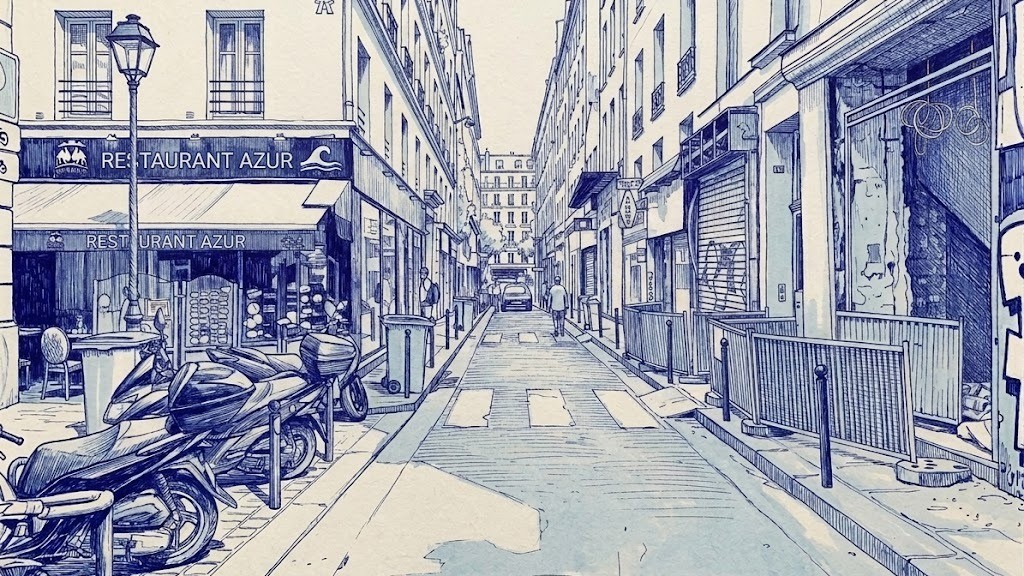
Rue de Tracy is one of the least-celebrated but most historically evocative streets in the 2nd arrondissement — a short north-south passage running through the northern fringe of the Sentier district, connecting the Boulevard Bonne-Nouvelle in the north to the Rue de Cléry in the south. Its name commemorates Alexandre de Prouville, Marquis de Tracy, one of the most consequential figures in the early history of New France — the seventeenth-century French colonial territory that would eventually become Canada — whose military and administrative achievements in the Americas gave France control of the St Lawrence valley and established the framework for French colonial society in North America.
The naming of a street in the northern Sentier after a Viceroy of New France is one of those quietly extraordinary Parisian topographic gestures that places the history of the French empire in the map of the metropolitan city — a reminder that the 2nd arrondissement, for all its commercial density and institutional weight, carries in its street names connections to the full geographical reach of French civilisation at its seventeenth-century apogee.
1. Alexandre de Prouville de Tracy: The Soldier Who Saved New France
Alexandre de Prouville de Tracy was born around 1596 and pursued a long military career that brought him to the most senior ranks of the French army before his appointment, in 1663, to the extraordinary position of Lieutenant General of all French territories in the Americas — effectively Viceroy of New France, with authority extending from Canada through the French Caribbean possessions in the Antilles.
His mission to New France in 1665 was one of the most significant interventions in the early history of Canada. The colony was in crisis: the Iroquois Confederacy — a powerful alliance of five nations whose military capacity had brought French settlement in the St Lawrence valley to the verge of collapse — was conducting raids of devastating effectiveness against the French settlements, and the colonists lived in a state of constant fear and insecurity.
Tracy's response was decisive. He brought with him the Carignan-Salières Regiment — the first regular military unit ever stationed in North America — and conducted a series of military campaigns against the Iroquois villages in what is now upper New York State that effectively ended the immediate Iroquois threat to the colony. The campaigns of 1666, while not entirely successful militarily, demonstrated French military capability sufficiently to bring the Iroquois to the negotiating table and establish a peace that allowed the colony to expand and consolidate.
Tracy also made significant administrative contributions: he oversaw the organisation of the colony's governance, promoted the settlement of the Carignan-Salières soldiers as farmers and militia along the Richelieu River (a strategic corridor against future Iroquois incursions), and established the framework of civil administration that would govern New France for the remainder of the French colonial period. He returned to France in 1667, his mission accomplished, and died in 1670 — having, in three years of extraordinary activity, transformed the prospects of French Canada.
2. New France and the French Imperial Geography of Parisian Street Names
Rue de Tracy belongs to the category of Parisian street names that preserve the memory of the French colonial empire in the map of the metropolitan city — alongside streets named after Algerian cities (Rue d'Alexandrie, Rue du Caire, Rue d'Aboukir), Napoleonic battles and other expressions of French power beyond the hexagon. In the northern Sentier, the Tracy name sits alongside Rue Blondel (the architect of the Porte Saint-Denis) and Rue de la Lune in a neighbourhood whose street names collectively span the military, architectural and cultural history of seventeenth-century France.
The specific connection to Canada gives Rue de Tracy a particular resonance in the context of the Francophone world: the colonial infrastructure that Tracy helped to establish in the 1660s was the foundation on which French Canada — and ultimately the Francophone society of Quebec that survives to this day — was built. His name in the Paris street map creates a connection between the metropolitan city and the Francophone diaspora of North America that is both historically precise and culturally enduring.
3. The Northern Sentier Character
Rue de Tracy runs through the northern fringe of the Sentier district, where the wholesale textile character of the area's interior gives way to the more transitional character of the streets approaching the Grands Boulevards. This northern zone has been among those most affected by the Silicon Sentier transformation, with technology companies and creative agencies establishing presences in the surrounding streets and contributing to the gradual transformation of the district's commercial identity.
The street's position between the Boulevard Bonne-Nouvelle — with its Grands Boulevards entertainment culture and the Grand Rex cinema — and the southern Sentier creates a dual access to the cultural and commercial resources of both zones, giving Rue de Tracy a connectivity that is more significant than its modest physical dimensions might suggest.
4. The Rue de Cléry Connection
The southern end of Rue de Tracy connects to Rue de Cléry — itself one of the most historically layered streets in the northern Sentier, following the line of the Wall of Charles V and carrying within it the memory of the medieval fortifications that once defined the northern edge of Paris. This connection places Rue de Tracy within the broader context of the northern Sentier's exceptional historical depth: a neighbourhood where medieval city walls, seventeenth-century viceroys, nineteenth-century textile merchants and twenty-first-century technology entrepreneurs all occupy the same few blocks.
5. Urban Context
Rue de Tracy runs from the Boulevard Bonne-Nouvelle in the north to the Rue de Cléry in the south, forming a short north-south connection through the northern Sentier. The street is served by the Bonne-Nouvelle metro station.
6. Architectural Character
The architecture of Rue de Tracy is typical of the northern Sentier fringe — buildings of four to five storeys with modest commercial facades varying between Haussmann-era constructions and older structures, creating a varied and unpretentious streetscape whose authentic character reflects the working commercial history of the district. The street has the honest, unpolished quality of a secondary artery in a commercial district — a quality that is increasingly valued by buyers who seek genuine urban character in their choice of central Paris address.
7. The Residential Market
The residential market on Rue de Tracy serves buyers who are drawn by the combination of northern Sentier accessibility, Grands Boulevards proximity and the extraordinary historical associations of a street named after the Viceroy who effectively founded modern Canada:
- buyers with a specific interest in the history of New France and the Francophone world for whom the Tracy connection has personal or cultural resonance
- Canadian and Quebecois buyers for whom living on a street named after one of the founders of their country's French colonial heritage is a particularly meaningful choice
- younger professionals and technology workers drawn by the Silicon Sentier environment and the accessible price points of the northern Sentier
- investors seeking properties in a district undergoing significant commercial and cultural transformation
- buyers who appreciate the historical depth that the Sentier's layered street names provide and who value the specific Canadian connection of this address
8. Property Prices
Property values on Rue de Tracy reflect the accessible character of the northern Sentier fringe:
- €12,000 to €15,500 per m² for unrenovated or standard apartments in the street's buildings
- €15,500 to €19,500 per m² for renovated properties with quality finishes and good natural light
- €19,500 per m² and above for exceptional units in the best buildings on the street
These values make Rue de Tracy one of the more accessible addresses in the 2nd arrondissement, offering buyers the opportunity to establish a presence in one of the most historically resonant districts in central Paris at price points that are significantly below those of the financial and Opéra districts to the south.
Rue de Tracy is a street that connects the northern Sentier to New France, the working commercial district of the 2nd arrondissement to the colonial history of the St Lawrence valley, and the modest secondary artery of a wholesale district to one of the most consequential figures in the history of the French empire. Alexandre de Prouville de Tracy served for three years in the Americas, established the framework for French Canada, and returned to die in Paris in 1670. His name has been preserved in a short street in the northern Sentier for three and a half centuries — one of the quieter but most historically charged addresses in the arrondissement, and one that carries, within its modest dimensions, a connection to the full geographical reach of French civilisation at the height of its ambition.
Thomas Herremans