
Rue de Varenne
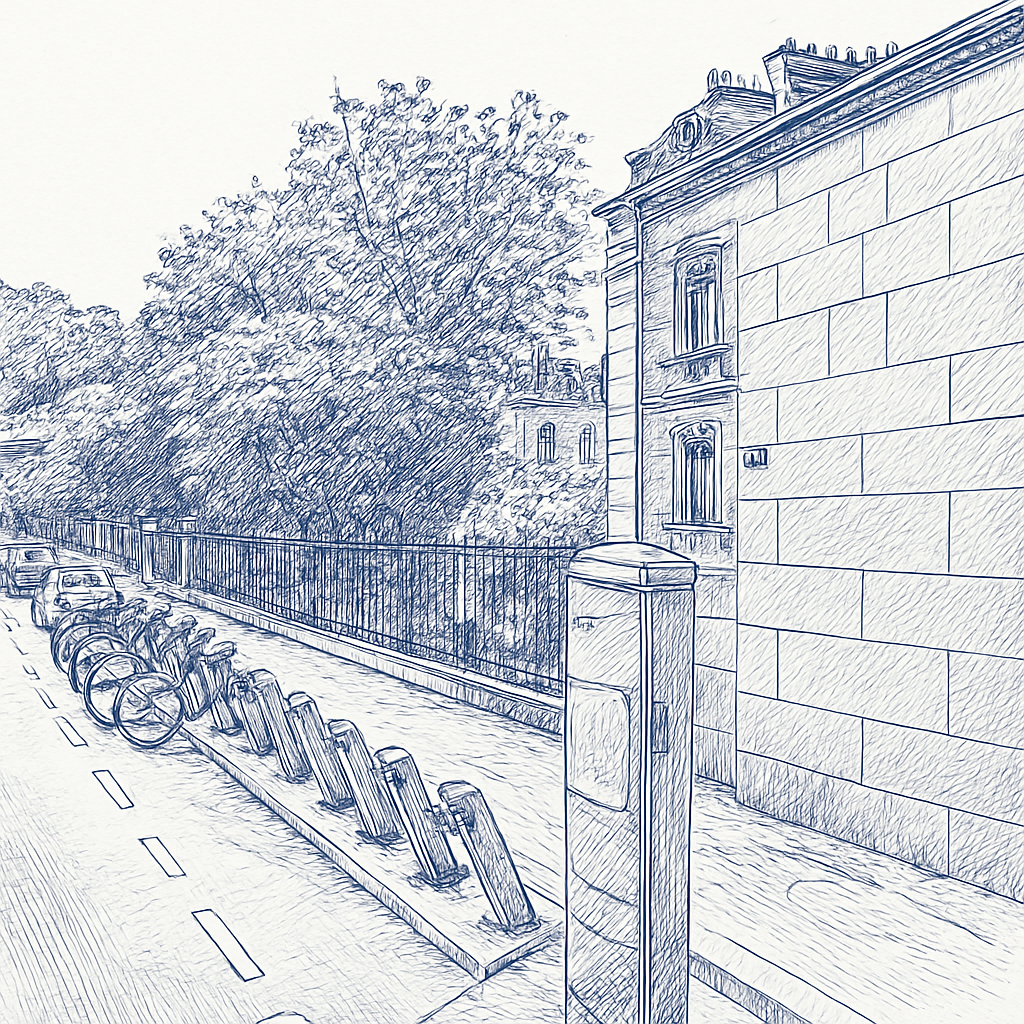
The Rue de Varenne, in the 7th arrondissement, embodies on its own the discreet aristocracy of the Faubourg Saint-Germain. Connecting Boulevard Raspail to Boulevard des Invalides, it crosses a neighborhood where 18th-century private mansions, ministries and embassies succeed one another, in a hushed atmosphere far removed from Parisian tourist bustle. This is a street of power and heritage, where wrought-iron gates outnumber shop windows.
The origin of the name remains uncertain, with some historians linking it to a garenne (game reserve) that may have existed here before the neighborhood's urbanization in the 17th century. The street developed from the 1600s onward, when the nobility, eager to distance itself from the Louvre and the bustle of the city center while remaining close to power, built sumptuous private mansions surrounded by vast gardens. The Hôtel Matignon, now the official residence of the French Prime Minister, is the street's most emblematic illustration, with its garden remaining one of the largest private gardens in Paris. The Hôtel Biron, which today houses the Rodin Museum, is another architectural jewel of the street, as is the former Hôtel de Boisgelin, now the Italian Embassy. These residences testify to an aristocratic urbanism where the street was merely a discreet passage to much larger properties hidden behind high walls.
The architecture of Rue de Varenne is distinguished by the predominance of classic private mansions, with sober yet elegant façades in cut stone, with carriage porches allowing the passage of coaches. Unlike the Haussmannian buildings that dominate other Parisian neighborhoods, here construction remains essentially pre-19th century, preserving an airy urban fabric punctuated by gardens and interior courtyards. A few later rental buildings completed the built landscape at the turn of the 20th century, but always with care to harmonize with the street's aristocratic character.
Neighborhood life here is marked by calm and discretion. Local shops remain scarce, as Rue de Varenne is not devoted to commerce but to residence and institutions. Residents nonetheless benefit from the immediate proximity of Rue du Bac and its refined boutiques, as well as the Raspail market. Transport links are good, with the Varenne metro station directly on the street, offering quick access to the Invalides and central Paris. The Rodin Museum garden and the Invalides esplanade offer green escapes appreciated by residents.
In real estate terms, Rue de Varenne caters to a very specific clientele, essentially composed of major French and international fortunes, diplomats, and families seeking an exceptional heritage asset rather than a simple rental investment. Properties here are rare, often located in grand old buildings or in sections of private mansions divided into apartments. Prices for a standard property requiring renovation stand around 14,000 to 16,000 euros per square meter. Renovated apartments with high-end finishes reach 18,000 to 21,000 euros per square meter. Exceptional properties—noble floors with private garden views, through-apartments in a former mansion—can exceed 25,000 euros per square meter, with some extremely rare transactions crossing this threshold significantly.
The market trend confirms the remarkable stability of this address, little affected by the cyclical fluctuations of the broader Parisian market. The scarcity of supply, combined with steady demand from buyers seeking prestige and discretion, keeps prices high with generally short selling times for properties that come to market, often sold privately even before official listing.
Rue de Varenne thus remains a place apart, where France's political and aristocratic history continues to be written behind discreet façades. Its exceptional heritage character, combined with a deliberately limited real estate offering, makes it one of the most sought-after and confidential streets in the 7th arrondissement.
Thomas Herremans