
Rue de Vaugirard
Introduction
Rue de Vaugirard holds a rather unusual record: it is the longest street within inner Paris, stretching over 4,350 meters from Rue de Rennes in the 6th arrondissement to Porte de Versailles in the 15th. This exceptional length gives it many faces, crossing sharply contrasting atmospheres: the chic and intellectual neighborhood of Saint-Germain-des-Prés at its northern end, then the edges of the Luxembourg Gardens, before extending into more residential and working-class neighborhoods. For this article, we will focus on its most emblematic and sought-after section, that of the 6th arrondissement, which runs alongside the Luxembourg Gardens and concentrates most of the prestige and heritage appeal of this historic street. In this area, Rue de Vaugirard stands out for its discreet elegance, its refined Haussmannian architecture, and its immediate proximity to one of the most beautiful gardens in the capital, making it a prime address for a demanding clientele seeking calm and greenery in the heart of Paris.
History
Rue de Vaugirard takes its name from the village of Vaugirard, a former independent commune annexed to Paris in 1860, whose name derives from "Val de Girard," referring to a certain Girard, abbot of Saint-Germain-des-Prés in the 13th century, who owned land in this then-rural valley. The street itself is one of the oldest thoroughfares in Paris, its route dating back to the Middle Ages as a path connecting the Abbey of Saint-Germain-des-Prés to the surrounding farmland. It then crossed vineyards and market gardens that supplied the capital, an activity that continued until the 19th century in its section furthest from the center. In the portion near the Luxembourg, the street became urbanized as early as the 17th century, with the construction of mansions and convents taking advantage of the relative tranquility of the neighborhood, then on the fringe of the bustle of central Paris. The Théâtre du Luxembourg, now gone, as well as several religious institutions, marked the history of this section of the street. At number 36, the town hall of the 6th arrondissement can still be found today, housed in a former convent of the Petits-Augustins, repurposed after the French Revolution, testament to the rich heritage of this thoroughfare. The Senate, housed in the nearby Palais du Luxembourg, also contributes to the institutional prestige of this area, making Rue de Vaugirard a strategic axis in the political and administrative geography of Paris. Over the centuries, the street has hosted numerous figures from the intellectual and artistic world, drawn by the proximity of the Luxembourg Gardens and the studious atmosphere of the neighborhood, between the Sorbonne and the Institut de France. The opening of Rue de Rennes in the 19th century and the great Haussmannian works helped modernize this section of the street while preserving its residential and institutional character.
Architecture
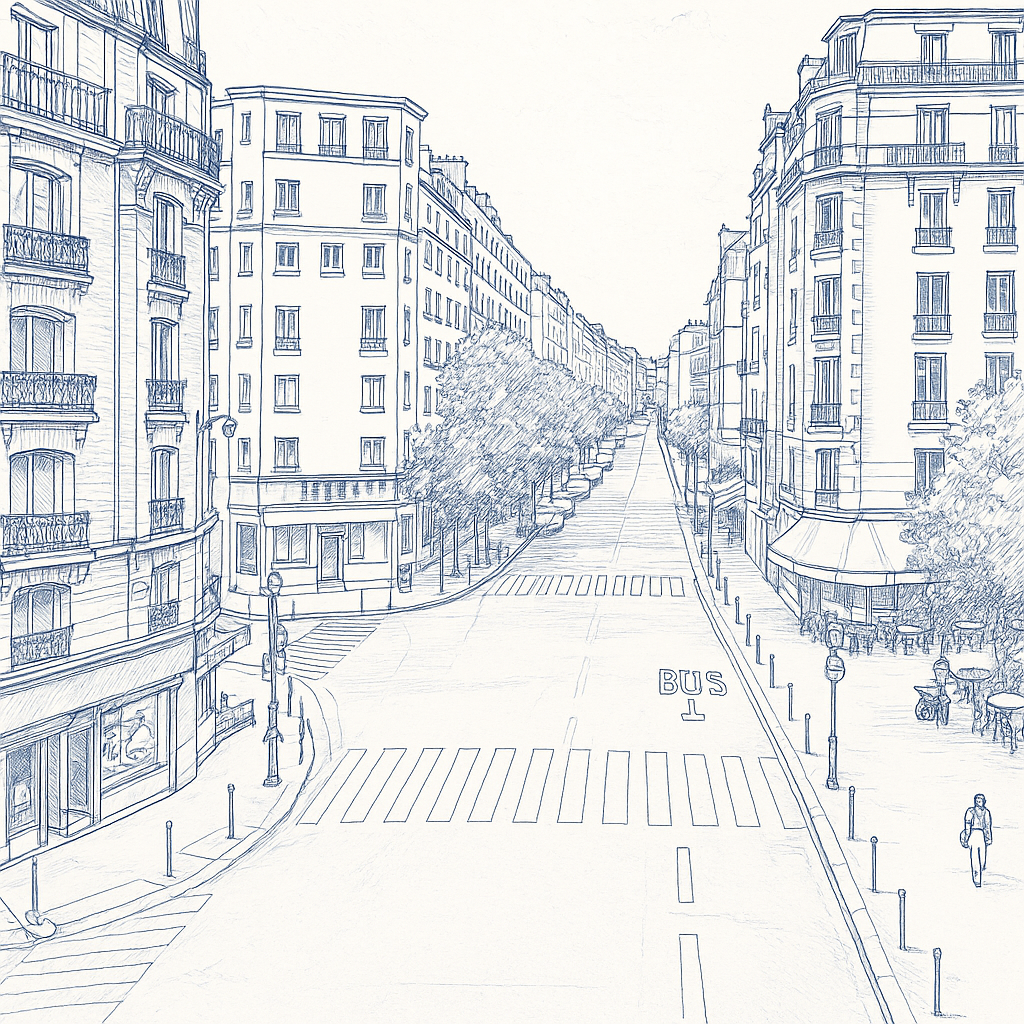
In its most prestigious section, around the Luxembourg Gardens, Rue de Vaugirard features predominantly Haussmannian buildings, constructed between 1850 and 1900, with cut-stone façades punctuated by continuous wrought-iron balconies on the second and fifth floors, in keeping with the architectural codes of the era. The buildings, generally six to seven stories high, offer generous volumes, high ceilings, and refined moldings in period apartments. Closer to Saint-Germain-des-Prés, there are also a few private mansions predating Haussmannization, witnesses to the neighborhood's aristocratic and religious past. The town hall of the 6th arrondissement, with its classical façade inherited from its convent past, constitutes a strong architectural anchor point in the street's landscape. Buildings on the garden side of the Luxembourg benefit from exceptional exposure and views, highly sought after on the Parisian real estate market.
Neighborhood Life
The section of Rue de Vaugirard bordering the Luxembourg Gardens enjoys a particularly peaceful and refined atmosphere. Shops here are select: antique bookshops, discreet luxury boutiques, elegant cafés, and gourmet restaurants punctuate the route, without ever descending into excessive bustle. The Luxembourg Gardens, the neighborhood's true green lung, daily attract strollers, students, and families, offering an exceptional living environment rarely matched within inner Paris. Public transport is excellent, with the Odéon station (lines 4 and 10) and the RER B at Luxembourg, allowing quick access to the entire capital and notably to the major schools and universities of the Latin Quarter. The population of this section of Rue de Vaugirard is composed mainly of wealthy families, professionals, diplomats, and figures from the academic and political world, due to the proximity of the Senate and several major institutions.
Real Estate Market
The real estate market on Rue de Vaugirard, in its section near the Luxembourg Gardens, appeals to a particularly demanding and wealthy clientele: senior executives, professionals, diplomats, and international investors drawn by the prestige of the address and the immediate proximity of the Luxembourg. Available properties are mainly spacious family apartments, from 80 to 200 sqm, located in Haussmannian buildings with refined amenities: Versailles parquet flooring, moldings, marble fireplaces, and generous ceiling heights. Apartments with views of the Luxembourg Gardens represent the pinnacle of the area. Prices per square meter break down as follows: for a standard property requiring updating, expect between €12,500 and €14,000/sqm; for a high-end renovated property, prices range between €15,000 and €17,500/sqm; for an exceptional property - an apartment with a direct view of the Luxembourg Gardens, an upper floor, or a private mansion - prices can reach €19,000 to €22,000/sqm, or even more for unique properties. The market remains extremely tight, with limited supply and constant demand, from both French buyers and a wealthy international clientele. Selling times are generally short for quality properties, often less than a month, as the scarcity of available properties fuels sustained competition among potential buyers.
Conclusion
Rue de Vaugirard, in its most emblematic section around the Luxembourg Gardens, represents one of the most prestigious and sought-after addresses in the 6th arrondissement. Combining Haussmannian heritage, prestigious institutions, and an exceptional living environment, it appeals to a refined clientele seeking excellence and tranquility in the heart of Paris. An address for those who refuse any compromise on Parisian quality of life.
Thomas Herremans