
Rue des Archives: The National Memory, the Hôtel de Soubise and the Street That Holds France's History
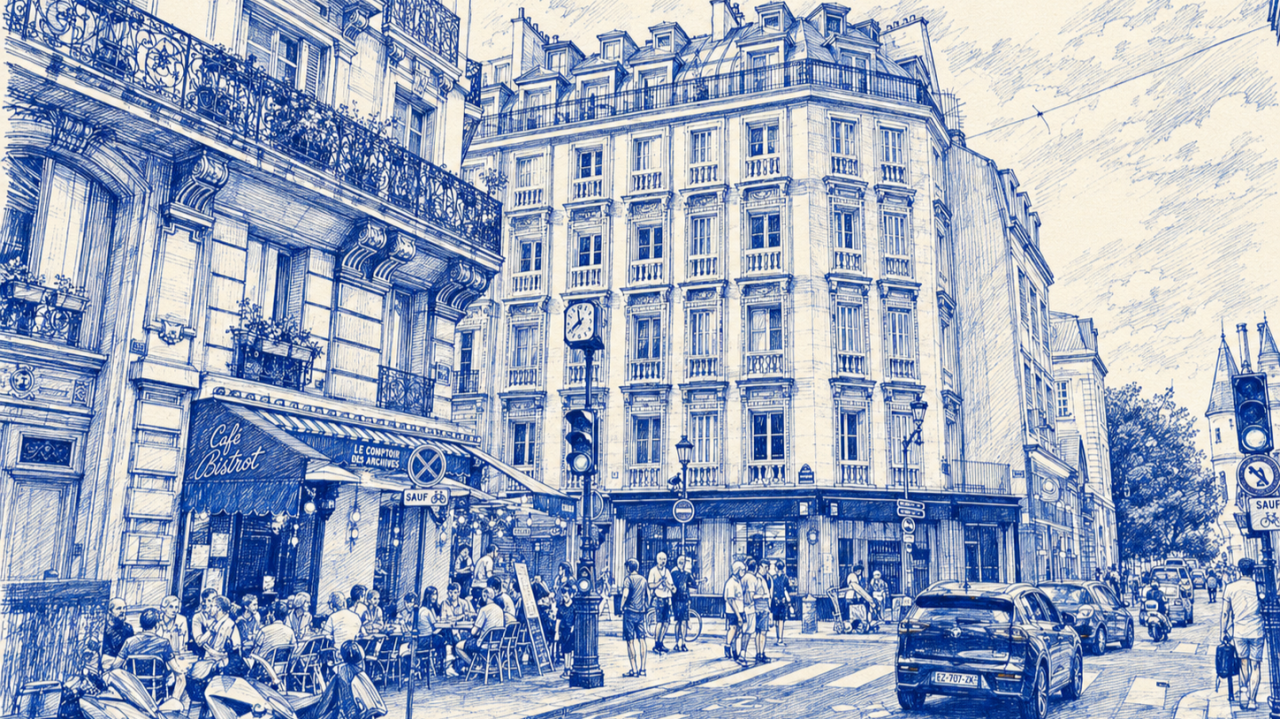
Rue des Archives is one of the most institutionally significant streets in the 3rd arrondissement — a long north-south artery running through the western section of the Marais that gives its name and its address to the Archives nationales de France, one of the most important repositories of historical documentation in the world. The street is named after this institution, which occupies two of the most magnificent hôtels particuliers in Paris — the Hôtel de Soubise and the Hôtel de Rohan — in a complex of buildings that combines some of the finest examples of French classical and Rococo architecture with the function of preserving the documentary heritage of the French state from the Carolingian period to the present.
The street runs from the Rue Rambuteau in the south — where it approaches the Centre Georges Pompidou — to the Rue des Quatre-Fils and beyond in the north, passing alongside the great garden courtyard of the Hôtel de Soubise and through a neighbourhood that is among the most architecturally distinguished in the Marais. The combination of the national archives, several important museums and the architectural heritage of the aristocratic hôtels gives Rue des Archives a cultural density that few streets in the 3rd arrondissement can match.
1. The Archives nationales and the Hôtel de Soubise
The Archives nationales de France are the national archives of the French Republic — the institution responsible for the collection, preservation and communication of the documentary heritage of the French state, the French church and French civil society from the earliest surviving documents to the most recent official records. Their collection encompasses millions of individual documents, from the earliest surviving Merovingian charters of the seventh century through the administrative records of the Ancien Régime, the decrees of the Revolution, the correspondence of Napoleon, and the official documentation of every subsequent government of France.
The Hôtel de Soubise, which serves as the principal public face of the Archives, is one of the most magnificent hôtels particuliers in Paris. Its great cour d'honneur — the formal courtyard facing the street, enclosed by two curved colonnades in the classical manner — is one of the most elegant architectural spaces in the Marais, and its interior apartments, decorated in the Rococo style of the early eighteenth century for the Prince of Soubise, include some of the finest decorative interiors in France.
The Hôtel de Rohan, adjacent to the Soubise, is equally remarkable for the extraordinary carved stone relief on its stable courtyard — the Horses of the Sun, attributed to Robert Le Lorrain, which is considered one of the masterpieces of French baroque sculpture. The two hôtels together constitute one of the most important architectural ensembles in the Marais, and their combination of institutional function with architectural magnificence gives Rue des Archives a character entirely its own.
2. The Musée des Archives nationales
The Musée des Archives nationales, housed in the decorated apartments of the Hôtel de Soubise, is one of the most interesting and least-visited museums in Paris. Its permanent collections include some of the most extraordinary documentary artefacts in French history: royal charters signed by Charlemagne, the will of Louis XIV, the trial records of Joan of Arc, letters in the hand of Napoleon, and the documents through which the French Republic established its constitutional and administrative identity.
For visitors who understand the significance of what they are looking at, the museum offers an experience of historical intimacy — the opportunity to be in the presence of the actual documents through which the history of France was made — that no other institution in Paris can provide. The combination of the decorative splendour of the Rococo apartments and the documentary seriousness of the archive collections creates an experience of considerable intellectual and aesthetic power.
3. The Artistic and Cultural Context
Rue des Archives sits at the centre of the most culturally dense section of the Marais, immediately adjacent to the Musée national Picasso — housed in the Hôtel Salé, one of the finest hôtels particuliers in the district — the Centre Georges Pompidou (accessible from the Rue Rambuteau end of the street), and the Musée Carnavalet, the museum of the history of Paris located in the Hôtel Carnavalet on the adjacent Rue de Sévigné.
This concentration of major cultural institutions in the immediate vicinity of Rue des Archives gives the street an exceptionally high density of museum and cultural heritage, making it one of the most culturally proximate residential addresses in Paris. The combination of the national archive, one of the world's great Picasso collections, the most important centre for contemporary art in France, and the city's own historical museum — all within easy walking distance of a single residential street — is a cultural proposition without parallel in the city.
4. Urban Context
Rue des Archives runs from the Rue Rambuteau in the south to the Rue de Bretagne area in the north, through the western section of the Marais in the 3rd arrondissement. The street is served by the Hôtel de Ville, Rambuteau and Arts et Métiers metro stations.
5. Architectural Character
The architecture of Rue des Archives is dominated by the presence of the Hôtel de Soubise and its garden — the great classical hôtel particulier whose cour d'honneur and garden facade define the western side of the street — and by the varied residential and commercial buildings on the eastern side. The combination of a national monument on one side and the mixed residential fabric of the Marais on the other creates a streetscape of considerable architectural contrast and interest. The wall of the Soubise garden — a long, elegant stone boundary that runs for much of the street's western edge — creates an enclosed and somewhat monumental character quite unlike the more open residential streets of the Haut Marais.
6. The Residential Market
The residential market on Rue des Archives reflects the cultural and institutional prestige of its location:
- cultural and heritage professionals — historians, archivists, museum professionals — for whom proximity to the Archives nationales and the surrounding museums is a genuine residential priority
- buyers who value the extraordinary cultural density of the street's neighbourhood and who seek an address where the great institutions of French civilisation are immediate neighbours
- international buyers drawn by the architectural magnificence of the Hôtel de Soubise and the cultural heritage of the address
- investors in the culturally rich western Marais, where the combination of institutional anchors and residential desirability creates consistent long-term demand
7. Property Prices
Property values on Rue des Archives:
- €14,000 to €18,000 per m² for standard apartments in well-maintained buildings
- €18,000 to €23,000 per m² for renovated properties with quality finishes
- €23,000 per m² and above for exceptional properties with particularly distinguished positions
Rue des Archives holds one of the most institutionally extraordinary addresses in the 3rd arrondissement — the national memory of France preserved in a pair of hôtels particuliers of exceptional beauty, on a street whose cultural context is among the richest in the Marais. For buyers who seek a residential address where the history of France is not merely commemorated but physically present — where the documents through which the country made itself are kept in the building next door — there are few more complete expressions of that aspiration in Paris.
Thomas Herremans