
Rue des Beaux-Arts — Where Artistic Legacy Meets Timeless Elegance
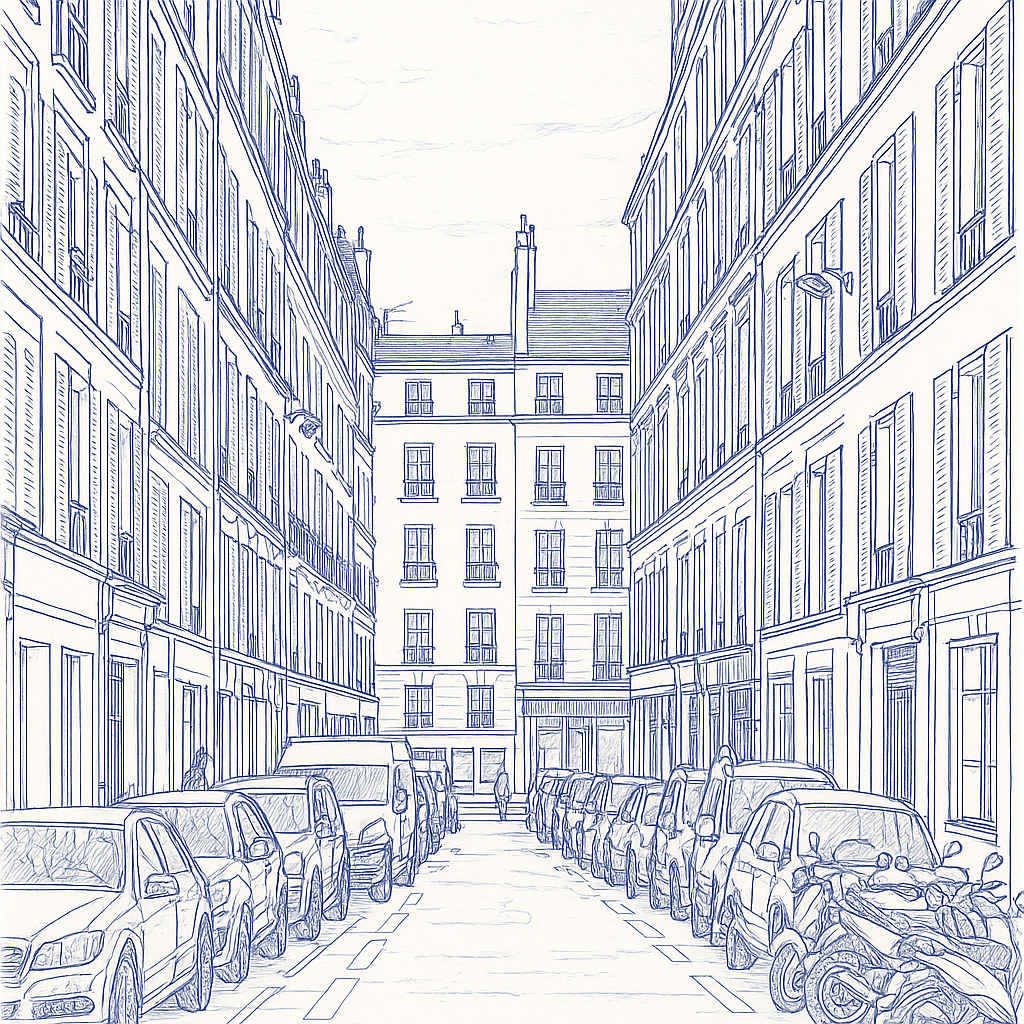
Nestled between Rue Bonaparte and Rue de Seine in the 6th arrondissement, Rue des Beaux-Arts is a short thoroughfare barely two hundred meters long, yet its prestige far exceeds its modest size. It takes its name from the École nationale supérieure des Beaux-Arts, the prestigious institution that occupies much of its northern flank and has trained generations of painters, sculptors, and architects since the 19th century. This street alone embodies the spirit of Saint-Germain-des-Prés: a rare blend of artistic excellence, discreet elegance, and refined bohemia. Unlike the larger commercial thoroughfares nearby, Rue des Beaux-Arts cultivates an almost confidential intimacy, punctuated by contemporary art galleries, charming hotels, and period façades that seem to have weathered the centuries without losing their splendor. It is an address for connoisseurs, prized by those seeking the very essence of artistic and literary Paris.
The history of Rue des Beaux-Arts is intimately linked to that of Parisian artistic education. Opened in the 17th century under the name Rue des Petits-Augustins, in reference to the convent of the Petits-Augustins located there, it was renamed in 1868 when the École des Beaux-Arts officially settled in, consolidating its artistic vocation. The convent of the Petits-Augustins, founded in the 17th century, already had a rich history: during the French Revolution, it became the Musée des Monuments Français, designed by Alexandre Lenoir to save religious artworks threatened with destruction, before eventually being absorbed by the École des Beaux-Arts in the 19th century. But the street also owes its worldwide renown to another, later and more romantic event: it was at number 13, in what was then the Hôtel d'Alsace, that Oscar Wilde died in 1900, exiled and ruined, allegedly uttering his famous line about the wallpaper in his room being too ugly to die alongside him. This hotel, now simply renamed 'L'Hôtel,' has become a pilgrimage site for lovers of Anglo-Saxon literature and a discreet luxury establishment. The street also hosted numerous artists' studios and art dealers, reinforcing its reputation as a crossroads between creation and the art trade. In the 20th century, it became an essential thoroughfare for art students from around the world, who frequented the surrounding cafés in hopes of crossing paths with their masters.
The architecture of Rue des Beaux-Arts is distinguished by its elegant homogeneity. The buildings, mostly constructed in the 18th and 19th centuries, present sober yet refined cut-stone façades, with carved wooden carriage doors and period ironwork on the balconies. The École des Beaux-Arts itself, with its courtyard of honor and main building in neo-Renaissance style designed by architect Félix Duban in the 19th century, constitutes a true architectural jewel, blending reused antique and Renaissance fragments with a scholarly composition typical of 19th-century eclecticism. The surrounding residential buildings, more modest but equally well-maintained, offer generous ceiling heights, stone staircases with wrought-iron railings, and sometimes vaulted cellars attesting to the age of the structures. The façades have retained a rare 18th-century character in this neighborhood, with small-paned windows and lime-rendered rubble-stone walls.
Neighborhood life here is marked by a calm refinement. By day, the street comes alive with the rhythm of Beaux-Arts students entering and exiting with their portfolio cases, and visitors to the numerous art galleries lining the street, exhibiting both contemporary art and more classical pieces. The bistros and small restaurants, often discreet, welcome a clientele of regulars, a mix of local residents, professors, and collectors. In the evening, the atmosphere becomes more hushed, almost confidential, conducive to intimate dinners. The immediate proximity of the Seine, the Quai Malaquais, and the Quai Voltaire allows for beautiful walks, while the Luxembourg Gardens and the Pont des Arts are just a few minutes' walk away. Transport links are excellent, with the Saint-Germain-des-Prés and Mabillon stations in immediate proximity.
The real estate market on Rue des Beaux-Arts is among the most exclusive on the Left Bank. The scarcity of properties, combined with the prestigious address, attracts a wealthy international clientele, often composed of art lovers, collectors, and creative professionals seeking an exceptional pied-à-terre. Available properties are mainly characterful apartments of 40 to 120 sqm, with exposed beams, period fireplaces, and sometimes views over the zinc rooftops typical of Saint-Germain-des-Prés. Prices per square meter reflect this exclusivity: €14,000 to €15,500/sqm for a standard property requiring renovation; €16,500 to €18,500/sqm for a tastefully renovated apartment with high-end fittings; and up to €20,000 to €22,000/sqm for an exceptional property, a top-floor apartment with terrace or a dual-aspect apartment in a historic building. Demand remains extremely strong despite the chronic scarcity of supply, and properties coming onto the market typically find buyers in less than two months, often through word of mouth even before an official listing.
In conclusion, Rue des Beaux-Arts represents the quintessence of discreet Parisian luxury, where art, literary history, and architecture combine to offer a unique living environment. It appeals to a discerning clientele passionate about culture and authenticity, for whom the address itself is already a work of art.
Thomas Herremans