
Rue des Jeûneurs: Fasting, the Textile Trade and One of the Sentier's Most Overlooked Streets
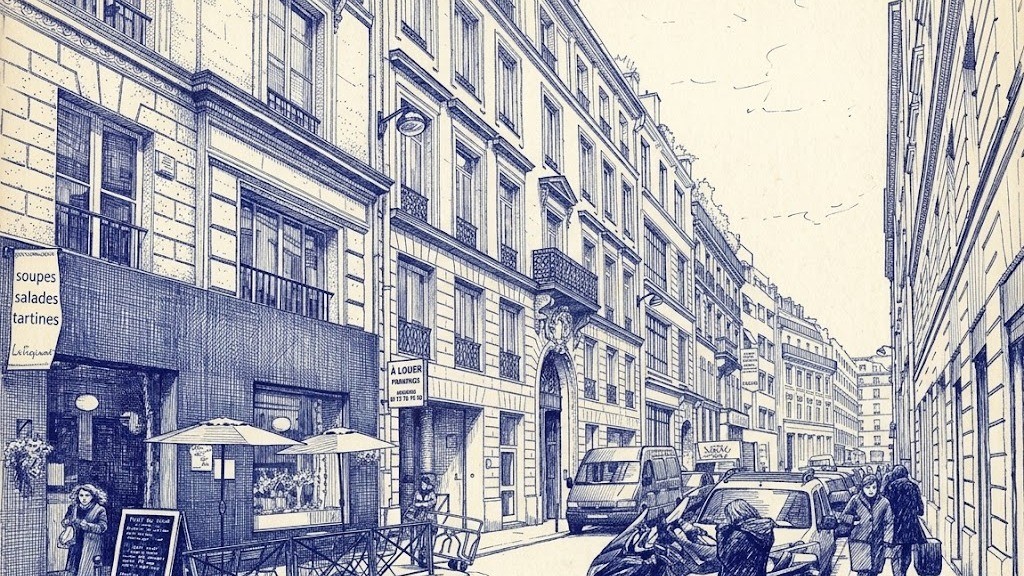
Rue des Jeûneurs is one of the most intriguingly named streets in the 2nd arrondissement — a street whose name, meaning "the fasters" or "those who fast," evokes a religious practice rather than the commercial reality that has defined the street for the past two centuries. Running east to west through the heart of the Sentier district, the street is a secondary artery in the wholesale textile and garment trade that has been as fundamental to the identity of the 2nd arrondissement as any of its more celebrated neighbours.
The name is thought to derive from a community of religious penitents or members of a religious confraternity who practised regular fasting as a devotional discipline and who were associated with a building or institution on or near this street in the early modern period. The precise identity of this community has been largely lost to historical records, but the name persists as a reminder of the religious and devotional life that once animated even the most commercially active quarters of old Paris.
Today, Rue des Jeûneurs is a working street of the Sentier — animated by the movement of goods, buyers, traders and, increasingly, by the technology professionals who have colonised the upper floors of its buildings as part of the wider Silicon Sentier transformation. It is not a street that seeks attention, but it rewards it.
1. The Etymological Mystery
The derivation of "Jeûneurs" — literally "those who fast" — from the French verb "jeûner" (to fast) places the street in the tradition of Parisian street names that preserve the memory of religious communities, confraternities and devotional practices that once shaped the daily life of the pre-revolutionary city.
Before the Revolution, Paris was densely populated with religious associations of all kinds: confraternities devoted to specific saints, penitential brotherhoods who practised collective acts of devotion including fasting, and charitable organisations associated with parishes and religious orders. These groups often occupied specific buildings or sections of streets, and their presence could become so established that the street itself became associated with their identity.
The precise confraternity or community behind the name "Jeûneurs" has not been definitively identified in historical records, making this one of the more enigmatic street names in the arrondissement — a fragment of pre-revolutionary religious life whose specific meaning has been lost even as its name has endured.
2. The Sentier Textile Economy
Rue des Jeûneurs developed its modern commercial identity as part of the broader expansion of the Sentier textile district in the nineteenth century. The street's position in the heart of the Sentier made it a natural location for the showrooms, workshops and trading firms of the wholesale garment trade, and by the mid-twentieth century it was a fully integrated part of the Sentier economy.
The street was particularly associated with the ready-to-wear garment trade — the prêt-à-porter sector that grew enormously in importance throughout the twentieth century as fashion became increasingly democratised and the wholesale market expanded to supply not just the luxury trade but the mass market for affordable stylish clothing.
The combination of showroom space on lower floors, production coordination offices in the middle floors and, in some buildings, actual garment production in upper-floor ateliers created a vertically integrated commercial environment that was characteristic of the Sentier at its peak.
3. Street Character and Daily Life
Rue des Jeûneurs has the character of a working street — not a destination street or a showcase address, but an artery through which commercial life flows with a directness and authenticity that is increasingly rare in the gentrifying districts of central Paris. The movement of goods, the presence of working traders, the overlap of different commercial activities and the social diversity of the district's working population give the street an energy that is distinctively Sentier in character.
The restaurant and café culture on the street is functional rather than fashionable, serving the working population of the district with efficient, generous and affordable food that reflects the traditions of the market district bistro. This working culinary culture is one of the authentic pleasures of a street like Rue des Jeûneurs — a reminder that Paris contains many registers of urban life beyond the showcase restaurants and luxury cafés of the tourist circuits.
4. Urban Context
Rue des Jeûneurs runs from the Rue du Sentier in the west to the Rue d'Aboukir in the east, forming a short but important east-west connection within the heart of the Sentier. The street is served by the Sentier metro station, giving it direct access to the broader Paris transport network.
5. Architectural Character
The architecture of Rue des Jeûneurs is typical of the working Sentier — buildings of four to six storeys with practical rather than decorative facades, large windows designed to maximise light in the workrooms and showrooms within, and ground floors adapted to commercial use with wide openings for goods display and delivery.
The residential accommodation on upper floors varies considerably in quality and character, from modest studios to more generous apartments that have been renovated to a standard appropriate for residential occupancy. The best units on the street benefit from the generous floor plates and ceiling heights of the commercial buildings in which they are set, offering spatial qualities that are difficult to find in more conventionally residential buildings.
6. The Residential Market
The residential market on Rue des Jeûneurs serves a primarily younger and more professionally diverse population than the more prestigious streets of the southern arrondissement. The street's working character, its accessibility and its position within the evolving Sentier district make it an address of particular interest for buyers who prioritise centrality and authenticity over prestige:
- technology and digital professionals drawn by the Silicon Sentier environment
- younger buyers for whom the authentic character of the Sentier is a draw rather than a deterrent
- investors seeking rental properties in a district with sustained demand and ongoing transformation
- buyers attracted by the spatial qualities of converted commercial buildings
7. Property Prices
Property values on Rue des Jeûneurs are among the more accessible in the 2nd arrondissement:
- €11,500 to €14,500 per m² for unrenovated or modest apartments
- €14,500 to €18,000 per m² for renovated properties with quality finishes and good ceiling heights
- €18,000 per m² and above for exceptional units in the best-converted buildings
Rue des Jeûneurs is a street that wears its history lightly. The devotional community that gave it its name has vanished from memory; the garment trade that defined it for two centuries is in the midst of transformation; the technology economy that is reshaping it is still finding its form. In this sense, the street is characteristic of the Sentier as a whole — a neighbourhood that has always been defined by change, by work and by the energy of communities who have brought their particular vitality to this corner of central Paris.
Thomas Herremans