
Rue des Martyrs �� Where Paris Climbs to Elegance
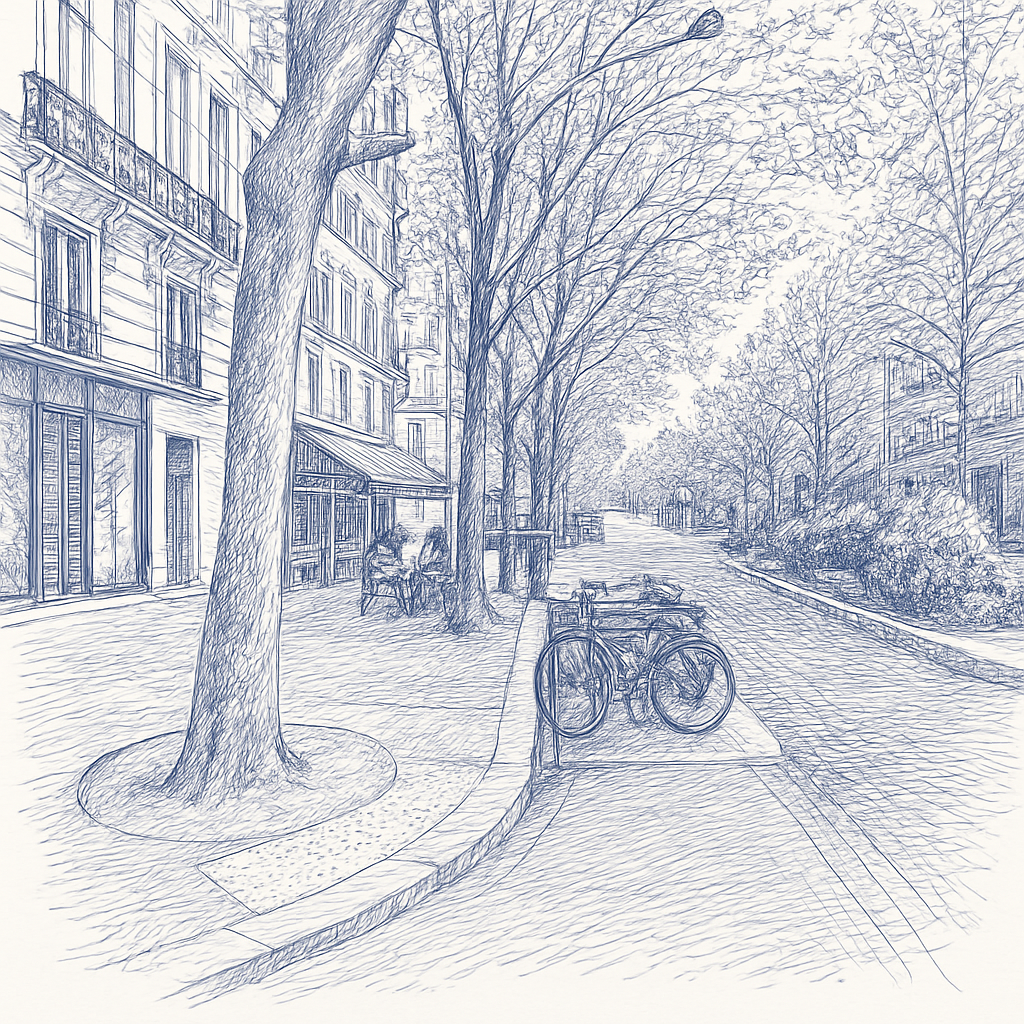
Rue des Martyrs climbs from the boulevard of the Nouvelle Athènes district up to the edges of Montmartre, crossing the ninth arrondissement in a gradual ascent that makes it one of the liveliest and most photogenic streets on the Right Bank. A true gourmet backbone of the neighbourhood, it is renowned for the density and quality of its food shops, bakeries, cheesemongers, wine merchants and greengrocers that attract a crowd of food lovers from across Paris every day. Unlike the more institutional streets in the lower part of Nouvelle-Athènes, Rue des Martyrs cultivates a working-class and bohemian identity, blending long-time residents with newcomers seduced by its urban-village atmosphere. Its slope, its lively pavements and its colourful façades make it an essential stroll for anyone wishing to understand the soul of everyday Paris, far from the frozen tourist arteries.
The origin of the name Rue des Martyrs dates back to an ancient tradition according to which this path was supposedly taken by Saint Denis and his fellow martyrs on their way to the hill of Montmartre, the "mount of the Martyrs", to be executed there in the third century. This legendary etymology gives the street a strong symbolic dimension, rooted in the Christian origins of Paris. Long a simple rural path crossing vineyards and open-air quarries, the street truly took shape in the nineteenth century with the urbanisation of the Nouvelle-Athènes district, favoured by Romantic artists, writers and musicians. Throughout the nineteenth and twentieth centuries, Rue des Martyrs became a popular shopping street, frequented by workers and small shopkeepers from nearby workshops, before undergoing progressive gentrification from the 1990s onwards. Edith Piaf, who grew up in the streets near Pigalle, reportedly frequented this working-class neighbourhood that fed the imagination of many artists and songwriters. The street has also inspired literary works and documentaries celebrating its unique atmosphere, including a bestselling book entirely devoted to its permanent market. Even today, several century-old shops perpetuate artisanal know-how passed down through generations, offering a rare continuity in an ever-changing Paris.
The architecture of Rue des Martyrs consists mainly of nineteenth-century buildings, mixing small bourgeois buildings of three or four storeys with more modest constructions inherited from the rapid urbanisation of Nouvelle-Athènes. The façades, often rendered and painted in bright colours, contrast with the more sober cut stone of neighbouring Haussmannian districts. A few remarkable corner buildings, with their wrought-iron balconies and preserved shop fronts, testify to the street's historic commercial character. The natural slope of the terrain, characteristic of the foot of the Montmartre hill, gives the street a particularly picturesque urban profile, reinforced by the near-total absence of rigid alignment between façades.
Neighbourhood life on Rue des Martyrs is intense from the morning onwards, when shopkeepers set up their stalls and residents come to buy their bread and cheese for the week. The atmosphere continues throughout the day with an uninterrupted succession of onlookers, gourmet tourists and regulars loyal to their favourite addresses. In the evening, wine bars and small restaurants take over, offering a convivial and warm atmosphere much appreciated by the neighbourhood's young professionals. Transport links are excellent, with several metro stations in the immediate vicinity, and the Square d'Anvers as well as the lower slopes of Montmartre provide welcome breathing spaces.
The real estate market of Rue des Martyrs attracts a young, urban and creative population, often first-time buyers or those seeking a dynamic rental investment driven by the neighbourhood's constant appeal. The properties on offer are mostly small surfaces, studios and two-room flats, along with a few family apartments in the highest-quality buildings. Standard prices range from €9,500 to €10,800 per square metre for a property requiring renovation, between €11,500 and €13,000 for a high-end renovated apartment with preserved period charm, and can reach €14,500 to €15,500 per square metre for an exceptional property with an unobstructed view of Montmartre or a terrace. Selling periods remain very short, often under a month, as demand remains strong for this address that is both working-class and trendy.
Rue des Martyrs embodies an authentic and gourmet Paris, at the crossroads of the village of yesteryear and the contemporary trendy neighbourhood. It appeals to a young and dynamic clientele, attached to neighbourhood life, food shops and a convivial atmosphere rarely matched elsewhere in the capital.
Thomas Herremans