
Rue Drouot
Introduction
In the 9th arrondissement, Rue Drouot connects Boulevard Montmartre to Rue Rossini, along a short route charged with a strong identity: that of the auction house and the art trade. World-renowned thanks to the Hôtel Drouot, Paris's main auction house, the street attracts collectors, experts, antique dealers and curious visitors from around the world. It stands out clearly from neighboring commercial streets through this very particular vocation, which shapes its atmosphere, both hushed and feverish, between the discretion of negotiations and the excitement of public auctions.
History
Rue Drouot owes its name to Count Antoine Drouot, an Imperial general loyal to Napoleon I, nicknamed the "Sage of the Grande Armée" for his exemplary moral rigor. Laid out in the early 19th century as part of the urbanization of the Chaussée-d'Antin and Grands Boulevards neighborhood, the street quickly took on a commercial and bourgeois vocation. But it was truly the establishment of the Hôtel des Ventes in 1852 that sealed the street's destiny. This institution, rebuilt several times, notably in 1980 in a resolutely modern style by architects Roland Coste, Jean-Jacques Fernier and André Biro, quickly became the beating heart of the Parisian art market, where paintings, furniture, jewelry, rare books and collectibles are traded. Legendary sales have been held there, dispersing prestigious private collections and sometimes headline-making estates. The street also hosts numerous appraisal firms, antique dealers and auctioneers, forming a unique ecosystem dedicated to the trade of art and antiques. The Drouot neighborhood thus became, over the 20th century, an essential meeting point for international collectors, museums and art dealers, contributing to Paris's standing as a historic capital of the art market, alongside London and New York.
Architecture
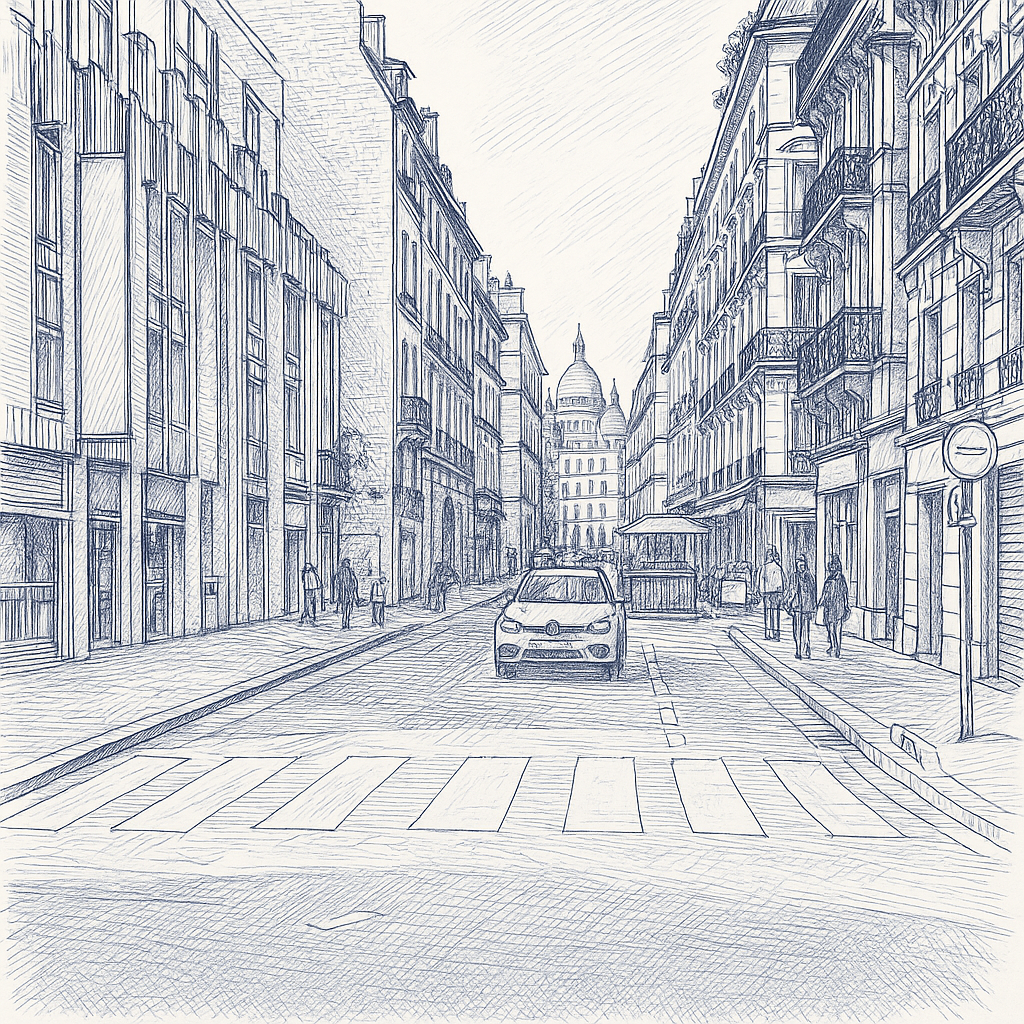
The architecture of Rue Drouot is marked by the presence of the Hôtel Drouot building itself, a modern 1980s construction with clean lines, contrasting with the surrounding Haussmannian buildings. The latter, mostly built between 1850 and 1880, present classic cut-stone facades, with continuous balconies and mansard roofs characteristic of the Second Empire style. Several buildings retain period commercial storefronts, testifying to the street's old commercial vocation.
Neighborhood life
Rue Drouot lives to the rhythm of auctions, with intense activity on public sale days, when sidewalks fill with buyers, curious onlookers and specialized transport trucks. Outside these moments, the street retains a calmer atmosphere, punctuated by cafés and restaurants frequented by art market professionals. Proximity to the Grands Boulevards and the Richelieu-Drouot metro station ensures excellent service.
Real estate market
The real estate market on Rue Drouot attracts a specific clientele, often linked to the art and appraisal world, as well as investors drawn by the neighborhood's centrality. Available properties are mainly medium-sized Haussmannian apartments, from two to four rooms. Prices range from €9,500 to €10,800/m² for a standard property, €11,500 to €13,000/m² for a high-end renovation, and up to €14,000 to €15,500/m² for an exceptional property on a noble floor. Sale timelines are two to four months, in a stable market driven by the neighborhood's centrality and economic dynamism.
Conclusion
Rue Drouot remains a one-of-a-kind address, blending the art trade, Haussmannian heritage and Parisian centrality, ideal for a curious and cultured clientele.
Thomas Herremans