
Rue du Bac
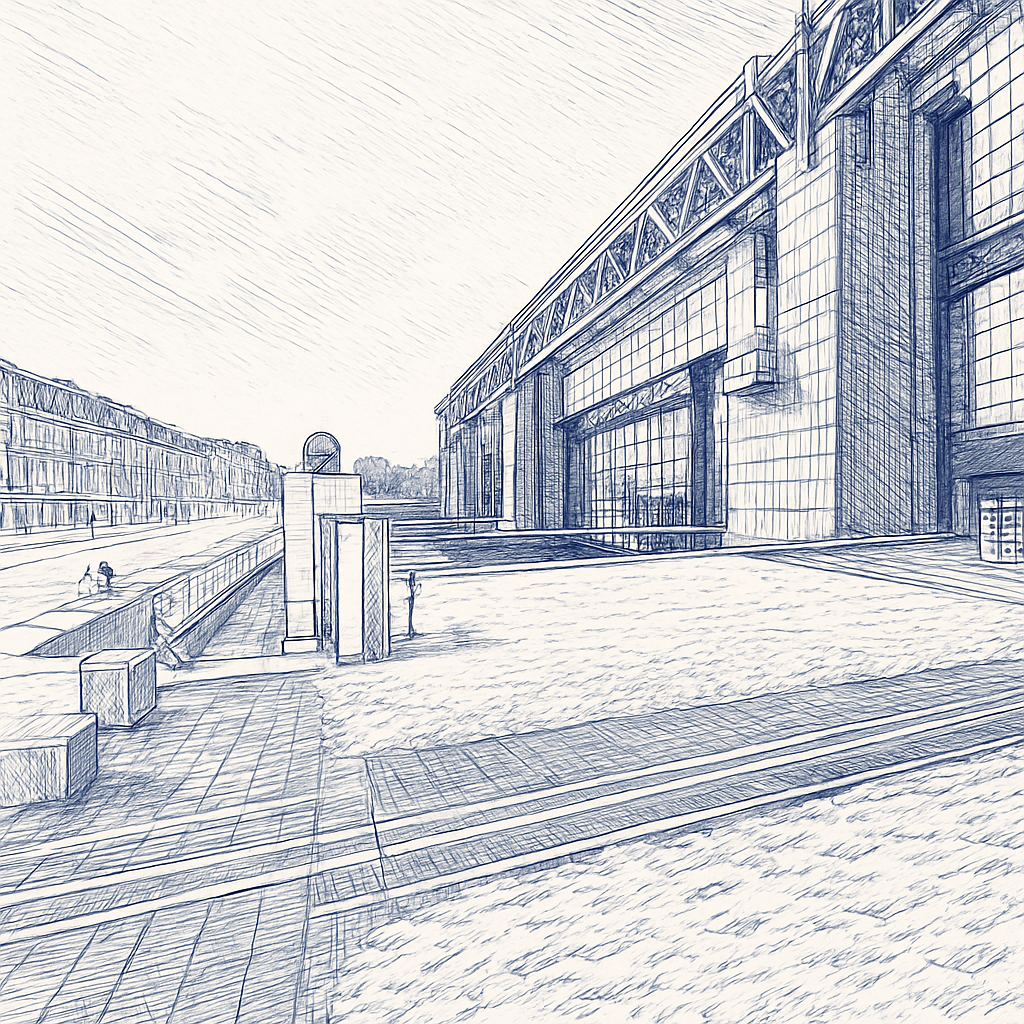
The Rue du Bac, a long artery in the 7th arrondissement, connects the Quai Voltaire to the vicinity of Le Bon Marché, crossing the entire heart of the Faubourg Saint-Germain. Its name, inherited from a former ferry (bac) that allowed crossing the Seine before the construction of the Pont Royal, recalls an era when this neighborhood was still a rural extension of the capital. Today, Rue du Bac is one of the most elegant and lively arteries of the Left Bank, combining prestigious antique dealers, decoration boutiques and historic religious institutions.
The street's history dates back to the 17th century, when Queen Marie de' Medici had this ferry set up to facilitate the transport of materials destined for the construction of the Louvre palace and later the Tuileries palace. The street truly took off urbanistically from the reign of Louis XIV, when the nobility began settling in the Faubourg Saint-Germain, then in full development. The Chapel of Our Lady of the Miraculous Medal, at number 140, attracts hundreds of thousands of pilgrims from around the world each year, making Rue du Bac a major site of Catholic devotion as well as a prized commercial address. Le Bon Marché, the world's first department store founded by Aristide Boucicaut in 1852, marks the southern end of the street and has profoundly influenced its commercial development since the second half of the 19th century.
The architecture of Rue du Bac reflects this long history, with a great diversity of styles ranging from 17th and 18th century private mansions to 19th-century Haussmannian buildings. Cut-stone façades, adorned with continuous balconies and zinc mansard roofs, dominate the northern part of the street, while the southern, more commercial part features later buildings adapted for storefronts and commercial uses. Several porches and interior courtyards still conceal remarkable private mansions, witnesses to the aristocracy that once populated these places.
Neighborhood life on Rue du Bac is particularly rich and lively. Antique dealers and art galleries rub shoulders with high-end interior decoration boutiques, fine gastronomy houses and elegant cafés where a refined Parisian clientele gathers. Le Bon Marché and its fine grocery store, La Grande Épicerie de Paris, constitute major commercial anchor points. Transport links are excellent, with the Rue du Bac and Sèvres-Babylone metro stations in immediate proximity, as well as quick access to the Luxembourg Gardens and the Seine quays, offering green spaces and walks appreciated by residents.
In real estate terms, Rue du Bac attracts a mixed clientele, composed of long-standing Parisian families, French senior executives and international buyers, particularly North American and European, drawn by the neighborhood's timeless charm. Standard properties, in older buildings requiring renovation, trade around 12,000 to 14,000 euros per square meter. Carefully renovated apartments, preserving original moldings and parquet floors while integrating modern comfort, reach 15,000 to 18,000 euros per square meter. Exceptional properties, such as noble floors with unobstructed views or through-apartments in historic buildings, can exceed 20,000 euros per square meter.
The current market trend shows sustained demand, driven by proximity to Le Bon Marché and the constant appeal of the Faubourg Saint-Germain among international buyers. Selling times remain relatively short for well-located and well-presented properties, confirming the solidity of this address against more general trends in the Parisian market.
Rue du Bac thus embodies a rare balance between historical heritage, lively neighborhood life and commercial excellence, making it one of the most sought-after and vibrant addresses in the 7th arrondissement.
Thomas Herremans