
Rue du Colonel Driant: The Soldier-Writer of Verdun, the Banque de France's Shadow and a Street of Civic Courage in the 1st Arrondissement
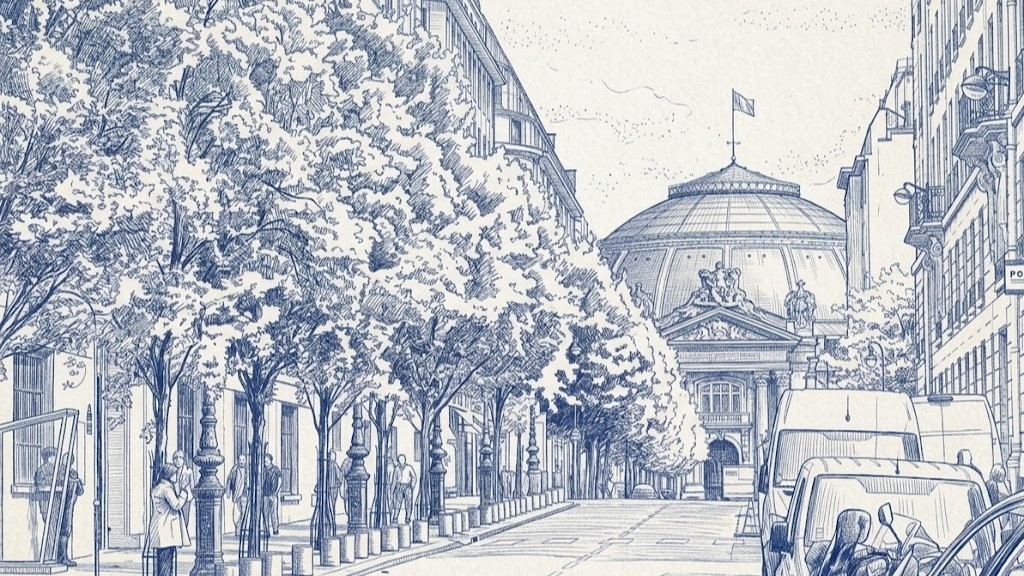
Rue du Colonel Driant is one of the most historically charged street names in the 1st arrondissement — commemorating Émile Driant, a French army officer, novelist and politician whose death at the Battle of Verdun on 22 February 1916 made him one of the most celebrated military heroes of the First World War. The street runs along the northern side of the Banque de France complex, connecting the Rue de la Vrillière in the east to the Rue Croix-des-Petits-Champs in the west, at the boundary between the 1st and 2nd arrondissements.
Émile Driant's story is one of the more extraordinary in the history of the French officer corps. A professional soldier who retired to pursue a literary and political career — writing popular adventure novels under the pseudonym "Capitaine Danrit" and serving as a deputy in the National Assembly — he re-enlisted at the outbreak of the First World War at the age of 59, determined to serve his country despite his age. He was killed leading his battalion's resistance against the massive German assault that opened the Battle of Verdun, becoming in death one of the iconic figures of French military resistance.
1. Émile Driant: Soldier, Novelist, Deputy, Hero
Émile Driant was born in Wasigny in 1855 and pursued a military career before leaving active service after the association with General Boulanger's failed political movement tainted his prospects. In retirement, he became a prolific writer of military and adventure fiction, imagining future wars — including aerial warfare and submarine conflict — with visionary accuracy. He also served as a deputy for Nancy from 1910 to 1916.
When war came in 1914, Driant re-enlisted immediately despite his age. By 1916 he was commanding a battalion of Chasseurs in the Bois des Caures at Verdun. When the German offensive opened on 21 February 1916 with the largest artillery bombardment in history to that date, Driant's battalion bore the full force of the initial assault. For two days, his Chasseurs held their position against overwhelming force, allowing the French army time to organise its defence of Verdun. Driant was killed on the second day.
2. The Banque de France Neighbourhood
Rue du Colonel Driant runs along the northern boundary of the Banque de France complex — at the edge of the 1st and 2nd arrondissements. The name of the brave colonel on a street alongside France's central bank is one of those Parisian toponymic juxtapositions that says something larger about the values a city chooses to commemorate: military courage placed alongside institutional financial sovereignty in the same block.
3. Urban Context
Rue du Colonel Driant runs from the Rue de la Vrillière in the east to the Rue Croix-des-Petits-Champs in the west, along the northern edge of the Banque de France complex, in the 1st arrondissement. The street is served by the Bourse and Palais-Royal metro stations.
4. Architectural Character
The street's northern side presents the institutional wall of the Banque de France while the southern side has residential and commercial buildings of the Haussmann era. This combination creates a street of sober institutional character appropriate to a name commemorating military sacrifice.
5. The Residential Market
The residential market is shaped by the position in the institutional district alongside the Banque de France. Buyers tend to be senior financial and institutional professionals who value the quiet gravitas of the address, alongside buyers drawn by the remarkable story of the street's namesake.
6. Property Prices
Property values reflect the institutional financial district setting:
- €16,500 to €20,500 per m² for standard well-maintained apartments
- €20,500 to €25,500 per m² for renovated properties with quality finishes
- €25,500 per m² and above for exceptional properties
Rue du Colonel Driant places the name of one of the most courageous figures of the Battle of Verdun in the institutional heart of central Paris — a reminder, in one of the most financially powerful streets in France, that the institutions it borders were defended at the most critical moment of the twentieth century by men who sacrificed everything.
Thomas Herremans