
Rue Fontaine — Where bohemian dreams meet timeless elegance
Introduction
Winding from Place Blanche to Rue de la Rochefoucauld, Rue Fontaine crosses the 9th arrondissement with a singular atmosphere, halfway between the nighttime effervescence of Pigalle and the residential calm of Nouvelle Athènes. Long associated with music halls and artistic bohemia, this gently sloping street cultivates a double identity today: that of a creative neighborhood buzzing at night, and that of a residential area increasingly favored by creatives and young professionals seeking authentic Parisian charm. Its immediate proximity to the Moulin Rouge and the grands boulevards makes it an address that is both central and surprisingly intimate.
History
Rue Fontaine takes its name from a fountain that once supplied this area, then located outside the limits of Paris, in the village of Nouvelle Athènes being urbanized in the early 19th century. This neighborhood, built on former quarries and market gardens, quickly attracted a population of artists, painters, and writers drawn by moderate rents and a village atmosphere just steps from the grands boulevards. Rue Fontaine became particularly famous in the 20th century thanks to number 42, where André Breton lived from 1922 until his death in 1966: his apartment-studio, a true surrealist cabinet of curiosities filled with artworks, masks, and ethnographic objects, is now partly preserved and displayed at the Centre Pompidou. The street also housed numerous cabarets and music halls in its extension toward Pigalle, contributing to the neighborhood's sulfurous yet creative reputation during the Roaring Twenties. Photographer and filmmaker Man Ray also resided there, as did many jazz musicians who made this area a bustling hub during the interwar period. More recently, Rue Fontaine has retained this identity as a crossing point between several worlds: that of Parisian nightlife, embodied by nearby theaters and cabarets, and that of a calm residential neighborhood, with its 19th-century bourgeois buildings now housing a more discreet population.
Architecture
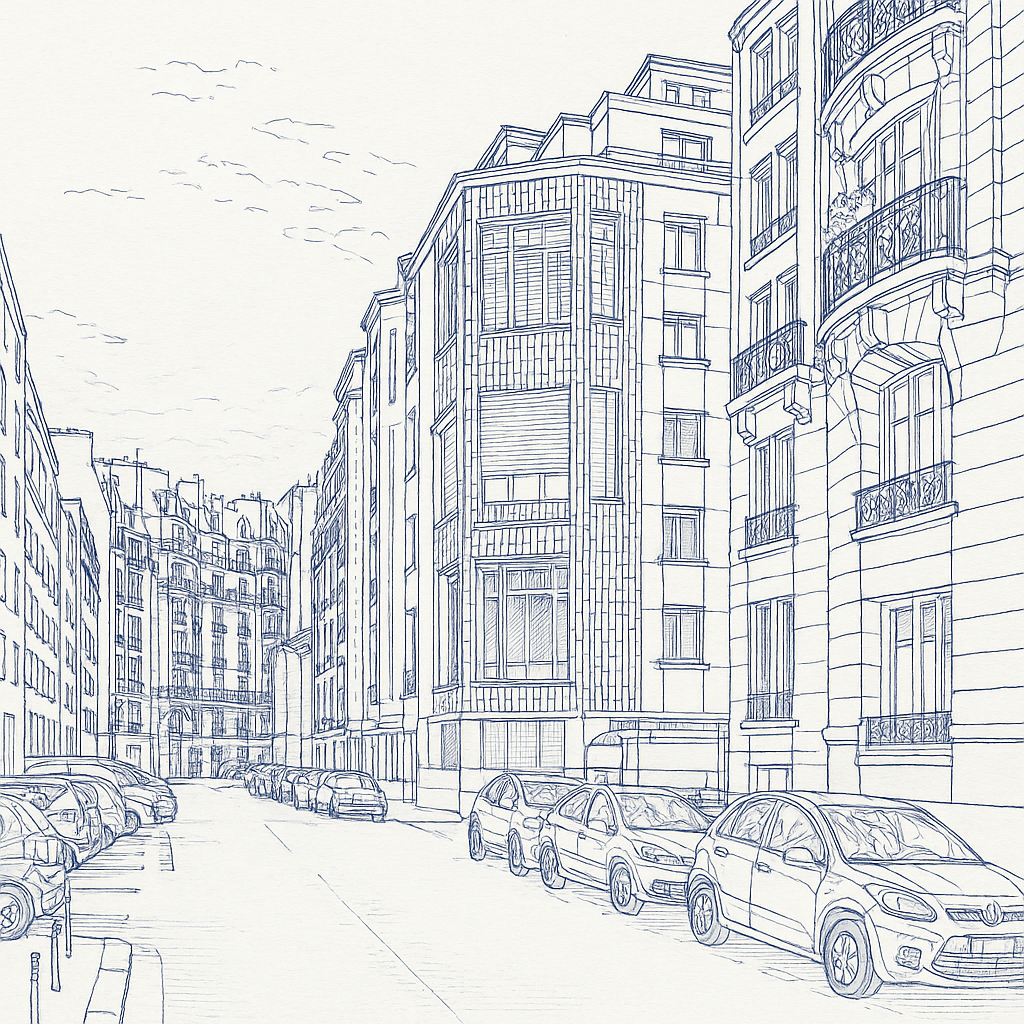
Rue Fontaine displays typical Haussmannian and post-Haussmannian buildings, four to six stories high in cut stone, façades adorned with running balconies on the second floor and wrought-iron railings with intricate ironwork. A few more modern buildings from the early 20th century punctuate this continuity with brick façades or discreet Art Nouveau elements. The slope of the street, descending toward Place Blanche, offers interesting views of the neighborhood's characteristic rooftops, with the silhouette of Sacré-Cœur in the background.
Neighborhood life
Rue Fontaine truly lives at two speeds. By day, it retains an almost residential calm, with a few local shops, discreet cafés, and contemporary art galleries that have settled here in recent years. At night, however, it regains part of its historical energy, with renowned cocktail bars and a young, creative clientele coming from neighboring areas. The Blanche metro station provides direct access, while the nearby Square de la Trinité and the Nouvelle Athènes park offer welcome green spaces. The neighborhood's population today is a mix of long-established families and young professionals drawn by the bohemian-chic atmosphere of Nouvelle Athènes.
Real estate market
The real estate market on Rue Fontaine appeals to a varied clientele, from first-time buyers to rental investors, as well as buyers seeking a Parisian pied-à-terre steeped in history. Available properties range from studios for rental investment to large Haussmannian family apartments with original moldings and fireplaces. Prices range between 9,500 and 11,000 euros per square meter for a standard property needing refreshing, between 11,500 and 13,000 euros for a renovated apartment with quality amenities, and up to 14,500 euros per square meter for an exceptional property, a top-floor unit with an open view of Sacré-Cœur or an apartment retaining remarkable architectural character. Sale periods remain reasonable, around two to three months, driven by sustained demand from a clientele drawn to the atypical charm of the Pigalle-Nouvelle Athènes neighborhood.
Conclusion
Rue Fontaine perfectly embodies this Parisian ability to combine artistic memory with contemporary vitality. An address sought after by a creative and cosmopolitan clientele, it appeals to those seeking a living, authentic Paris steeped in history, far from the overly polished streets of the touristic center.
Thomas Herremans