
Rue Gay-Lussac — Where intellect meets timeless elegance
Introduction
Rue Gay-Lussac winds through the heart of the Latin Quarter, in the 5th arrondissement, connecting Boulevard Saint-Michel to Rue Claude-Bernard, not far from the Panthéon and the Luxembourg Gardens. An artery that is both academic and residential, it embodies the intellectual soul of the Montagne Sainte-Geneviève, a district historically devoted to knowledge and teaching since the Middle Ages. Less touristy than the Boulevard Saint-Michel it extends, Rue Gay-Lussac retains an authentic character, blending 19th-century bourgeois buildings, prestigious scientific institutions, and a population of students, researchers, and long-established families. Named in tribute to one of France's greatest scientists, this street remains inseparable from the history of student struggles and the intellectual ferment that shaped the modern Latin Quarter.
History
Rue Gay-Lussac owes its name to Joseph Louis Gay-Lussac (1778-1850), the illustrious French chemist and physicist known for his gas laws and fundamental work in modern chemistry. The choice of this name, given in 1864 when the street was cut through as part of the Haussmannian transformations of the Latin Quarter, was no accident: it symbolically anchors this thoroughfare in the scientific and academic tradition that has characterized the sector for centuries, between the Sorbonne, the Collège de France, and the nearby École Normale Supérieure. Before its final construction, the street's route already existed partially under the name Rue de l'Est, testifying to the ancient urbanization of this sector of the Montagne Sainte-Geneviève. Rue Gay-Lussac will forever be associated with the events of May 1968: it was here, on the night of May 10-11, 1968, that the famous "night of the barricades" took place, one of the most striking episodes of the student uprising, when the street's cobblestones were torn up to build barricades against police forces, in a confrontation that durably marked French collective memory. This historic episode gave the street a strong symbolic dimension, regularly evoked in commemorations and accounts of this pivotal period in contemporary French history. Beyond this episode, the street has always maintained close ties with the academic world: several major schools and scientific institutions line its route or immediate surroundings, perpetuating the district's intellectual vocation from the 19th century to today.
Architecture
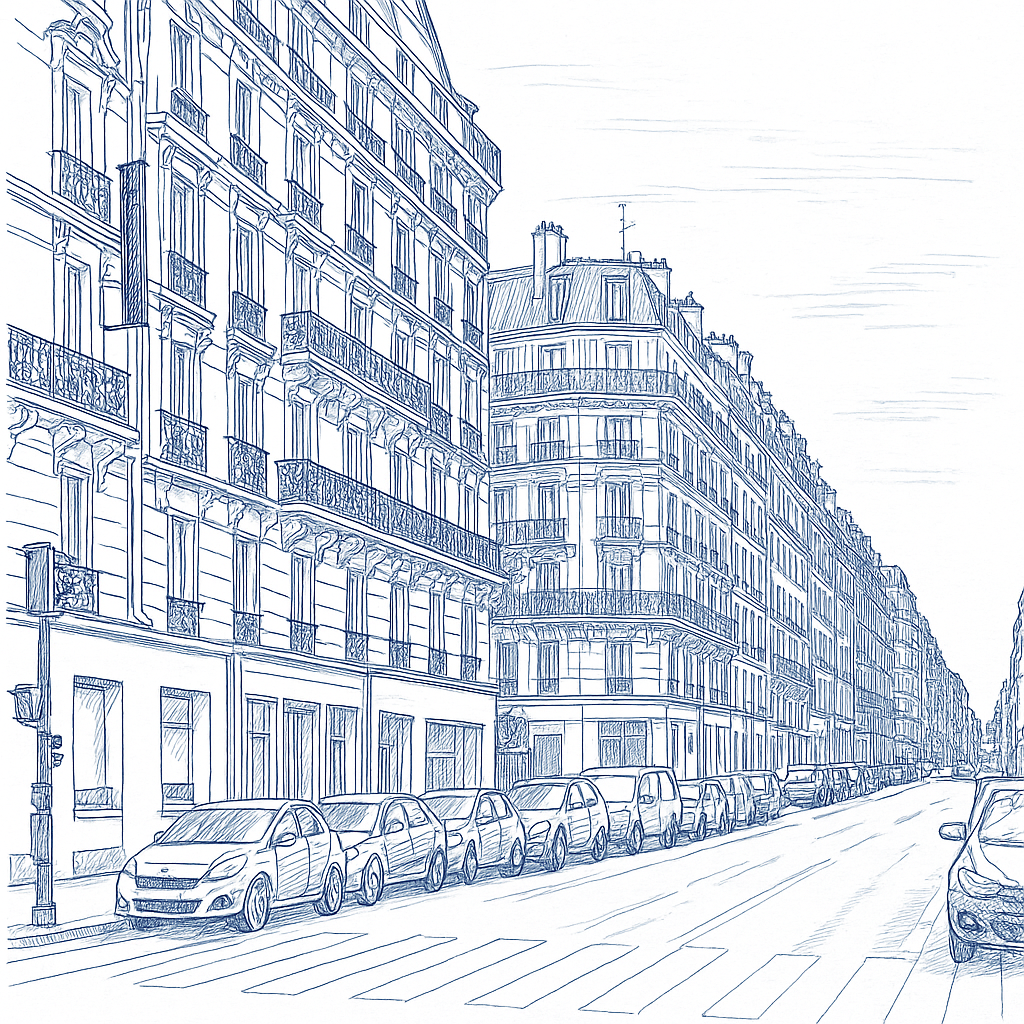
Rue Gay-Lussac presents typically Haussmannian construction, built mostly between 1860 and 1880, with cut-stone façades, continuous balconies on the noble floors, and mansard roofs pierced by dormer windows. The street also retains a few older buildings predating the great works, testifying to the progressive urbanization of the Montagne Sainte-Geneviève since the 18th century. Institutional buildings, particularly those linked to scientific and academic establishments, bring interesting architectural diversity, with more sober façades, sometimes adorned with busts or commemorative plaques honoring illustrious scholars. The street's natural slope, which follows the relief of the Montagne Sainte-Geneviève, offers interesting visual perspectives toward the Panthéon, visible from certain points along the street, reinforcing the monumental character of this Latin Quarter axis.
Neighborhood Life
Rue Gay-Lussac lives at the rhythm of the student and academic life that continuously animates this sector of the 5th arrondissement. Cafés and bookshops, numerous near Boulevard Saint-Michel, spill onto the street itself, creating an atmosphere both studious and convivial. The immediate proximity of the Luxembourg Gardens, a few hundred meters away, offers residents an exceptional green space for walks or lunch breaks. Traditional food shops, bakeries, and small neighborhood restaurants coexist with specialized bookshops and stationers inherited from the sector's long academic tradition. Transport access is excellent, with the Luxembourg RER station in immediate proximity, as well as several bus lines serving Boulevard Saint-Michel. This situation, between intellectual ferment and residential calm, appeals to a mixed population, blending students, academic researchers, and families long settled in this history-laden neighborhood.
Real Estate Market
The real estate market on Rue Gay-Lussac attracts a varied clientele, ranging from investors wishing to rent to student or young researcher tenants, to families seeking a cultural and intellectual setting for children attending the prestigious schools in the sector. The supply mainly consists of two- and three-room apartments on the intermediate floors of Haussmannian buildings, as well as a few large family apartments on the noble floors, sometimes with views of the Panthéon or the Luxembourg Gardens. Properties requiring renovation generally trade between €11,000 and €12,500/m², while renovated apartments with careful finishes reach €13,500 to €15,000/m². Exceptional properties, particularly top floors with unobstructed views or dual-aspect apartments in the best-located buildings, can exceed €16,500 to €18,000/m². The average time on market ranges from four to seven weeks, with smaller units generally finding buyers more quickly due to strong rental demand from students and young professionals. The recent trend confirms a dynamic yet stable market, sustained by the permanence of demand linked to the sector's academic prestige.
Conclusion
Between historical memory and intellectual vitality, Rue Gay-Lussac remains an emblematic address of the Latin Quarter. It appeals to a clientele attached to the studious authenticity of this sector, where Haussmannian heritage and academic ferment combine harmoniously, in one of the capital's most history-laden neighborhoods.
Thomas Herremans