
Rue Jacob — The Literary and Artistic Heart of Saint-Germain-des-Prés
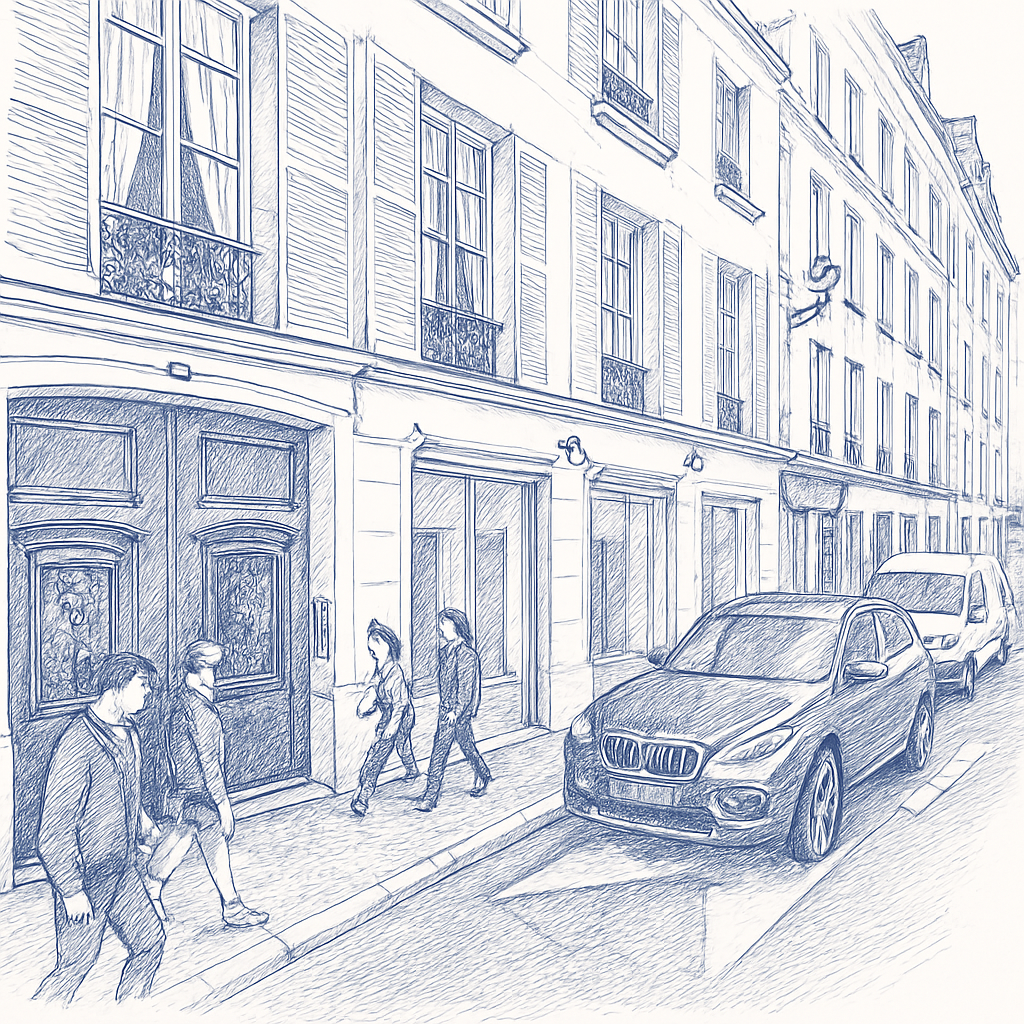
Nestled in the 6th arrondissement, the rue Jacob connects the rue de Seine to the rue Bonaparte, right at the heart of the Saint-Germain-des-Prés district. Short but dense with history, this cobbled street breathes a literary and artistic charm unique in Paris, where every façade seems to harbor the memory of a famous writer, publisher, or gallery owner. Unlike the more lively and touristic streets of the neighborhood, the rue Jacob retains an almost secret intimacy, a slow pace conducive to erudite wandering among art galleries, antiquarian booksellers, and 17th-century façades. It is a street that cultured Parisians consider a sanctuary preserved from tourist bustle, a place where French literary history still seems to vibrate between the stones.
The street's name originates from lands once belonging to the Abbey of Saint-Germain-des-Prés, part of which was named in reference to the biblical patriarch Jacob, though the exact circumstances of this naming, dating back to the 17th century, remain unclear—a period of subdivision of abbey lands for the urbanization of the faubourg. The street quickly became a residential area for enlightened aristocracy and bourgeoisie, then, from the 19th and especially the 20th century, a genuine intellectual hub. Composer Richard Wagner lived there at number 14 in 1841, in a modest garret where he composed passages of his early works before his later fame. Later, publisher and bookseller Adrienne Monnier, a central figure of early 20th-century Parisian literary life, held her famous bookshop La Maison des Amis des Livres at number 7, where André Gide, Paul Valéry, Ernest Hemingway, and James Joyce crossed paths—Joyce's Ulysses was indeed published in France thanks to the support of Monnier and her companion Sylvia Beach. The Hôtel d'Angleterre, located at number 44, hosted American writer Ernest Hemingway during his first Parisian stays in the 1920s, a period immortalized in his book A Moveable Feast. This concentration of creative minds made the rue Jacob a genuine crossroads of 20th-century literary modernity, a tradition perpetuated today by the presence of numerous publishing houses, art galleries, and antiquarians specializing in rare books and manuscripts.
The architecture of the rue Jacob consists mainly of 17th and 18th-century buildings, with narrow, tall façades in cut stone weathered by centuries, punctuated by carriage doors leading to cobbled interior courtyards of old-world charm. Slate roofs, small-paned windows, and antique wrought-iron balconies testify to a remarkably preserved historic fabric, offering one of the finest architectural perspectives of pre-Haussmannian Paris.
Neighborhood life here remains peaceful and cultured: art galleries open their doors in the morning, antiquarian booksellers display their bibliophilic treasures in windows, while a few discreet cafés welcome a clientele of erudite regulars. The Saint-Germain-des-Prés or Mabillon metro stations serve the street easily, and the Luxembourg Gardens, a few minutes' walk away, offer a welcome green respite in this mineral neighborhood.
In real estate terms, the rue Jacob attracts a cultured, affluent clientele, often international, passionate about literary history and the authentic charm of old Paris. Available properties are mainly charming apartments, with sometimes atypical volumes given the age of the buildings, featuring exposed beams and period fireplaces. Standard prices range between €13,000 and €15,000/sqm, high-end renovated properties reach €16,000 to €18,000/sqm, while exceptional properties, particularly those with remarkable historical features, can exceed €20,000/sqm. Marketing times generally remain short, between two and three months, as demand for this mythical neighborhood remains constant.
A street of timeless charm and undeniable literary soul, the rue Jacob appeals to culture lovers, collectors, and all those who dream of living in the intellectual Paris of the great writers and artists of the past century.
Thomas Herremans