
Rue Monsigny: The Composer Who Taught Himself Music and the Opéra-Comique's Most Overlooked Street
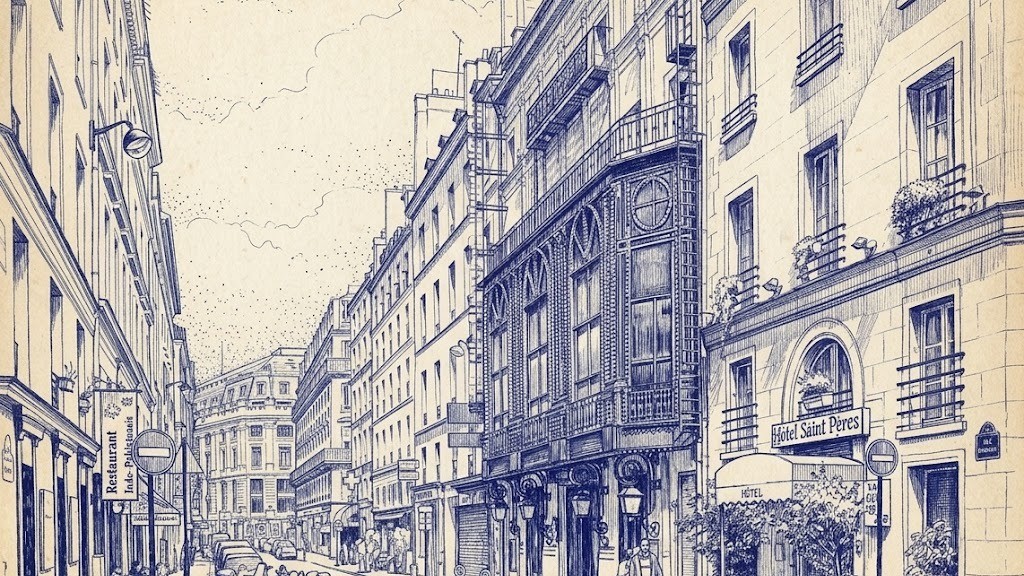
Rue Monsigny is one of the shortest and most musically intimate streets in the 2nd arrondissement — a tiny passage barely fifty metres long connecting the Rue des Petits-Champs to the Rue Sainte-Anne, running in the immediate shadow of the Bibliothèque nationale and within a short walk of the Opéra-Comique. Named after Pierre-Alexandre Monsigny, one of the founding composers of the opéra-comique genre, the street joins Rue Favart and Rue Dalayrac in the small constellation of musical street names that cluster in this corner of the arrondissement.
Monsigny's story is one of the most remarkable in the history of French music. A self-taught composer who learned the rudiments of music from a single teacher and never received formal academic training, he produced between 1759 and 1777 a series of opéras-comiques that transformed the genre, introducing to it an emotional depth and a dramatic sophistication without precedent. His masterpiece "Le Déserteur" of 1769 — a drama of a soldier condemned to death who is saved at the last moment by his beloved — was one of the most moving and most frequently performed operas in Europe for two generations.
1. Pierre-Alexandre Monsigny: The Autodidact of French Opera
Pierre-Alexandre Monsigny was born in Saint-Omer in 1729. His musical education consisted essentially of four months of lessons with the Italian violinist Pietro Gianotti — an almost comically inadequate foundation for a career as an opera composer. Yet Monsigny taught himself the rest: he studied scores, listened obsessively, composed constantly, and produced in the course of eighteen years a series of opéras-comiques that placed him alongside Gluck and Grétry as one of the defining theatrical composers of eighteenth-century Europe.
His appointment as administrator of the Académie royale de musique following the success of "Le Déserteur" represented the French musical establishment's formal recognition of an achievement that had no parallel in the history of self-taught composition. Monsigny retired from composition in 1777, aged forty-eight, and lived for another forty years, dying in 1817 at the age of eighty-seven.
2. The Musical Neighbourhood
Rue Monsigny sits at the centre of the most musically dense neighbourhood in the 2nd arrondissement — immediately adjacent to the Bibliothèque nationale's music collection, within walking distance of the Opéra-Comique, and surrounded by the other musical street names — Favart, Dalayrac, Marivaux — that cluster in this corner of the institutional and theatrical district. The concentration of musical names in this small area creates a kind of invisible musical geography, a neighbourhood where the history of French lyric theatre from Monsigny through Bizet and Debussy is preserved in the names of the surrounding streets.
3. Urban Context
Rue Monsigny connects the Rue des Petits-Champs to the Rue Sainte-Anne in the 2nd arrondissement, running immediately south of the Bibliothèque nationale Richelieu complex. The street is served by the Pyramides and Bourse metro stations.
4. Architectural Character
The architecture of Rue Monsigny is intimate in scale, its modest buildings presenting facades of quiet dignity. The proximity of the Bibliothèque nationale wall gives the northern approach a particular character of enclosed gravitas.
5. The Residential Market
The residential market is shaped by the intersection of musical heritage and library neighbourhood:
- musicologists and music historians for whom proximity to the BnF music collection and the Opéra-Comique is a genuine residential priority
- buyers with a specific interest in Monsigny's extraordinary autodidactic career
- quiet central Paris seekers for whom this tiny street offers remarkable cultural depth in a setting of unusual tranquillity
- investors in the institutional district at accessible price points
6. Property Prices
Property values on Rue Monsigny:
- €16,000 to €19,500 per m² for standard apartments
- €19,500 to €24,000 per m² for renovated properties with quality finishes
- €24,000 per m² and above for exceptional units
Rue Monsigny commemorates one of the most improbable careers in the history of French music — a man who taught himself to compose with four months of lessons and went on to write one of the most beloved operas in eighteenth-century Europe. His fifty-metre street, hidden in the shadow of the Bibliothèque nationale in the 2nd arrondissement, is the smallest and most intimate of the musical commemorations in the district, and perhaps for that reason the most appropriate one.
Thomas Herremans