
Rue Poncelet — Where Parisian gastronomy meets timeless elegance
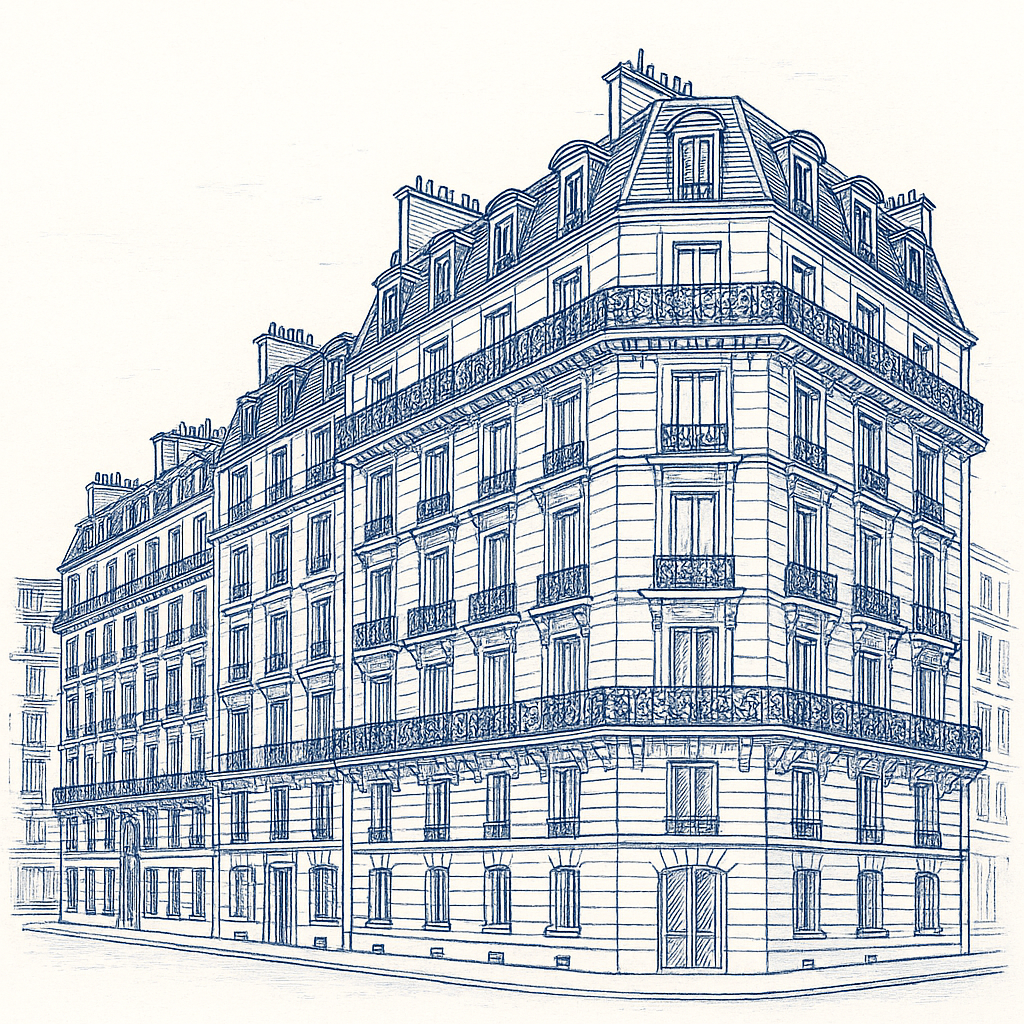
At the heart of the Ternes district in the 17th arrondissement, Rue Poncelet is one of those streets that alone concentrates the full art of French Parisian living. A quintessential market street, it stretches between Rue du Faubourg Saint-Honoré and Avenue des Ternes, hosting a renowned food market every day, one of the liveliest and highest-quality in the capital. Here, Haussmannian façades frame colorful stalls of produce vendors, cheesemongers, fishmongers, and butchers, creating a village-like atmosphere rare just steps from the Champs-Élysées. Rue Poncelet stands out from its neighbors through this dual identity: bustling and commercial by day, residential and peaceful come evening. It is a favored address for Parisian families and expatriates seeking a convivial daily life, without sacrificing the elegance and standing of the 17th arrondissement.
The history of Rue Poncelet is more recent than that of many streets in central Paris, as it is part of the great urbanization movement of the village of Ternes, annexed to Paris in 1860 under the impetus of Baron Haussmann. Its name pays homage to Jean-Victor Poncelet, a brilliant 19th-century French mathematician and military engineer, a pioneer of projective geometry, whose work profoundly shaped engineering sciences. Before its complete urbanization, the Ternes sector was still largely composed of market gardens and guinguettes that supplied Paris with vegetables and fresh produce, a nourishing vocation of which today's market on Rue Poncelet is, in a sense, the direct and living heir. From the late 19th century, the street structured itself around this local food trade, with the bourgeois buildings constructed at that time incorporating ground-floor shops from their very design. The Ternes district, and Rue Poncelet in particular, became in the 20th century a symbol of this bourgeois, commercial Paris, far from the bustle of the grand boulevards yet just as lively. During the interwar period and then after the Second World War, the street consolidated its reputation as an upscale neighborhood market, frequented both by residents of the 17th and by clientele from neighboring arrondissements drawn by the quality of its shops. Even today, certain family-run businesses passed down through generations continue this traditional commercial know-how.
Architecturally, Rue Poncelet presents a fine ensemble of Haussmannian and post-Haussmannian buildings, constructed mainly between 1860 and 1910. The cut-stone façades, punctuated by continuous wrought-iron balconies on the second and fifth floors, offer a homogeneity typical of Second Empire and Belle Époque Paris. The commercial ground floors, with their painted wooden storefronts or, in some cases, Art Nouveau display windows, fully contribute to the street's charm. The interior courtyards and stairwells, often adorned with elegant ironwork and period stained glass, attest to the care taken in constructing these bourgeois buildings intended for an affluent clientele. A few more recent buildings, constructed in the 1930s, bring a discreet Art Deco touch, with their more geometric façades and stylized ironwork.
Neighborhood life here is particularly vibrant, especially in the morning and on weekends, when the market is in full swing. The smells of fresh bread, aged cheeses, and ripe fruit mingle with animated conversations between shopkeepers and loyal customers. One encounters families doing their weekly shopping as well as gourmets seeking exceptional products. The cafés and small restaurants on the street and nearby, particularly around the neighboring Place des Ternes, complete this convivial offering. Transport access is excellent, with the Ternes metro station just steps away, serving line 2, as well as numerous bus lines connecting the neighborhood to the rest of the capital. Parc Monceau, a ten-minute walk away, offers a lovely green space for local families.
The real estate market on Rue Poncelet mainly attracts Parisian families and senior executives, drawn by this rare blend of village conviviality and bourgeois standing. Available properties are predominantly family apartments of 60 to 130 sqm, located in Haussmannian buildings with moldings, period parquet floors, and marble fireplaces. There are also some smaller properties, 2- and 3-room apartments, favored by first-time buyers and rental investors. Prices per square meter are as follows: €9,800 to €10,800/sqm for a standard property needing refreshing; €11,500 to €12,800/sqm for a high-end renovated apartment; and up to €13,500 to €14,800/sqm for an exceptional property, a high floor with unobstructed views or a dual-aspect corner apartment. Demand remains very strong, driven by the attractiveness of the Ternes district and proximity to the area's reputed schools. Marketing periods are generally short, one to three months for well-located and well-presented properties.
Ultimately, Rue Poncelet embodies an authentic Parisian lifestyle, where quality commerce and upscale residential living combine harmoniously. It primarily appeals to families attached to neighborhood life and conviviality, without compromising on architectural elegance and the standing of the 17th arrondissement.
Thomas Herremans