
Rue Royale — Where Grandeur Meets Timelessness
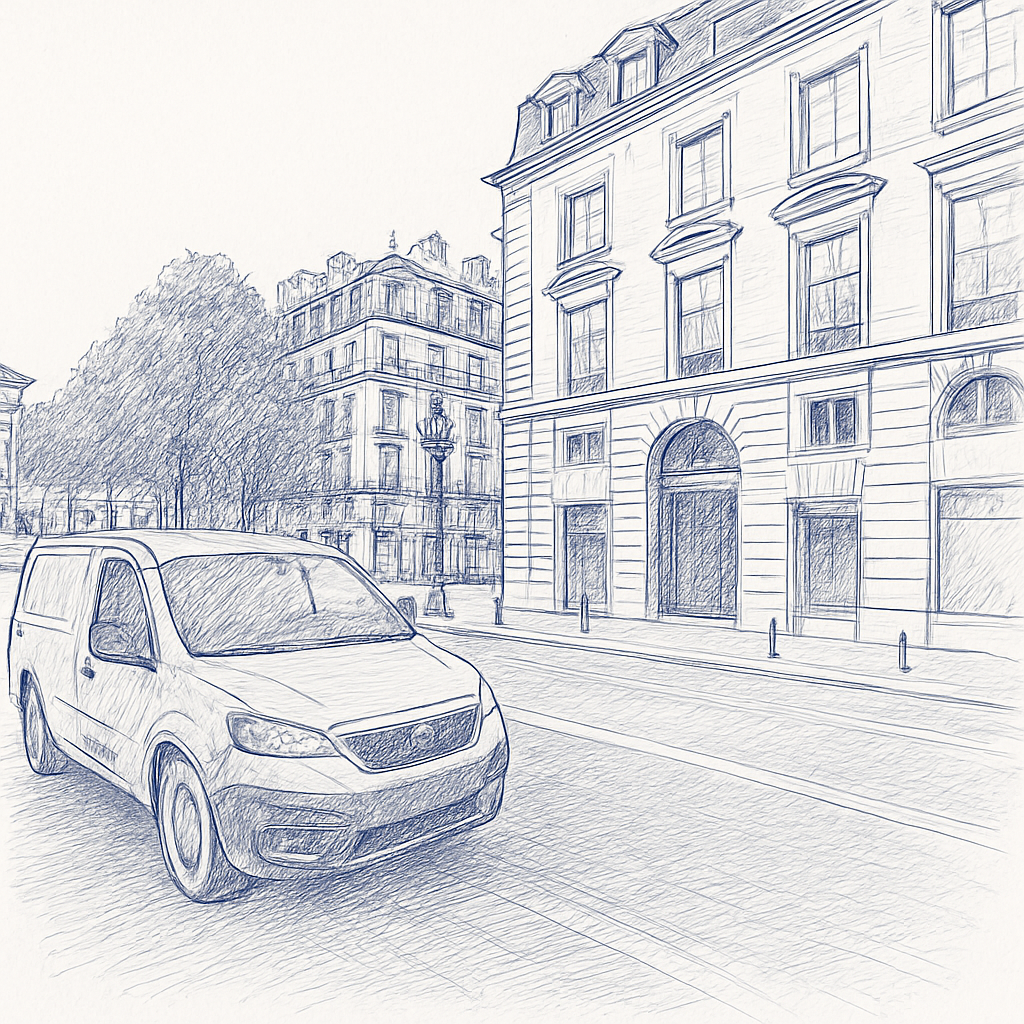
Rue Royale is one of the most prestigious thoroughfares in the French capital, linking Place de la Concorde to the Église de la Madeleine along a strikingly noble straight perspective. Barely three hundred metres long, it nonetheless concentrates an exceptional density of luxury houses, historic jewellers and world-famous gastronomic addresses. Its monumental vista, framed by the colonnades of the Madeleine on one side and the obelisk of the Concorde on the other, makes it one of the most beautiful streets in Paris, often compared to the great Roman urban perspectives. Unlike the neighbouring shopping streets of the Faubourg Saint-Honoré, more elongated and cosmopolitan, Rue Royale retains an architectural unity and a solemnity typical of the great Enlightenment-era urban projects. Visitors come as much to admire the shop windows as to contemplate an urban composition conceived as a whole, a rarity at this scale within the Parisian fabric.
The history of Rue Royale is inseparable from the great development project of Place Louis XV, today's Place de la Concorde, commissioned by the king in the mid-eighteenth century. Architect Ange-Jacques Gabriel designed the street to open a monumental perspective between the royal square and the still-planned Église de la Madeleine. Pierced from 1757 onwards, Rue Royale quickly became a residential address for the aristocracy and, after the Revolution, for the wealthy business bourgeoisie and foreign embassies. The Hôtel de Crillon, one of the two twin buildings designed by Gabriel on either side of the street at the corner of the Concorde, remains its architectural jewel, today a legendary palace hotel frequented by royalty and celebrities from around the world. Directly opposite, the former Garde-Meuble de la Couronne, now the Hôtel de la Marine, has recently regained its original splendour following a spectacular restoration now open to the public. Rue Royale is also home to Maxim's, an Art Nouveau restaurant opened in 1893 that became the essential meeting place of Belle Époque Parisian high society, the Ballets Russes and the cinema world of the Roaring Twenties. Nearby, the Ladurée house, founded in 1862, invented the Parisian macaron as we know it today right here, and its historic tea room remains an institution. The street has weathered the upheavals of French history, from revolutionary riots to the republican commemorations regularly held on the nearby Place de la Concorde, without ever losing its solemn character.
The architecture of Rue Royale illustrates the perfect mastery of eighteenth-century French classicism. The façades, built of cut stone following a colossal order of pilasters and columns, respect a uniform height and rhythm as intended by Gabriel to create a homogeneous ensemble worthy of accompanying the royal square. Wrought-iron balconies, sculpted pediments and mansard roofs contribute to this measured elegance. Several buildings were raised or altered in the nineteenth century without ever breaking the overall harmony, a rare feat of urban conservation for such a central and commercially coveted thoroughfare.
The neighbourhood life of Rue Royale oscillates between daytime tourist effervescence and a hushed nighttime calm. By day, the shop windows of Christofle, Ladurée or the great jewellers attract an international clientele seeking French silverware or a now-legendary pastry. The terraces of Maxim's and neighbouring cafés offer a privileged vantage point over the ballet of limousines and elegant passers-by. In the evening, the street regains a more intimate atmosphere, lit by still-glowing shop windows, while residents on the upper floors enjoy a surprising calm for such a central address. Transport links are exceptional: the Concorde station serves three metro lines, and the neighbourhood benefits from the immediate proximity of the Tuileries Gardens.
The real estate market of Rue Royale caters to a very limited, mostly international clientele seeking prestigious pieds-à-terre or heritage investments. Residential properties are rare, as most surfaces are occupied by luxury shops, offices or corporate headquarters. The few available apartments, often on upper floors with views of the Madeleine or the Concorde, boast exceptional features: original mouldings, marble fireplaces, ceiling heights exceeding three and a half metres. Standard prices range from €16,000 to €18,000 per square metre for a property requiring renovation, between €20,000 and €23,000 for a high-end renovated apartment, and can exceed €28,000 per square metre for an exceptional noble floor with an unobstructed view of the monumental perspective. Properties that come onto the market find buyers within weeks, as scarcity trumps all other considerations.
An exceptional address at the heart of monarchical and then republican Paris, Rue Royale remains a showcase of French craftsmanship and a symbol of timeless elegance. It appeals to a wealthy, often international clientele, sensitive to history, architecture and the rarity of such a location, more than to mere residential functionality.
Thomas Herremans