
Rue Saint-Roch: Religious Heritage, Administrative Gravity and a Highly Segmented Residential Market in the Heart of Paris
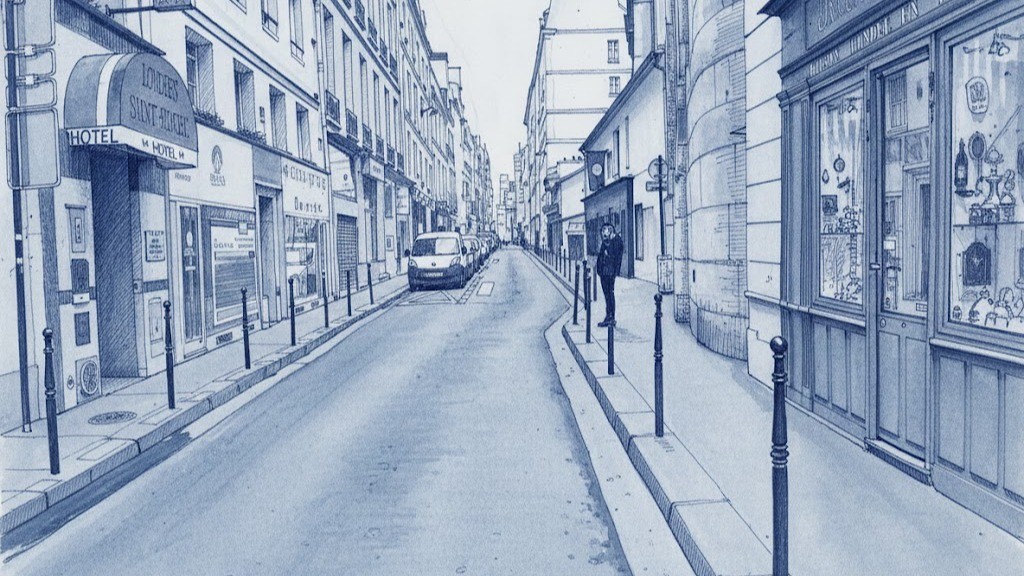
Rue Saint-Roch is one of the most structurally complex streets in Paris’s 1st arrondissement. Running between Rue Saint-Honoré and the Jardin des Tuileries, alongside the church of Saint-Roch, it occupies a strategic position at the crossroads of history, religion, administration and central Parisian life.
Unlike purely residential streets or fully commercial axes, Rue Saint-Roch is defined by layered uses. It is simultaneously a place of worship, a governmental environment, a residential address and a central pedestrian corridor. As a result, its real-estate logic is fragmented, highly dependent on micro-location, building type and exposure.
This article examines Rue Saint-Roch through its historical origins, religious and cultural role, documented figures, architectural fabric, residential reality and price-per-square-meter dynamics.
1. Historical and Religious Origin
Rue Saint-Roch takes its name from the nearby church of Saint-Roch, dedicated to Saint Roch, a 14th-century Catholic saint traditionally invoked against plagues.
The church of Saint-Roch, built primarily between the 17th and 18th centuries, has long served as a major religious institution in central Paris. Its presence shaped the street’s development, attracting clergy, administrative buildings and service-related activity.
Historically, the street evolved as: • a religious axis • a service street supporting the Tuileries area • a residential address for clergy, officials and artisans
2. Urban Morphology and Central Function
Rue Saint-Roch is relatively short but highly strategic.
Its urban characteristics include: • immediate proximity to Rue Saint-Honoré • adjacency to the Tuileries gardens • strong pedestrian flows • institutional and administrative presence
The street functions as a connector between commercial, political and cultural zones rather than as a purely residential enclave.
3. Architecture and Building Typologies
Architecturally, Rue Saint-Roch is heterogeneous.
The street includes: • 17th- and 18th-century buildings • Haussmannian-era residential blocks • former conventual and administrative buildings • mixed-use properties with offices and housing
Apartments vary significantly: • some retain historic proportions and high ceilings • others have been subdivided • exposure to noise varies strongly by orientation
Building-by-building analysis is essential.
4. Documented Historical Figures and Institutions
Rue Saint-Roch is associated with documented historical figures through institutional and religious proximity, rather than private residential celebrity.
5. Residential Lifestyle: Centrality With Constraints
Living on Rue Saint-Roch offers extreme centrality.
Advantages: • immediate access to the Tuileries • proximity to museums, luxury retail and institutions • strong architectural character
Constraints: • pedestrian traffic • limited residential calm on lower floors • mixed-use environment
The street appeals primarily to: • pied-à-terre buyers • professionals working nearby • investors seeking centrality
6. Real-Estate Market and Prices per Square Meter
Rue Saint-Roch operates as a highly segmented micro-market.
Indicative price ranges: • ground/lower floors, mixed-use: €12,500–14,500 / m² • upper-floor residential apartments: €14,500–17,000 / m² • exceptional historic properties: up to €18,500 / m²
Key value drivers: • building age and status • floor level • exposure to street vs. courtyard • historic character
Transaction volume is moderate but uneven.
Conclusion
Rue Saint-Roch is not a street of uniform value.
It is a street of historical gravity and functional layering, where residential appeal depends entirely on micro-location and building typology. In the heart of Paris, it offers opportunity, character and complexity—never simplicity.
Thomas Herremans