
Rue Spontini — Where Parisian Discretion Meets Timeless Refinement
Introduction
Rue Spontini unfolds its peaceful course in the heart of the 16th arrondissement, between Avenue Foch and Avenue Victor-Hugo, in one of the capital's most upscale residential sectors. Far from tourist bustle, this street perfectly embodies the discreet elegance of the classic 16th arrondissement, that of great bourgeois families and preserved private mansions. Lined with Haussmannian buildings and a few rare individual houses, Rue Spontini cultivates a hushed, confidential atmosphere, prized by an international clientele seeking residential tranquility just steps from the Bois de Boulogne and the Champs-Élysées. Named in tribute to an Italian composer who settled in Paris, it reflects the 19th-century taste for honoring great artistic figures in the naming of streets in this then-booming neighborhood.
History
Rue Spontini owes its name to Gaspare Spontini (1774-1851), an Italian opera composer who settled in France, whose works, notably "La Vestale," enjoyed great success under the Empire and the Restoration, earning him official recognition and the title of Superintendent of the King's Music under Louis XVIII. His name was given to this street during the subdivision of the Plaine de Passy district and the Avenue Foch sector, as part of the vast urbanization plan for the 16th arrondissement initiated under the Second Empire, starting in the 1850s-1860s. This sector, then largely rural and composed of land belonging to great aristocratic families, was progressively subdivided and urbanized to welcome the new business bourgeoisie and great industrial families seeking to settle in a green setting, in immediate proximity to the Bois de Boulogne recently redeveloped by Baron Haussmann and engineer Alphand. Rue Spontini thus fits within this logic of developing a prestigious residential neighborhood, designed from the outset to accommodate vast private mansions and high-end apartment buildings. Several political, artistic, and diplomatic figures took up residence on Rue Spontini throughout the 20th century, consolidating its reputation as a discreet yet extremely sought-after street. The street has also preserved, in its section closest to Avenue Foch, a few remarkable private mansions, vestiges of the original urbanization, now converted into private residences, embassies, or headquarters of international institutions, reinforcing the cosmopolitan and prestigious character of this 16th arrondissement address.
Architecture
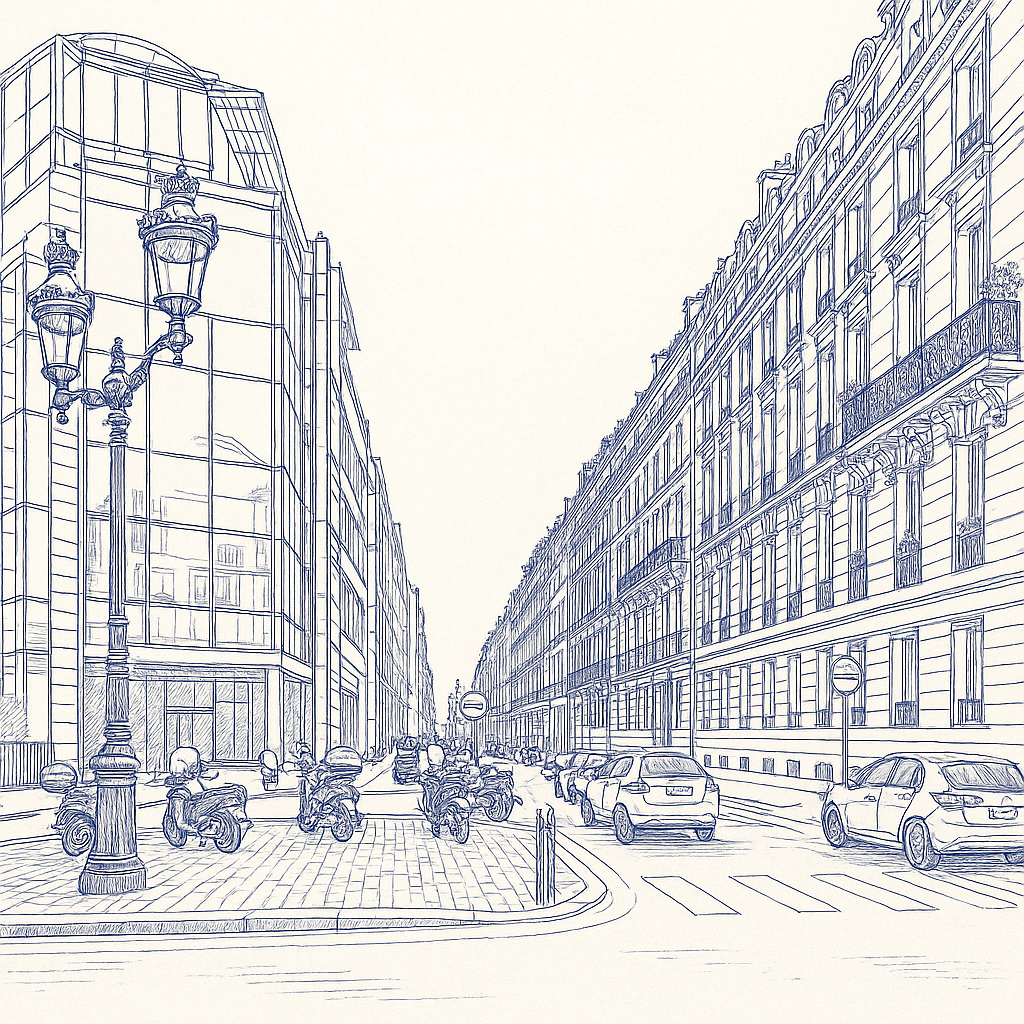
The architecture of Rue Spontini reflects the particular care given to this sector during its urbanization at the end of the 19th century. The Haussmannian buildings lining the street stand out for their finely sculpted cut-stone façades, ornate wrought-iron balconies, and monumental carriage doors, testament to the high standing sought from the outset by the era's developers. A few rarer private mansions punctuate the street with their eclectic architecture, blending classical influences with Art Nouveau elements for the latest constructions, dating from the very beginning of the 20th century. The interiors, mostly remaining intact or restored with great care, offer exceptional volumes: enfilade double living rooms, ceiling heights sometimes reaching 3.50 meters, Versailles parquet floors, and sculpted marble fireplaces. This exceptional build quality, combined with the generous width of the street and the presence of avenue trees, gives Rue Spontini a rare architectural cachet, perfectly representative of the most classic 16th arrondissement.
Neighborhood Life
Rue Spontini lives at the tranquil pace of an exceptional residential neighborhood, where calm is disturbed only by the discreet passage of service vehicles and residents. Shops, rare on the street itself, are concentrated on the nearby Avenue Victor-Hugo, offering luxury bakeries, fine caterers, and high-end fashion boutiques meeting the expectations of a demanding clientele. The immediate proximity of the Bois de Boulogne allows residents to enjoy sports facilities and green walks just minutes away on foot, while nearby Avenue Foch embodies one of the capital's most prestigious addresses. Transport access is provided by Porte Dauphine station (line 2) and Rue de la Pompe (line 9), allowing efficient connection to central Paris while preserving the sector's residential calm. This rare combination of absolute tranquility and practical access explains the constant appeal of Rue Spontini to wealthy families and international executives.
Real Estate Market
The real estate market on Rue Spontini caters to a very high-end, often international clientele, composed of wealthy families, business leaders, and diplomats posted to Paris. The supply is characterized by large family apartments, ranging from 150 to over 400 m², distributed in high-standing Haussmannian buildings or, more rarely, in former private mansions divided into exceptional apartments. Properties requiring renovation, still featuring their original volumes but requiring a complete upgrade of finishes, trade between €13,500 and €15,000/m². Renovated apartments with high-end finishes, including home automation, enhanced security, and noble materials, reach €16,500 to €19,000/m². Exceptional properties, particularly former private mansions or apartments with unobstructed views of the Bois de Boulogne, can exceed €21,000 to €24,000/m², with certain exceptional transactions recorded well beyond that for unique properties. The average time on market ranges from six to ten weeks, as this ultra-high-end market segment generally requires a longer negotiation period given the amounts involved. The recent trend confirms the remarkable stability of this prestige market, driven by constant international demand for the most prestigious addresses in the 16th arrondissement.
Conclusion
A discreet yet eminently prestigious address, Rue Spontini embodies residential excellence in the classic 16th arrondissement. It appeals to a demanding international clientele seeking calm, space, and exceptional architectural heritage, just steps from the Bois de Boulogne and the capital's most prestigious thoroughfares.
Thomas Herremans