
Rue Taitbout — Where Parisian elegance whispers of Belle Époque grandeur
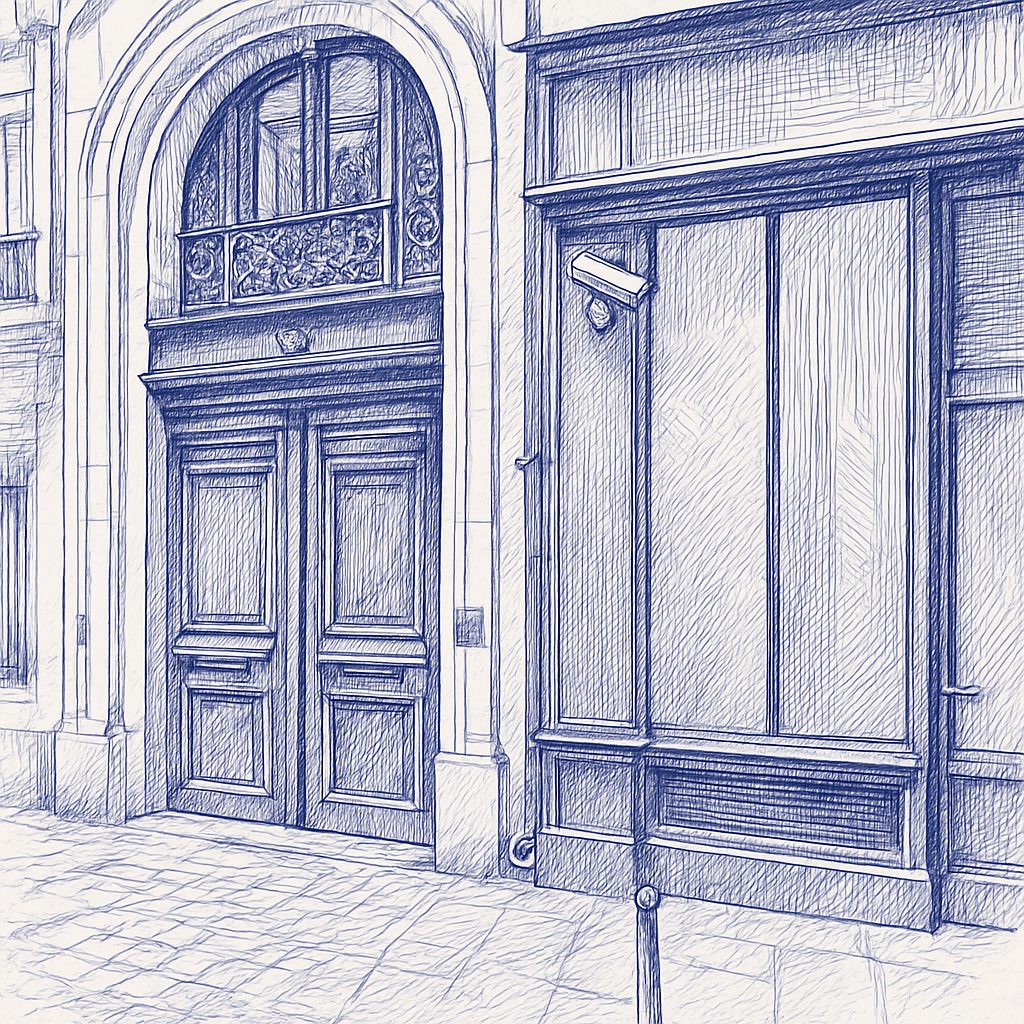
Rue Taitbout runs through the ninth arrondissement from Boulevard des Italiens to Rue Saint-Lazare, at the heart of a district that was, in the nineteenth century, one of the most sought-after in the capital by the great financial and artistic bourgeoisie. Both residential and lively, the street retains a preserved Haussmannian character and an elegant atmosphere, less touristy than the neighbouring grand boulevards but just as representative of Second Empire Paris. Its immediate proximity to the Opéra Garnier and the department stores makes it both a practical and prestigious address, appreciated by a population mixing executives, liberal professions and heritage families attached to this district steeped in musical and financial history.
Rue Taitbout takes its name from a former landowner of the district in the eighteenth century, whose surname was given to the street during its progressive urbanisation from the 1770s-1780s, as the Chaussée d'Antin district developed rapidly under the impetus of wealthy financiers and business nobility. Rue Taitbout quickly became one of the most sought-after addresses in this new fashionable district, attracting a population of bankers, artists and prominent intellectuals. Frédéric Chopin lived there for several years at number 5, in an apartment where he gave numerous private concerts that became legendary among the musical high society of the time, receiving among others George Sand and the greatest Romantic artists of his era. The street also hosted several influential literary and musical salons that contributed to the cultural influence of the nearby Nouvelle-Athènes district. In the nineteenth century, Rue Taitbout also became an important axis for the entertainment industry, with several theatres and concert halls settling in its immediate vicinity, taking advantage of the district's affluent clientele and proximity to Boulevard des Italiens, then the beating heart of Parisian social life. The construction of the Opéra Garnier, inaugurated in 1875 a few hundred metres away, further reinforced the street's appeal, which became a favoured passage between the Opera and the grand boulevards. Several buildings on the street still preserve remarkable interior décor elements today, witnesses to this prosperous period when Parisian high society settled there in numbers.
The architecture of Rue Taitbout magnificently illustrates classic Haussmannian style, with buildings mostly constructed between 1850 and 1890, their cut-stone façades punctuated by continuous balconies and zinc mansard roofs. A few older buildings, predating Haussmannisation, also survive, testifying to the initial urbanisation of the Chaussée d'Antin district in the late eighteenth century. Carriage entrances, staircases adorned with ironwork and paved interior courtyards give the street a heritage character highly sought after by lovers of classic Parisian architecture.
The neighbourhood life of Rue Taitbout benefits from a strategic location between the Opera, the department stores of Boulevard Haussmann and the bustle of Boulevard des Italiens. Traditional restaurants, lively cafés and local shops coexist harmoniously, offering residents a practical daily life without sacrificing the district's heritage charm. Public transport is exceptional, with several metro stations in the immediate vicinity serving the entire capital. The Square de la Trinité and Parc Monceau, a little further away, offer green spaces appreciated by the district's families.
The real estate market of Rue Taitbout attracts a varied clientele, between executives working in neighbouring business districts, heritage families and investors drawn by the proximity to the Opera and major shopping axes. Properties on offer are mostly Haussmannian apartments of three to six rooms, with classic features: mouldings, herringbone parquet flooring, marble fireplaces. Standard prices range from €10,800 to €12,000 per square metre for a property requiring renovation, between €13,000 and €14,500 for a high-end renovated apartment, and can reach €16,000 to €17,000 per square metre for an exceptional noble floor with preserved original décor. Marketing periods are generally between five and eight weeks, testifying to sustained demand for this address, both practical and steeped in history.
Rue Taitbout remains a prime address for those seeking classic Haussmannian elegance combined with a strategic location between the Opera and the grand boulevards. It appeals to a clientele attached to the district's musical and architectural heritage, seeking a refined and practical living environment at the heart of historic Paris.
Thomas Herremans