
Rue Vavin
Introduction
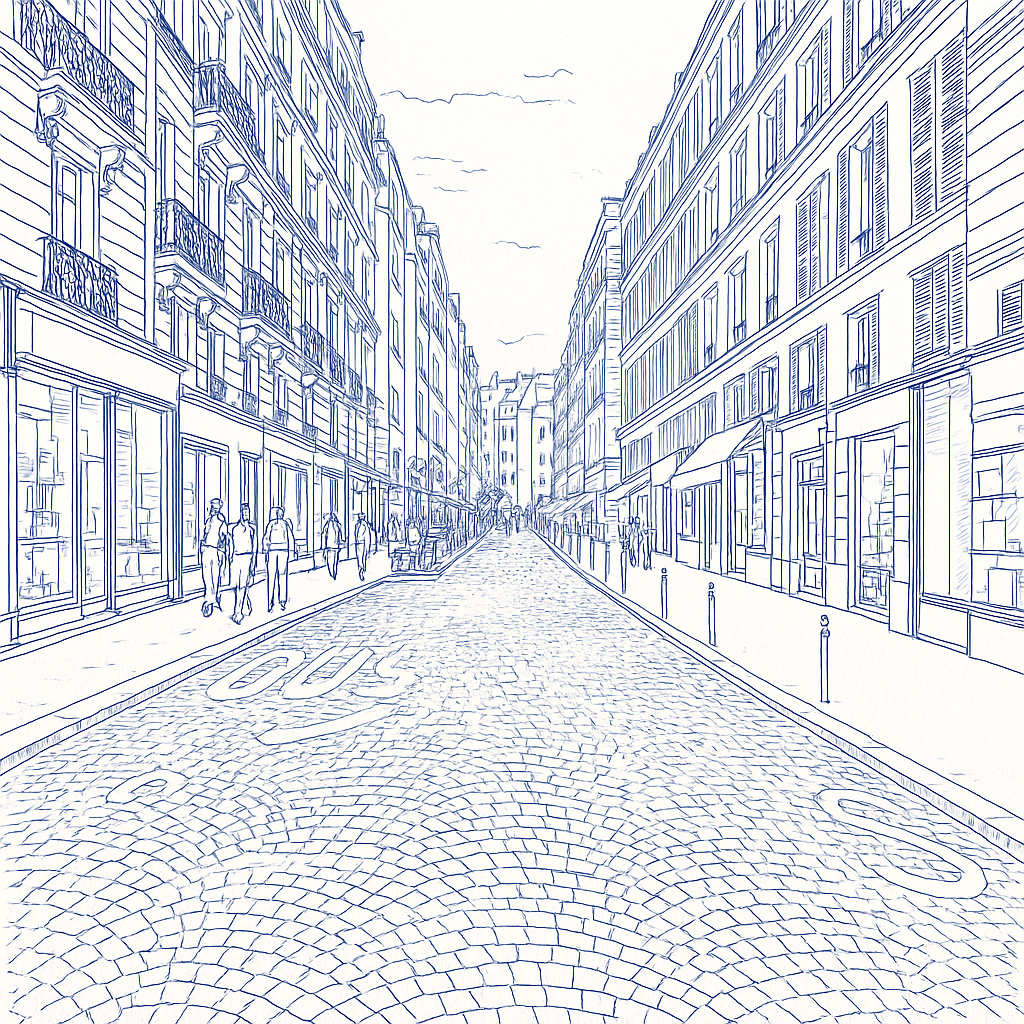
Rue Vavin, tucked away in the heart of the 6th arrondissement, traces a discreet diagonal between Boulevard du Montparnasse and Rue Notre-Dame-des-Champs, just steps from the Luxembourg Gardens. Short yet steeped in history, it embodies the spirit of artistic Montparnasse at the dawn of the 20th century, while today retaining a hushed residential atmosphere prized by a discerning clientele seeking authentic Parisian character. Unlike the bustling, commercial avenues nearby, Rue Vavin cultivates a human, almost village-like scale, where 19th-century bourgeois buildings sit alongside a truly singular architectural piece: Henri Sauvage's stepped apartment building. Named after a 19th-century lawyer and politician, this street is today one of the most sought-after addresses in residential Montparnasse, at the crossroads of the academic, artistic, and bourgeois worlds that shaped the identity of the Left Bank.
History
Rue Vavin takes its name from Alexis Vavin (1792-1863), a French lawyer and politician, district mayor and later deputy for the Seine. Opened in the mid-19th century as part of the urbanization of the Montparnasse district, it quickly became part of the Haussmannian fabric spreading across the Left Bank. But it was at the turn of the 20th century that Rue Vavin acquired its true identity, as Montparnasse became the crucible of the world's artistic avant-garde. Painters, sculptors, and writers flocked to the neighborhood, drawn by modest rents, artists' studios, and the intellectual ferment of nearby cafés—La Rotonde, Le Dôme, La Closerie des Lilas—lining the adjacent Boulevard du Montparnasse. Rue Vavin itself, more discreet, housed numerous studios and residences for artists and intellectuals passing through this bustling Paris of the École de Paris. The most significant event in the street's architectural history came in 1912, when architect Henri Sauvage, in collaboration with Charles Sarazin, built a revolutionary residential building at number 26: its stepped façade, clad in white glazed ceramic tiles, allowed each floor to enjoy a terrace and abundant light, a total break from classical Haussmannian alignment. This building, now protected as a historic monument, became a manifesto of early-century architectural hygienism, designed to bring air and light into a dense urban context. It would durably influence Parisian architecture and remains a reference studied in architecture schools worldwide. Over the decades, Rue Vavin retained its prestigious status, weathering the transformations of the Montparnasse district without losing its intimate character, far from the agitation of the train station and the modern towers that reshaped part of the area in the 1970s.
Architecture
The architecture of Rue Vavin offers a striking contrast between Haussmannian tradition and modernist daring. Most buildings date from the Second Empire and the early Third Republic, with cut-stone façades, continuous balconies, and Mansard zinc roofs. But the Sauvage building at number 26 is the crown jewel of the street's architectural heritage: its stepped silhouette, gleaming white ceramic catching the light, and successive terrace-balconies make it a unique architectural object in the Parisian landscape, often compared to contemporary works in Vienna or Berlin. Other, more discreet buildings on the street reflect bourgeois taste for spacious interiors: moldings, herringbone parquet floors, marble fireplaces, and generous ceiling heights characterize the traditional apartments. The immediate proximity to artists' studios on Rue Notre-Dame-des-Champs and Boulevard Raspail reinforces this hybrid architectural identity, between established bourgeoisie and creative modernity.
Neighborhood Life
Rue Vavin lives at a peaceful pace, marked by residents' comings and goings toward the Luxembourg Gardens, a few minutes' walk away. In the morning, cafés around the Vavin intersection welcome a regular clientele of students from nearby schools and local professionals. In the afternoon, the street regains its residential calm, disturbed only by children leaving nearby schools. Local shops—artisan bakeries, wine merchants, discreet fashion boutiques—complete a full neighborhood life offering without ever descending into tourist bustle. The nearby Boulevard du Montparnasse offers direct access to Vavin metro station (line 4) and Notre-Dame-des-Champs, as well as the historic grand brasseries that made the neighborhood's reputation. The nearby Edgar Quinet market rounds out the local food offering. This privileged location, between residential calm and immediate access to all the amenities of the Left Bank, explains the sector's constant appeal to families and professionals alike.
Real Estate Market
The real estate market on Rue Vavin attracts a varied clientele: senior executives, professionals, academics, and occasionally foreign investors drawn by the architectural cachet of the sector and proximity to the Luxembourg Gardens. Properties range from artist's two-room apartments with skylights to large five- or six-room family apartments on the upper floors of Haussmannian buildings, sometimes offering unobstructed views over Parisian zinc rooftops. Traditional apartments, with original parquet and moldings but requiring renovation, trade at around €12,000 to €13,500/m². Carefully renovated properties, featuring high-end fitted kitchens and contemporary bathrooms while preserving character features, reach €14,500 to €16,500/m². Exceptional properties—particularly within the Sauvage building itself, or top floors with terraces and Luxembourg views—can exceed €18,000 to €20,000/m², with certain rare properties negotiated case by case well above that. The average time on market remains short, generally three to six weeks for well-positioned properties, reflecting the scarcity of supply in this highly sought-after micro-market. The recent trend shows a slight contraction in transaction volumes but remarkable price stability, driven by the structural scarcity of character properties in this sector of the 6th arrondissement.
Conclusion
Discreet yet profoundly marked by 20th-century architectural history, Rue Vavin embodies a rare balance between Haussmannian heritage and modernist daring. It appeals to a clientele seeking an elegant pied-à-terre steps from the Luxembourg Gardens, far from the bustle yet close to everything. An address for connoisseurs rather than passersby, it speaks to those seeking Parisian authenticity in its most refined form.
Thomas Herremans