
🌆 The Most Beautiful Streets in Paris’s 18ᵉ Arrondissement: A 2,000-Word Stroll Through Montmartre, Clignancourt, Goutte d’Or, and Beyond
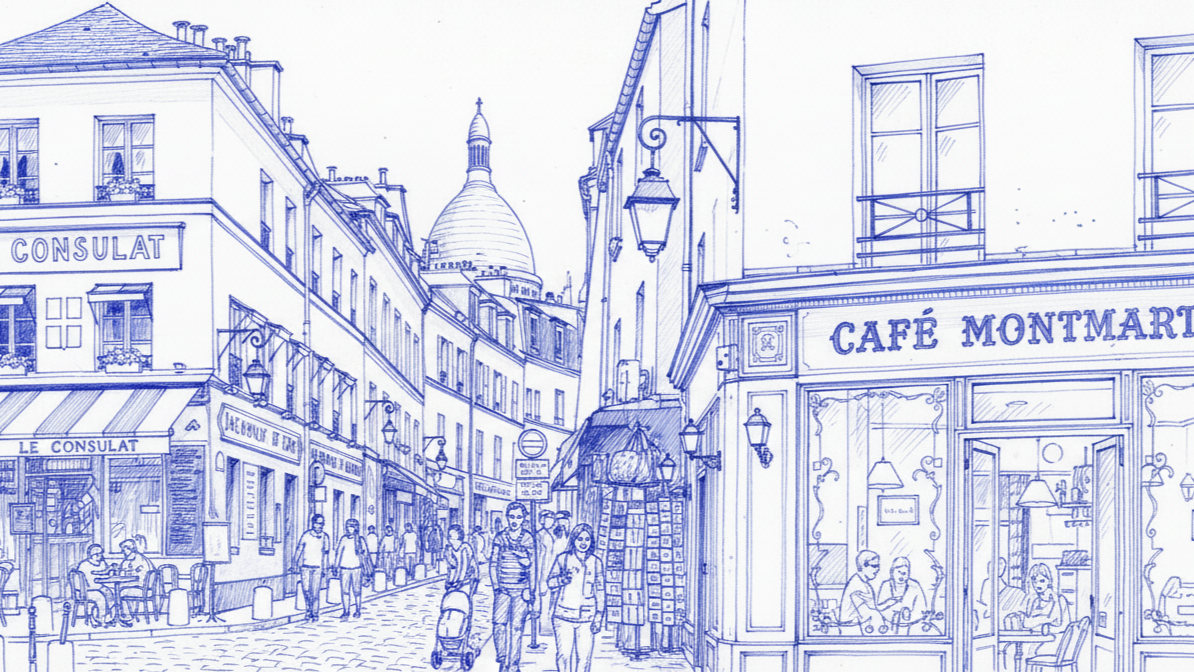
Paris’s Northern Crown: Where Art, Faith, and Everyday Life Meet on the Hills
Of all Paris’s arrondissements, the 18ᵉ is perhaps the most cinematic — a place where history and light collide on the city’s northern hills. Home to the mythic Montmartre, but also to the Goutte d’Or, Clignancourt, and La Chapelle, it’s a district of extraordinary contrasts: artistic and sacred, gritty and graceful, deeply local yet universally adored.
To walk through its streets is to travel through time and temperament — from 19th-century ateliers to North African markets, from cobbled lanes to grand boulevards, from whispered prayers at the Sacré-Cœur to jazz echoing down Rue des Martyrs.
Let’s take a slow, 2,000-word stroll through the most beautiful streets of the 18ᵉ arrondissement, where every stone has a story and every corner a view.
1️⃣ Rue Lepic: The Windmill Road of Montmartre
Our journey begins where Paris tilts upward — on Rue Lepic, a serpentine street that climbs from Boulevard de Clichy to Place Jean-Baptiste-Clément, lined with cafés, flower shops, and pastel façades.
Historically, Rue Lepic was the road leading to the windmills of Montmartre. Two of them still stand: the Moulin de la Galette and the Blute-Fin. In the 19th century, artists like Renoir, Van Gogh, and Toulouse-Lautrec gathered here to paint the dance halls and the laughter that defined la bohème.
Today, Rue Lepic is a microcosm of Montmartre: part tourist path, part village main street. At number 54 once lived Vincent and Theo van Gogh. A few doors away, Café des Deux Moulins — immortalized in Amélie Poulain — still serves crème brûlée to dreamers from around the world.
At sunset, when the light glows pink on the hill, Rue Lepic remains one of the most atmospheric streets in Paris — alive, layered, eternal.
2️⃣ Rue des Abbesses: The Beating Heart of the Village
If Rue Lepic is the spine of Montmartre, Rue des Abbesses is its heart. Named after the abbesses who once governed the Benedictine convent of Montmartre, this bustling street today is the district’s epicurean soul.
The Abbesses metro station, with its original Hector Guimard Art Nouveau entrance, sets the tone: a slice of Parisian heritage amid daily life.
Boutiques sell artisan chocolate, vintage clothes, and handmade candles. Sidewalk cafés — Le Sancerre, Le Vrai Paris, Café Marlette — spill onto the street, where locals and visitors share the same terraces, united by coffee and conversation.
What makes Rue des Abbesses special is its authentic vibrancy: despite Montmartre’s fame, this remains a real neighborhood, where children go to school and friends meet after work. In the evenings, the light glows through the chestnut trees, and you sense the old village heartbeat beneath the city’s rhythm.
3️⃣ Rue de l’Abreuvoir: The Most Photographed Street in Paris
Few streets capture the romantic ideal of Montmartre quite like Rue de l’Abreuvoir. Narrow, cobbled, lined with ivy-clad houses, it curves gently toward the white domes of the Sacré-Cœur — a composition that feels painted rather than built.
At its curve sits the famous Maison Rose, a pink café that has graced a thousand postcards. Once frequented by Picasso, Modigliani, and Gertrude Stein, it still draws artists and couples who come for a glass of wine and a view over the rooftops.
Rue de l’Abreuvoir ends at Square Suzanne-Buisson, where a statue of Saint Denis — the patron saint of Paris, who was martyred on this very hill — stands amid chestnut trees.
Despite its fame, the street retains a timeless quiet, especially in early morning light when the cobblestones shimmer and the sound of footsteps replaces the noise of the city below.
4️⃣ Rue Cortot and Rue Norvins: Artistic Echoes
Just beyond Rue de l’Abreuvoir lies Rue Cortot, one of Montmartre’s oldest lanes. Here you’ll find the Musée de Montmartre, housed in a 17th-century building where Renoir once lived and painted. The museum’s gardens — replanted according to Renoir’s canvases — overlook the city like a dream suspended in time.
A few steps further is Rue Norvins, the postcard street of Montmartre, winding toward Place du Tertre. Despite the tourist bustle, this area preserves its bohemian essence: artists selling watercolors, accordionists playing La Vie en Rose, cafés echoing with the hum of conversation.
At dusk, when the souvenir shops close, Rue Norvins feels like the Montmartre of old — small, secretive, alive with invisible ghosts of painters and poets.
5️⃣ Rue Caulaincourt: The Elegance of Montmartre’s Edge
Descending from the hill, Rue Caulaincourt offers a change of mood. Wide, curved, and lined with elegant Haussmannian buildings, it embodies a more residential, refined Montmartre — less touristy, more lived-in.
Under its graceful stone viaduct runs Avenue Junot, where artists like Dali and writers like Cocteau once resided. Many of the 1920s mansions here, with art-deco details and private gardens, are among the most exclusive properties in northern Paris.
At the corner of Rue Caulaincourt and Rue Lamarck stands the Cimetière de Montmartre, shaded by plane trees — a quieter counterpart to Père-Lachaise, home to Degas, Stendhal, and Dalida. The street’s soft slope, its cafés under arcades, and its proximity to both the village and the city make it one of the 18ᵉ’s most sought-after addresses for families and expatriates alike.
6️⃣ Rue Lamarck: Where the City Meets the Sky
Climbing Rue Lamarck feels like ascending through layers of Paris itself. At its lower end, near the metro station Lamarck-Caulaincourt, you find classic cafés and neighborhood bakeries. As the street rises, views open up toward the city, culminating in the steps of Rue du Chevalier-de-la-Barre, leading straight to the Sacré-Cœur.
This street embodies the vertical poetry of Montmartre — where every turn reveals a glimpse of skyline, every corner a story.
No wonder filmmakers love it: Amélie, Midnight in Paris, and countless others have used Rue Lamarck as a symbol of Parisian magic.
For residents, the appeal goes beyond aesthetics: despite the slopes, the area offers a rare sense of serenity, with proximity to transport, markets, and schools.
7️⃣ Rue Muller and Rue Ramey: The Hidden Montmartre
Away from the tourist flow, the streets behind Rue Ramey and Rue Muller form the quieter, residential heart of lower Montmartre.
Here, narrow façades, artisanal workshops, and small squares evoke the Montmartre of local life — laundry lines, laughter, bicycles, and Sunday markets.
Rue Ramey in particular has reinvented itself over the last decade: organic grocers, design studios, and small cafés (like Lomi or Café Ramey) have transformed it into a chic yet approachable enclave, favored by young professionals and families.
Just above, Rue Muller leads to the terraced stairs of Rue Paul-Albert, offering breathtaking views over Paris — a photographer’s secret known to locals long before Instagram discovered it.
8️⃣ Rue du Mont-Cenis: The Artery of Old Montmartre
If Montmartre were a body, Rue du Mont-Cenis would be its artery — connecting the village square at Place du Tertre to the broader 18ᵉ below.
The street takes its name from the Alpine pass, hinting at its steep slope. Along the way, you pass charming houses, bakeries, and ateliers. Halfway down stands the Église Saint-Pierre-de-Montmartre, one of the oldest churches in Paris, dating back to the 12th century. Its simple Romanesque beauty anchors the spiritual history of the hill.
At the bottom, Rue du Mont-Cenis opens onto more urban energy — a reminder that Montmartre’s village and the larger city are never far apart.
9️⃣ Rue Ordener and Rue Marcadet: The Pulse of Clignancourt
Leaving Montmartre proper, we enter Clignancourt, a lively district that bridges bohemian heritage and urban renewal. The broad Rue Ordener stretches west to east, lined with 19th-century apartment buildings, markets, and boulangeries. It feels like everyday Paris, full of strollers, delivery bikes, and neighborhood chatter.
Parallel to it, Rue Marcadet carries a similar energy — a working-class artery that has steadily gentrified without losing its authenticity. Cafés and concept stores mix with long-standing local businesses, reflecting the social diversity that defines the 18ᵉ’s strength.
In recent years, this area has become increasingly popular among young professionals and artists priced out of the 9ᵉ or 10ᵉ. Many appreciate its proximity to both the metro (Lamarck-Caulaincourt, Jules-Joffrin) and the still-affordable property prices compared to central Paris.
🔟 Rue Myrha and Rue des Gardes: The Goutte d’Or Reimagined
No exploration of the 18ᵉ would be complete without visiting La Goutte d’Or, the district around Barbès — one of Paris’s most culturally rich areas.
Once stigmatized, it is now undergoing a remarkable transformation. The streets here, especially Rue Myrha, Rue des Gardes, and Rue Léon, form the heart of a vibrant African and Middle Eastern community. Textile shops, spice stores, and tailors animate the sidewalks.
In recent years, cafés like Café Pimpin and galleries such as Les Instants Chavirés have brought a new audience, while municipal projects have improved lighting, paving, and public space.
Rue Myrha, with its mix of new restaurants and traditional grocers, perfectly embodies the Goutte d’Or’s future: diverse, creative, and unpretentiously alive.
This is not the polished Paris of postcards — but it’s perhaps the most authentic expression of the city’s soul in the 21st century.
11️⃣ Rue de Clignancourt and Rue Stephenson: The Grand Axes
Stretching northward toward Porte de Clignancourt, Rue de Clignancourt serves as one of the arrondissement’s main thoroughfares. It is here that Montmartre’s slopes meet the bustling markets of the north.
Nearby, Rue Stephenson and Rue Ordener frame one of Paris’s most eclectic areas — close to the Marché aux Puces de Saint-Ouen, the world’s largest flea market. Antique dealers, vintage hunters, and designers flock here every weekend to search for treasures, from art-deco lamps to 18th-century mirrors.
For property buyers, these streets offer large, early-20th-century apartments at prices still below the Paris average, making them attractive to families and investors seeking space and character.
12️⃣ Rue de la Chapelle and Rue Marx-Dormoy: The Northern Frontier
At the far northern edge of the 18ᵉ lies La Chapelle, an area once industrial, now fast-evolving. Rue de la Chapelle, part of the ancient Roman road connecting Lutetia to Saint-Denis, is regaining attention thanks to major urban regeneration projects and improved public transport links (Lines 12, 2, and the RER B).
Nearby, Rue Marx-Dormoy has become a local favorite for its bakeries, multicultural shops, and proximity to the Marché de l’Olive — a covered market offering produce, wine, and artisan goods. Here, the city’s future unfolds: modern architecture blending with preserved 19th-century façades, new eco-housing rising beside historic courtyards.
This is where Paris’s northern gateway is reinventing itself — proof that the 18ᵉ is not just about history, but about momentum.
13️⃣ Rue du Mont-Cenis to Rue des Saules: The Circle Closes
We end where we began — in the upper Montmartre hills, where Rue du Mont-Cenis meets Rue des Saules. The latter winds through vineyards, yes — actual vineyards, the Clos Montmartre, still producing a few hundred bottles of wine each year.
Each October, during the Fête des Vendanges, locals and visitors gather here for music, parades, and wine tasting, a reminder that this part of Paris remains a village within a metropolis.
It’s hard to imagine a more poetic conclusion: a street lined with vines, artists, and stories, overlooking the city that has always inspired the world.
💬 Conclusion: The 18ᵉ Arrondissement, in Ten Thousand Steps
To walk through the 18ᵉ is to experience the entire human range of Paris — art and labor, devotion and decadence, memory and motion. From Rue Lepic’s windmills to Rue Myrha’s spice stalls, the district is a living museum of urban diversity.
For those seeking to buy property here, the appeal is equally layered:
- Montmartre offers prestige and timeless charm,
- Clignancourt and Jules-Joffrin bring affordable elegance,
- The Goutte d’Or and La Chapelle represent the city’s creative future.
In short, the 18ᵉ is not just one arrondissement — it’s many cities within one skyline. Every street reveals a new Paris, and every doorway opens to another story.
The hill may stand still, but Paris keeps climbing — and in the 18ᵉ, the view is always worth the ascent.
Thomas Herremans