
🌿 The Most Beautiful Streets in Paris’s 19ᵉ Arrondissement
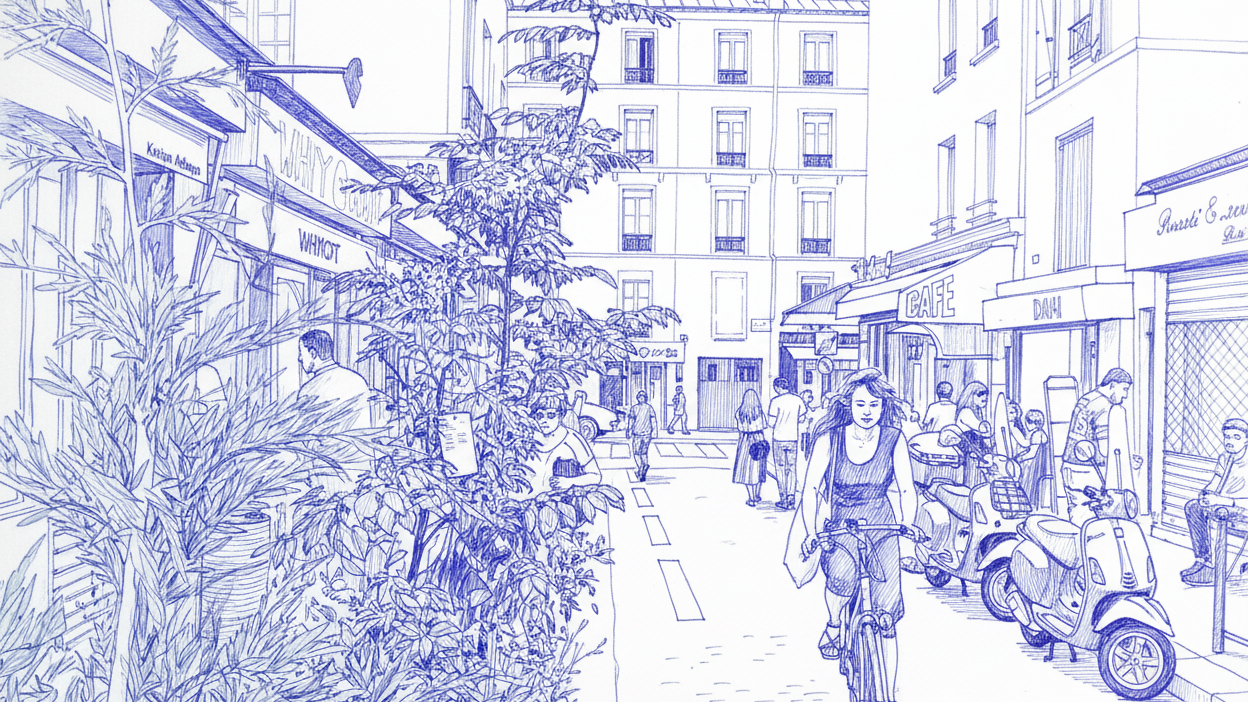
Where Paris Breathes, Flows, and Looks Forward
If central Paris is the museum of history, the 19ᵉ arrondissement is its open-air studio — a district where ideas, cultures, and landscapes come together with rare vitality. Stretching from Buttes-Chaumont Park to the Canal de l’Ourcq, from Belleville’s slopes to La Villette’s futuristic domes, this northeastern corner of the capital has evolved from an industrial zone to one of the most dynamic and diverse parts of Paris.
Its streets may not all be famous, but they hold a quiet grandeur — a beauty that comes not from uniform façades but from contrasts: brick and stone, tradition and innovation, calm and chaos, nature and urban life.
Let’s take a slow walk through the most beautiful and emblematic streets of the 19ᵉ arrondissement, where Paris still dares to dream, build, and breathe.
1️⃣ Rue de Crimée — The Artery of Transformation
Few streets capture the story of the 19ᵉ like Rue de Crimée. Stretching for nearly 3 kilometers from the Buttes-Chaumont to the Porte de la Villette, it’s a living thread between the district’s industrial past and its cultural present.
Once lined with warehouses and factories, Rue de Crimée today reflects Paris’s urban renewal at its best. Its southern end, near Place de Bitche, is classic Haussmannian Paris — limestone façades, small cafés, and tree-lined sidewalks. As you walk north, the atmosphere becomes more contemporary: glass buildings, student residences, and renovated lofts near the Canal de l’Ourcq.
At the bridge known as Pont de Crimée, a rare hydraulic masterpiece allows boats to pass by lifting the roadway — a spectacle that delights both locals and visitors. Around it, restaurants and bars like Paname Brewing Company and Le Pavillon des Canaux bring a new kind of life to the water’s edge.
Real-estate here mirrors the street’s evolution: older apartments south of Buttes-Chaumont average €9,000/m², while lofts and new builds near the canal hover around €8,000/m², offering both value and character.
2️⃣ Rue de Belleville — A Ridge Between Cultures
Technically shared with the 20ᵉ arrondissement, Rue de Belleville begins in the 10ᵉ and climbs east toward Jourdain and Télégraphe. At its peak, near the Belvédère de Belleville, it offers one of the most stunning panoramic views of Paris — a hidden rival to Montmartre.
The street’s personality is unmistakable: a mix of traditional Chinese grocery stores, North-African bakeries, hip cafés, and timeless Parisian bistros. The result is a microcosm of global Paris — lively, affordable, and full of surprises.
Architecturally, Rue de Belleville showcases every era of Parisian life: late-19th-century façades, post-war housing, and renovated lofts tucked behind small courtyards.
Prices remain diverse — from €8,500 to €10,500/m², depending on view, floor, and condition — but what unites buyers here is not uniformity, it’s energy. To live on Rue de Belleville is to live between worlds: the poetic chaos of the old Paris and the upward momentum of the new.
3️⃣ Rue Botzaris — Calm Above the City
If Rue de Belleville is the pulse, Rue Botzaris is the breath. Running along the northern edge of the Parc des Buttes-Chaumont, one of the city’s most extraordinary parks, this quiet residential street offers a village-like serenity rare in Paris.
Many of its buildings date from the 19th century, when the park was created under Napoleon III. Their balconies look directly onto lush slopes, grottoes, and waterfalls — a view so green it almost feels provincial.
The atmosphere is elegant but unpretentious. There’s the Pavillon Puebla hidden among the trees, beloved by locals for summer cocktails; small art studios and family apartments coexist peacefully.
Real-estate here commands a premium: expect €10,000–11,000/m² for well-kept apartments, sometimes more for those with direct park views. Yet, compared to the Left Bank, it’s still a fraction of the price — for arguably one of Paris’s most peaceful settings.
4️⃣ Rue de Mouzaïa — The Secret Garden of the 19ᵉ
Step off the main roads, and you’ll find a place that feels like a different city altogether: La Mouzaïa, or the quartier d’Amérique.
Here, narrow, cobbled lanes lined with small houses and flower-filled gardens recall a provincial village. Streets such as Rue de Mouzaïa, Rue du Général-Brunet, and Villa du Danube form a grid of pedestrian alleys where ivy climbs façades and cats nap on sun-warmed walls.
Built in the late 19th century for workers, the houses are modest in scale but rich in charm. Many have been lovingly restored, creating rare private homes in a city dominated by apartments.
This is one of Paris’s best-kept secrets — and a real-estate treasure. Prices for houses with gardens can exceed €12,000/m², while smaller pied-à-terre apartments remain around €9,000/m². Owning property here is not just buying square meters; it’s acquiring a slice of pastoral Paris.
5️⃣ Quai de la Loire & Quai de la Marne — Life Along the Canal
No exploration of the 19ᵉ is complete without walking along the Canal de l’Ourcq, the district’s shimmering backbone. And nowhere is its beauty clearer than along the twin embankments of Quai de la Loire and Quai de la Marne.
In summer, these quays transform into a Parisian Riviera: joggers, cyclists, and sunbathers line the water, while floating terraces host concerts and cinema nights. The architecture blends 19th-century warehouses with modern glass pavilions, embodying the district’s constant dialogue between memory and modernity.
Real-estate demand along the canal has surged as former industrial buildings have become lofts, artist studios, and offices. Average prices hover around €8,500/m², with exceptional canal-view apartments reaching €10,000/m².
Here, life feels both urban and open — a rare luxury in Paris, where space and sky are usually rationed.
6️⃣ Avenue Simon Bolivar — Elegance Between Two Worlds
A gentle slope linking Belleville and Buttes-Chaumont, Avenue Simon Bolivar is one of those quietly prestigious streets that rarely make headlines but never lose appeal.
Bordered by early-20th-century buildings with intricate ironwork, the avenue offers wide sidewalks, mature trees, and a subtle sense of order amid the district’s eclecticism.
Nearby cafés like Le Bolivar and the small boutiques around Rue des Annelets create a neighborhood rhythm that feels authentically Parisian, not curated.
Apartments here are classic — parquet, mouldings, balconies — but with the added advantage of green proximity. With metro stations Bolivar and Buttes-Chaumont nearby, and average prices between €9,500 and €10,500/m², the avenue remains a safe and graceful investment.
7️⃣ Rue Manin — The Grand Promenade
If one street defines the geography of the 19ᵉ, it’s Rue Manin. Running along the southern edge of Buttes-Chaumont and curving gently toward Place de Rhin-et-Danube, Rue Manin offers sweeping views of the park’s hillsides, romantic staircases, and the famed Temple de la Sibylle perched above the lake.
Elegant 19th-century buildings stand beside modern additions, creating a living panorama of Parisian urbanism. Cafés like Le Pavillon du Lac and Rosa Bonheur (a beloved local guinguette) have made this area one of the most social in the arrondissement.
Real-estate here attracts families and professionals seeking space, light, and calm within 15 minutes of République. Expect €10,000–11,500/m² for well-located properties — a premium justified by the setting’s unique serenity.
8️⃣ Rue des Solitaires — Quiet Grace in the Heart of the East
Often overlooked, Rue des Solitaires embodies the understated beauty of the 19ᵉ. Tucked between Jourdain and Place des Fêtes, it offers village quietude while remaining close to major metro lines.
The street’s name — “of the solitaries” — comes from a former convent nearby, but today it’s far from isolated. The area hosts a mix of young families, artists, and long-time residents who appreciate its human scale.
Its architecture is harmonious: modest Haussmannian façades, a few brick buildings, and leafy courtyards. Real-estate here averages €9,200–9,800/m², making it a haven for buyers seeking value and atmosphere without the Belleville bustle.
9️⃣ Rue Eugène-Jumin — Art Deco Under the Arches
Close to the Parc de la Villette, Rue Eugène-Jumin stands out for its remarkable Art-Deco architecture. Here, the Cité de la Muette complex — an early example of modernist social housing built in the 1930s — gives the street a distinctive rhythm: curved façades, geometric balconies, and decorative brickwork.
This area has become increasingly popular among architects and design enthusiasts who appreciate the blend of heritage and functionality. Lofts and converted ateliers near the Villette basin offer unique volumes, often priced between €8,500 and €9,500/m².
With the Philharmonie de Paris, the Zénith concert hall, and cultural venues nearby, Rue Eugène-Jumin sits at the intersection of art, history, and innovation.
🔟 Rue Petit & Avenue Jean-Jaurès — The Pulse of the Future
To the northeast, near Rosa Parks station, a new Paris is emerging — one built around sustainable urban design and mixed-use spaces. Rue Petit and Avenue Jean-Jaurès are central to this transformation.
Once dominated by factories, these streets are now lined with eco-friendly developments, student residences, and cultural venues. The 104 Paris (a vast creative hub) and the Canal de l’Ourcq promenade nearby have helped redefine this part of the arrondissement as a hotspot for young entrepreneurs and creatives.
While average prices remain below €9,000/m², demand is steadily rising as transport and amenities improve. Investors see this as the next logical step in Paris’s eastward evolution — a district where architecture, affordability, and lifestyle converge.
🧭 The 19ᵉ Arrondissement: A District of Balance
What makes the 19ᵉ arrondissement remarkable is its capacity for contrast:
- It’s urban but full of nature,
- Lively but largely residential,
- Diverse yet cohesive.
You can move from a tranquil tree-lined street to a buzzing canal in five minutes. Children walk to school past street art; professionals work remotely from terrace cafés; neighbors share vegetables grown in community gardens.
This mix of authenticity and accessibility explains why more Parisians and expats are looking east — not just for affordability, but for quality of life.
💶 Real-Estate Snapshot (2025)
According to the Chambre des Notaires de Paris, the arrondissement’s average price per square meter in early 2025 stands at around €9,400/m², up 2.1 % year-on-year. Compared with the city average of €10,800/m², that represents a 15 % discount, yet with strong growth potential as infrastructure and amenities continue to expand.
Rental demand remains robust, driven by proximity to universities, La Villette’s cultural zone, and efficient transport to the city center. In short, the 19ᵉ is no longer a “frontier” — it’s a frontier fulfilled.
💬 Conclusion: Where the Future of Paris Still Feels Local
The 19ᵉ arrondissement may not have the grand boulevards of the 8ᵉ or the boutiques of Saint-Germain, but it has something rarer: breath and belonging. Its most beautiful streets are not merely photogenic — they are lived-in, layered, and human.
Here, the beauty lies in coexistence: stone beside steel, gardens beside graffiti, silence beside song.
For homebuyers and investors alike, the 19ᵉ offers what modern Paris increasingly values — space, soul, and sustainability. It is a district where the city looks forward without losing sight of its people.
Walk its streets, and you’ll feel it: Paris’s future still speaks with the accent of the 19ᵉ.
Thomas Herremans